Orchid Town was an attraction in the ’40s and ’50s

This article was written for an appeared in the Ojai Valley News on June 11, 1999.  It is reprinted here with their permission.

Orchid Town was an attraction in the ’40s and ’50s

by David Mason

“Gardening is one of the best things in the world to make you forget your troubles, so as you go along, take a little time out and relax in your garden amongst the flowers.”
                — Louis Boyle, Out West, 1952

The lavish two-story hotel with its sweeping veranda would have no overnight guests. The post office has not postmaster, the Orchid Café couldn’t serve a decent cup of coffee and there were no children learning their ABC’s at the Deer Little School.

The blacksmith shop was silent and no hymns were heard coming from the Community Church. The Last Chance Saloon never served liquor; the jail never held a prisoner; and the justice of the peace? Well, he never married a single couple.

This may sound like a very dull town, but on the contrary, it was probably one of the most exciting old beautiful towns in all of Southern California.

El Rancho Rinconada, Orchid Town, was the dream of a wealthy man.
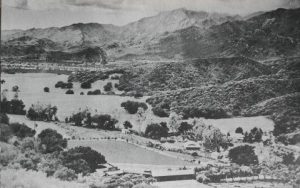
Overview of Orchid Town on the El Rancho Rinconada.

When Louis Boyle purchased the 77-acre ranch in the Ojai Valley in March of 1939, it consisted of a small house, garage and barn. Within a year, the land would start to spring forth with an array of exotic plants, for Mr. Boyle’s dream was to develop his ranch into a paradise of flowers.

Mr. Boyle was not raised in the flower business. His father had come to California with his family in the 1890s and had obtained employment in the iron and steel business, which he did quite successfully. His company manufactured barrels, canteens, camp stoves, tin cans and garbage cans.

The elder Boyle eventually took over the Pacific Stove Company, which made heaters and stoves; one popular line of heaters sold for 90 cents each.

One employee was an ambitious man by the name of Parkie O’ Keefe, the plant superintendent and salesman, who would sell stoves, write up the orders, come back to the plant, change clothes and work to make the stoves.

In 1913, Bob Merritt came to work for the Pacific Stove Company. After a few years, Mr. Merritt, longing to go into business for himself, convinced Mr. O’ Keefe to join him. The elder Boyle sold the stove manufacturing end of his business to them and retained a financial interest in their business, which came to be known as O’ Keefe and Merritt.

The Boyle manufacturing company was sold to the United States Steel Company in 1939 and it was then that Louis Boyle came to the Ojai Valley and bought El Rancho Rinconada.

He was not the first man to see the possibilities in this secluded ranch in the little valley. The previous owner, Loring Farnum, had attended Thacher School from 1898 until 1900 and was so impressed with the Ojai Valley that in 1908 he purchased the ranch and named it El Ranch Rinconada. He built a white farm house, planted a prune orchard and raised horses.

The original Farnum house was one of the 60 buildings in the valley that was lost in the great 1917 fire. Mr. Farnum was on the Boyd Club Board of Trustees and he was the first person to introduce radio to the Ojai Valley citizens.

Louis Boyle was enthusiastic about creating a sprawling ranch of orchids and other unique plans. He had attended the 1938 Pasadena Flower Show, where a large display of cymbidium orchids had caught his eye.

The Orchid Ranch would have to be unique, the land encircled by the mountains was too magnificent to construct just ordinary rows of lath and greenhouses.

The idea of creating a western town as a front for the flower beds was decided upon as an attractive way to conceal the lath house structures. Mr. Boyle and his helpers spent months going through junk yards, picking up old doors, windows and lumber.

The first building was the hotel. The imposing structure would stand out from the rest of the town. The windows were actually shadow boxes that held a variety of treasures. Each window box told a different story of the history of the Old West. They included old guns, powder horns, lamps and spectacles. Some contained wooden tools, music boxes, branding irons and straight razors.
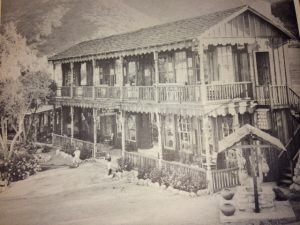
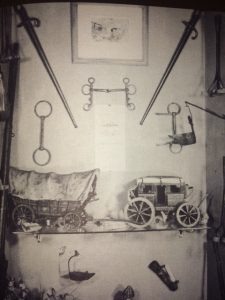
 La Casa de Las Orquideas (the old Hotel) and wishing-well.
La Casa de Las Orquideas (the old Hotel) and wishing-well.


Shadow box of antiques.


Upon entering the front door of the hotel, your first view was of hundreds of orchid plants growing in attractive gardens –- a spectacular sight.
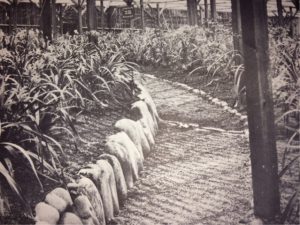
Inside of a Lath House.

The rear side of the false front was also a treasure trove. Hung on the walls were old western pictures and newspapers. Out front stood a wishing well.

Further down the street, other false fronts continued to be built on both sides, until the town had almost all of the conveniences one would expect in a small town.

There was the drug store, church, hardware and general store. Then they had the little school, assayer’s office, the town hall and bank, the opera house and Last Chance Saloon –- and the largest building, Kate’s House, was named for one of the ladies of early San Francisco.

There was also the Chinese Laundry, King’s Harness Shop, Wells Fargo, Pony Express and The Picture Gallery.

The Picture Gallery was extraordinary. The walls were covered with beautiful pictures of orchids, the handiwork of many artists, who years ago contributed in their greatest ways to symbolizing the beautiful flowers.

The gallery consisted of more than 1,000 prints of orchids, offset in their placement on the walls to make room for the collection of museum quality antiques that were also neatly arranged in the gallery.

An office building and library were built on a low rise at the base of the mountains, so as to afford a panoramic view of the ranch. The atmosphere of the office was more like a home instead of a place of business. The library contained a large collection of rare botanical books, collected from around the world.

Over the years, the Orchid Ranch would become one of the main sources of elaborate displays at flower shows, winning many awards.
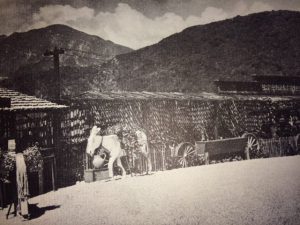
Lath House which shaded plants at Orchid Town.

The various displays that Mr. Boyle entered in the shows were replicas of his greenhouses that were showplaces within themselves, adorned with exquisite garden statuary that added charm to the meandering rock-lined walks that encircled the beautiful beds of graceful orchids.

The camellia plants would add another source of color and beauty to the ranch. Planted throughout the property were more than 7,000 camellia bushes, consisting of 150 different varieties. Many of them were rare and unusual.

The 1948 forest fire would take its toll on the Orchid Ranch, as well as the entire Ojai Valley. At El Rancho Rinconada, lath houses burned to the ground, destroying the precious plants and flowers that the lath had been protecting. The camellias that were planted along the outskirts of the ranch, closer to the surrounding hills, were lost when the fire swept into the little valley.

The ranch was repaired of all fire damage and, in short time, was back in full operation. As though to add insult to injury, the next year it snowed on the little town. To protect the orchids, which were only covered by lath, smudge pots had to be moved in.

By 1952 there were more than 50,000 cymbidium plants growing on the ranch. Mr. Boyle learned all he could about the flowers, mostly through trial and error. His passion for cymbidiums was a major contributor to the flower’s popularity.

During the years that the ranch was in operation, the cymbidium orchid became the most popular flower for stylish corsages. Florists from around the world were supplied with the blooms shipped from El Rancho Rinconada.

There was no lovelier orchid than the cymbidium and there was no finer selection in the United States than those grown at Orchid Town, El Rancho Rinconada. Many different varieties of cymbidiums were propagated there in the many specially designed greenhouses built for the young seedlings.

The names of the cymbidiums read like a list from “Who’s Who,” including: Anne Boleyn, Bach, Mozart, Beau Brummel, Cleopatra, Godiva, Goldilocks, Hiawatha, Pocahontas, Paul Revere, Joan of Arc and Marco Polo. The royal family was not forgotten; plants were named for Queen Elizatbeth I, Queen Mary, Princess Margaret, Prince Charles and Windsor Castle. President Lincoln and President Wilson were also included in the list.

Many other unusual flowers filled the ranch greenhouses, among them the waxy red Hawaiian anthuriums and the cypripedium orchids, also known as the Slipper Orchid.

The ranch would continue to delight people from around the world, whether it be those fortunate enough to have been invited to the many private parties and official affairs that were held there, down to the excitement felt by the smallest florists across the country who received their shipments of the exquisite flowers from the ranch.
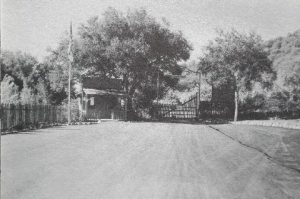
Orchid Town's main entrance.
Orchid Town’s main entrance.

When Mr. Boyle died in August of 1954 the glory of El Rancho Rinconada began to fade, but not to the memories. I’m sure the many hours I spent as a child, admiring the quaint place and the beautiful creations of God, had a lot to do with influencing my life.

The property was eventually sold to Camp Ramah and there aren’t many of the original structures left. The office and library, the main house and guest house remain. The western town is gone and the one sign of an earlier day is the wishing well.

Camp Ramah has maintained the land with spacious lawns, tree and flowers, and the serene atmosphere remains. Today, the former El Rancho Rinconada is used for the health and enrichment of young people’s lives, not unlike what it did for the flowers many years ago.

 

Ranger Bald was a man among men

The following article was printed in the Ojai Valley News probably in the 1960’s or 1970’s because that’s when the author (Ed Wenig) wrote for the newspaper. This article is reprinted here with the permission of the Ojai Valley News.

Ranger Bald was a man among men

An erect, elderly gentleman riding a spirited horse down Ojai Ave. to the post office was a familiar figure to residents of the valley in the 1940’s. Dismounting, he would swing into the post office on crutches, collect his mail, remount, and ride away to his apartment in the olive mill on the street that today bears his name.

Industrious, hard-working Geo. Bald come to the Ojai Valley in 1886 at the age of 22. He found his first job setting out orange trees for Edward Thacher on the land which is now known as the Topa Topa Ranch.

In 1891 George Bald married Miss Catherine Clark, the sister of the famous stagecoach driver, Tom Clark. The two went to the state of Washington to make their home for a decade. Returning to the Ojai Valley in 1900, Bald became operator of the Ojai olive mill, a new and promising industry. In the few years of its operation it was estimated that 11,000 gallons of oil were sold.

About 1902 George Bald decided to become a forest ranger. His headquarters were in Nordhoff, and his territory included the Ojai Valley, Sespe Hot Springs, Mutah, and Sespe Gorge to the Lockwood Valley.

Three trails

For the next 19 years he carved out trails on the steep mountain sides in winter and patrolled his area for fires in summer. Three well-known trails he built were the Topa Topa Trail, the Ocean View Trail, and the Pratt Trail. The last-mentioned trail was financed by Charles M. Pratt, Standard Oil executive who lived on North Foothill Road, at which point the trail began. Sometimes a trail 10 miles long had to be made to reach a place only two miles distant “as the crow flies”.

Fire-fighting, too was a strenuous job for Forest Ranger Bald in the days before the development of modern fire control apparatus and improved systems of communication. When fire or smoke was observed from his lookout or camp, he would tie onto his saddle a bag of barley for his horse, lunch for himself, his fire-fighting tools, which consisted of a rake, shovel, mattock and axe, and ride off to locate the trouble spot.

For these duties he received about $60 a month from which he was expected to purchase his provisions and clothing, and grain for his horse.

In 1921 George Bald was offered the superintendency of the biggest, and often called the best, orange grove in the valley — the very orchard he had helped plant in the eighties. For the next 15 years he devoted all his efforts to the well-known Topa Topa fruit ranch. When his wife died in 1936, and the Topa Topa ranch was sold in the same year, George Bald retired and went to live in an apartment in the old olive mill.


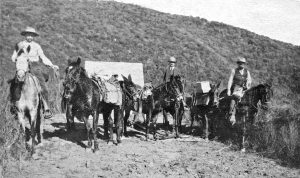
Ranger George Bald riding in the center in the back country.

georgebaldothers19101

Murky Water

Note: This article was written by Emily Thacher Ayala and first appeared in Edible Ojai, No. 22, Fall 2007. It has been slightly modified and contains additional photographs.

Murky Water

Until the desert knows
That Water grows
His sand suffice
But let him once suspect
That Caspian fact
Sahara dies.

Emily Dickenson, No. 1291

Emily & George Thacher, 1975

We do live in a desert—ok, that’s a bit of exaggeration used by many writers about Southern California–but when my great-grandfathers arrived here, one from England and the other from New England, they found a far different place in the Ojai Valley than what they had left behind. The sage and sumac embedded in dry rocky ground, the oak woodlands with their grasses and burr clover that had literally saved the Hispanic bovine bacon for more than a century. There was no water from the sky for most of the year and all too briefly there could be too much. My great-grandfather, Sherman Thacher, in his first year upon arrival and working at his older brother’s fledgling orange orchard on the east end Grand Avenue wrote to his mother in New Haven, Connecticut that, “Edward planted and God refused to water.” Irrigation water had to be hauled by barrel to the thirsty trees before dams, ditches, flumes and furrows were constructed over the next few decades. Indeed, irrigation was by far the most time-consuming and constant portion of the early farmers’ labors. From the other side of my Ojai roots, my grandfather, Elmer Friend, always said about his spring, summer and fall efforts of constructing and maintaining the thirsty furrows that he had “moved every rock in the Ojai Valley at least twice,” a bit of hyperbole I never heard any of his contemporaries deny him. Look at those massive stone walls in the East End and you also may begin to believe. And, of course, thanks to their efforts our valley is now a far different place that they have left as a legacy to us to labor in and enjoy ourselves.

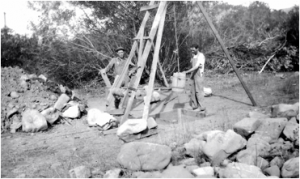
Elmer and Henry Friend hand digging well on Reeves Road ranch, ca. 1925.

But the subject of water seems to be at the forefront again… or perhaps the lack thereof and the price we must pay for it. Growing up I was acutely aware of water. Sometimes there was too much, with mud and boulders growling in the river below our orchard, but most times too little to maintain our special swimming hole in the Ventura River. I remember having to share bathwater with my brother, even with my parents. It was rather murky water–the water coming from the spring above our house, gravity fed directly into the pipes with whatever fine plant life and dirt the spring and pipes contained, then into the tub to be mixed with the daily grime of two grubby farm kids. It’s no wonder I’m not squeamish about the cleanliness of my fingernails. I remember times when water would not reach the upstairs bathroom during the summer; there just wasn’t enough pressure in the pipes for it to get there, teasing me from my upstairs bedroom by hovering in its tubular home in the wall between me and the ground. During our last sustained drought there wasn’t much water in the spring which might trickle only at night when the willows and other canyon plants demands were at their diurnal low.

Our spring-fed house would also do without water when a flood or fire came along damaging the system. Sometimes the pipes simply came apart from wildlife or our dogs mucking about in the spring. Someone (usually my dad) would go up the canyon amid the willows and poison oak and fix the pipe and clean the screen filter. Then in the 90’s we had a well drilled, and a tank put in, which has solved lots of our domestic water issues. When the pump is on, the tank is filled, and even if the spring runs low we have enough water to take showers; most of the time. Like any power outage, being our own ‘water company’ is a good reminder to be thankful for the utilities that others work long and hard to provide us with.

Attached to our water system for the house is the water system for the orchard. This system starts with a whole slew of larger pipes; one from the spring, from the well, the water tank and from the river. The orchard is divided into blocks each with a main valve connected to the various sources of water. Blocks are further divided into rows with a line of hose and their own riser and valve from the pipe below. Irrigating the orchard is tricky, determining which source of water to be used in each block, balancing the water to flow where it needs to go, ensuring that the sprinklers have enough pressure on the sloping ground. You turn on the water for a block and make sure the pressure gauge stays between 25 and 35 psi. If the pressure isn’t high enough, then turn off rows of sprinklers until the pressure is sufficient. When water is plentiful it takes 3 days to irrigate the whole 20 acres, 2 blocks each day. On a dry year when the spring is trickling and the well not pumping at full capacity it takes 5 days or more, and during some of those days you won’t take a shower upstairs. It’s tricky business, one must take into account the slope of the land—make sure the top of the slope is getting sufficient water. You don’t want to shortchange the trees at the end of the line. And of course make sure some water still flows to the house; don’t leave Mom with soap in her hair. And remember not to close too many valves or you may blow up a pipe—.

We all made mistakes—I’ve blown up a few water lines in my ignorance of where the pipes lie underground and what valve to open or close and in what order. I’ve also turned the well on to fill the tank and forgotten to close the valve after filling the tank; sending water gushing out onto the ground. We do have a one-way valve installed coming from the spring, so you can’t pump water back into the spring, which would certainly surprise the other critters using the spring. Yet this back flow of water might loosen the murk in the pipeline!

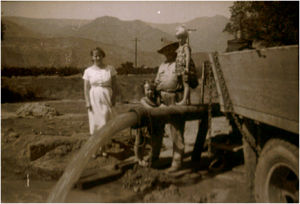
Joni (Florence), Anne, Elmer and Aleta Friend with the test pumping new well during the drought, 1951.

This may seem like a convoluted system for providing water to a mere 20 acres and one home, but I can assure you it isn’t much different on other local farms that balance water storage and use from various sources. Nor is it different from the larger daunting task that our local water companies undertake daily. Our Ojai Valley water comes from wells, Lake Casitas (CMWD), springs and then flows to storage tanks, balancing reservoirs, and directly to users. Getting that water around to each home and orchard involves an enormous number of valves, pumps, pressure gauges, miles of pipeline and lots of human vigilance! The water companies have a lot of people to answer to if the water stops or the pressure isn’t sufficient to reach someone’s upstairs. Water companies can’t get away with only allowing us to have water several days a week while they repair something or scratch their collective heads about a problem as we can with our orchard. Just to add to the task, water companies must have their water squeaky clean–minimal murk is not allowed under state drinking water standards. Add to the tasks for our water companies that much of the infrastructure they are using was put in place many years ago and virtually all of it is underground. It’s not surprising that they need to raise their rates to maintain the systems and have budgetary concerns during wet years and times of drought conservation. Farms may use more water, and we are willing to pay the cost of the water delivered, but the infrastructure and administrative costs should be shared equally among all customers who are able to access the system. This should include meters that only use water when their other sources become unavailable. This seems only reasonable to us.

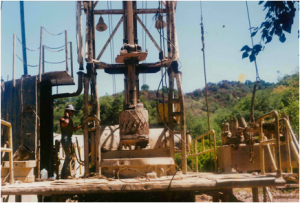
Well drilling in 1990 on the same ranch on Reeves Road shown above.

Farmers are much more in tune with our water history, the delivery systems, and how they function, than the average residential customer. We are not opposed to paying for water as it sustains our industry. We are opposed to unfair and drastic rate changes that could potentially put us out of business. I suspect that with this recent rate change some folks that have small farms (5 to 10 acres around their home) may simply shut off the water and call it quits after they receive their water bills this fall and make the comparison to their income from growing oranges. As orchards go dry and are removed the feel of our valley will change. If you are curious to know what a fallow orchard looks like, check out the corner on Fordyce road where an orchard was removed several years ago. Or the empty field on the north side of Grand avenue between Carne and Fordyce. I live on Fordyce and can attest to the fact that the only benefit of these fallow lands is an influx of ground squirrels, some lizards, a few birds and lots of dust. If the valley reverts to sagebrush and the dust increases, our Ojai will become a less desirable place to live. Water keeps our valley green and pretty, provides jobs and food, and a buffer from wildfires. We should keep the orchards green for those reasons alone.

I’m not sure where we are headed with costly water rates. As the price rises we use less, the water companies sell less and then need to increase rates to make up for the lost income. We need to start acting as if we have a finite amount of water from all the sources available and price it out to all users in an equitable manner. Conserve, conserve—turn off the water when brushing your teeth, only flush for when necessary, don’t over water your yards, etc. Heck, you can even share bath water with someone— let’s ensure there’s enough to go around. Lastly, please do rain dances or say a special prayer in hopes that the heavens open to give us ample rainfall this winter!

When the well’s dry
We know the worth of water.

Benjamin Franklin,
Poor Richard’s Almanac


Effie Skelton

This story was written by Cricket Twichell.  It is based on a piece she wrote for the Ojai Valley News in the 1980’s.  

Effie Skelton

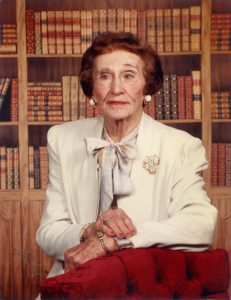
effiemayskeltonThis lady knew about small beginnings. Born in Oklahoma around the turn of the century, Effie Skelton weighed in at 1 1/2 pounds. Told there was no way this child could survive, the Cherokee Indian auntie assisting at Effie’s birth ignored the doctor’s grim prognosis, wrapped Effie in soft cotton, tucked her into a shoe box which she placed in the warming oven of the wood stove and then every hour fed her a drop or two of blackberry brandy. Effie kicked into high gear and eventually became a driving force in the Ojai.
After graduating from business college, Effie saved her hard-earned money and in 1927 bought a brand new Pontiac. She had an agenda— to immediately head out west—by herself— to California. “I didn’t know how to drive backwards” said Effie” but that didn’t matter. I was only going forward.”

Ending up in Ventura, Effie married a young man who worked for Shell Oil Company. They moved to Ojai where she raised 3 children and became a realtor, specializing in Meiners Oaks properties. Her weekly column in the Ojai Valley News— “What’s Doin’ in Meiners Oaks”—- had a devoted , down-home following.

Over the years Effie became concerned because so many artifacts connected with the pioneer days of the Ojai were leaving the valley. If only we had a museum which would house these papers, tools, and etc of a bygone era! The more she thought about this, the more zealous she became in her determination to stop the hemorrhaging of the Ojai’s historical items.

Other community leaders jumped on Effie’s band wagon. Bob Browne, a local anthropologist, history buff and handyman, shared her enthusiasm for creating a museum and historical society in the Ojai. He had bought a house in the highlands above Miramonte and to his delight discovered it had been the site of a Chumash Indian village. After UCLA conducted a full-blown archaeological dig on his property, Bob wanted to house the relics which had surfaced in a place where they could be enjoyed and appreciated by.the community at large. He and Effie joined forces; and soon Lynn Rains, Arthur Waite, Bill Bowie, Lois Powers and Elizabeth Thacher hopped on board.

The founding members of the museum began working the room, asking members of Ojai pioneer families to donate articles to their worthy cause. The Forest Service offered space to store the memorabilia which came pouring in. When they needed more room, Walter Gamulski offered storage space where the American Legion Hall is today if the museum group would pay the taxes and the insurance. You betcha’!

Effie and her friends put donation cans in banks, stores, motels and public buildings. She wrote articles in the Ojai Valley News to keep the community appraised of the progress of her venture and to remind readers to donate antiques etc to add to the ever-growing collections.

In 1966, 50 years ago, the Museum opened up for business in the Arcade where the realtors office is today. At the opening reception punch was served in attractive bowls the early Chinese settlers had used for washing their hair. That day Effie got to raise two flags over the new Museum, one which had flown over the capitol in Sacramento and one which had flown over the White House in Washington. Ojai had itself a bona fide Museum!

As the collections continued to grow, in 1979 a new home was found for the fledgling Museum— on Montgomery Street at the former firehouse which had been built in 1937 with WPA funds. Bud Bower donated the services of Ojai Van Lines to transport the possessions to the new location; Bob Browne and his crew built dioramas depicting animals in the Sespe back country; eye-catching displays were concocted. People came. In one year Effie, who manned the guest book every day for over 20 years, counted 7,000 visitors from 31 countries.

What started as an idea in Effie’s noggin, grew into an institution which is thriving today. Like her old Pontiac, the Museum only goes forward!

The story of the man who Transformed Ojai

The following article was written by Harriet Wenig for the “Ojai Valley News’s” OJAI GOLDEN ANNIVERSARY – 1921 TO 1971 celebratory booklet (page 4). It is reprinted here with the permission of the Ojai Valley News.

The story of the man who transformed Ojai

The post office tower, the arcade, the park with its tennis courts and festival bowl, the tranquil Arbolada residential district — these distinguish the village of Ojai from countless other small towns that dot the landscape of America.

But photographs of the business district of Nordhoff in the early days show it to have been a typical little cluster of stores with the false fronts bordering a dusty main street, utterly without distinction except for its background of oak trees. Who wrought the transformation?

Oldtimers will tell you that, although no man can be given the entire credit, the man who played a key role in conceiving, financing and executing the whole affair was Edward D. Libbey, millionaire glass manufacturer from Toledo, Ohio.

Mr. Libbey had come to the Ojai Valley in 1908 to spend a winter vacation at the new Foothills Hotel, on the recommendation of his friend Harry Sinclair. The natural beauty of the valley captivated him, and he returned year after year to enjoy its rustic charm. Possessing a rare combination of idealism and practicality, he decided to take and active part in preserving those features of the valley that he loved, and to transform those features which he considered to be a scar on the landscape into something more in harmony with their surroundings.

He gradually began to acquire land in the valley and to make the acquaintance of men living here who would be sympathetic to his dreams concerning its development. He held long conferences with civic leaders such as Sherman Thacher, Walter Bristol, John J. Burke, and Harry Sinclair, discussing various ideas for the improvement of the town and the valley. Mr. Libbey made no specific promises at these meetings, but indicated that he was interested in helping wherever he could.

As a result of these discussions the Ojai Valley Men’s League was formed to advance the interests and enterprises of the community, with Sherman Thacher as president and Walter Bristol as secretary-treasurer. Mr. Libbey was a member of the executive committee.

                                                      Mission arcade

The San Diego architect, Richard Requa, was consulted for suggestions as to ways of making Nordhoff into a distinctive town, patterned after the villages established by the Spaniards when they first came to America. Requa proposed a mission arcade extended the length of the one business block on the north side of Ojai Avenue, as and architectural device to unify the business district. When his plans were shown to the merchants of Nordhoff, Libbey offered to underwrite the cost of the arcade if the merchants would contribute $10 a front foot toward the cost. The merchants enthusiastically agreed. When, on the completion of the arcade, several of the merchants defaulted on their payments, Libbey quietly assumed their debts himself.

Meanwhile, having acquired title to all the land on the south side of Ojai Avenue, Libbey set about transforming it into something that would enhance the beauty of the downtown district. He ordered the razing of the decaying buildings that occupied the property, and had the area cleared of everything but its majestic oak trees. At the corner of Signal street and Ojai avenue the original post office was built with its landmark tower, designed by Requa, and constructed by Robert Winfield, who was brought from San Diego to execute Requa’s plans. In another part of the property were established the first of the tennis courts which were to bring such fame to Ojai. All of this Libbey proposed to donate as a gift to the people of the Ojai Valley.

                                                            Gift in trust

In March, 1917, the Ojai Civic Association was formed as a corporation to receive Mr. Libbey’s gift in trust for the people of the valley. On the board of the corporation were the men who had advised and counseled with Mr. Libbey throughout the entire project.

A gala picnic was held at the park by the residents of the valley on April 7, 1917. The climax of the affair was the presentation of the deed of the park and post office to Sherman Thacher, as chairman of the Ojai Civic Association.

The gratitude of the people of the Ojai Valley for the philanthropy of Edward Libbey is expressed in a plaque which can be seen today on the wall of the post office tower. It reads:

In appreciation of
the gift of this building and park by
EDWARD D. LIBBEY
the people of the Ojai Valley have
placed this tablet
April Seventh, 1917.

The arcade and the post office inspired other construction in the downtown area by private enterprise, with Mr. Libbey invariably assuming the role of sort of benevlent godfather.

In 1918-1919 the present Oaks Hotel, originally known as Hotel El Roblar, was designed by the firm Mead and Requa, and built by Robert Winfield. Mr. Libbey headed the subscription list for its construction with $10,000, with the remaining $30,000 necessary to build it being subscribed by local citizens.

The Catholic Church on Ojai Avenue was remodeled in accordance with a Spanish mission design by Requa, and the congregation was the recipient of generous donation from Mr. Libbey to assist in the remodeling.

The site of the present public library was a gift from Libbey to the trustees of the Thacher Memorial Library, accompanied by a donation of $10,000 toward the construction of the present building.

                                                             Arbolada

Libbey’s contributions to the development of Nordhoff were not limited to the central area of the town. One of his early land acquisitions had been several hundred acres of wooded area that lay south of the Foothills Hotel. There, on the east side of Foothill Road near Fairview he built a rustic home. Across the road he erected wrought iron gates to serve as an entrance to an area which was first known as Libbey Park, and later renamed The Arbolada, meaning “woodland”.

Libbey employed gangs of men to clear the underbrush from beneath the oaks, and proceeded to install winding roads with curbs lined by native stone throughout the area. He had three homes built in authentic rural Spanish architecture to set the tone of the development. Friends of Libbey were invited to purchase the first parcels of land in the park and erect homes whose architecture was carefully checked for its harmony with the surroundings. The area was later opened to the public for the purchase of lots, and happily, Mr. Libbey’s standards of construction have been consistently maintained.

In 1923 the Ojai Valley School was the recipient of a gift of land in the Arbolada area from Mr. Libbey, and in the same year he planned and financed the Ojai Valley Golf Course and Club House.

Mr. Libbey’s death in Toledo in 1925 from a sudden attack of pneumonia came as a great shock to his friends in the Ojai Valley. His accomplishments in the preservations and enhancement of the beauty of the valley remain as living monuments to his unselfish idealism


edwarddrummondandflorencescottlibbey

Edward Drummond Libbey and Florence Scott Libbey


.

EARLY DAYS–Nordhoff founded dramatically

Royce Gaylord Surdam

The following article was printed in the Ojai Valley News,  in 1979. It is reprinted here with their permission.

EARLY DAYS—Nordhoff founded dramatically by Ed Wenig

Few pioneer towns were founded so dramatically, and with so much fanfare, as was the town of Nordhoff on April 6, 1874. On that evening, R. G. Surdam, promoter-extraordinary, greeted over 300 people at the just completed Blumberg Hotel – a hotel built on the hope of a future population.

Months before, Surdam had advertised regularly in the VENTURA SIGNAL about the Ojai Valley as a delightful health resort, and just previous to the big hotel party, a large advertisement had appeared with a diagram entitled “PLAT OF THE TOWN OF NORDHOFF.”

It must have been a thrilling sight in that early April afternoon to see the gay society folk of Ventura and a hurriedly assembled band starting for the Ojai Valley on horseback and in all kinds of wagons. There was a road of sorts part way, but after that came to an end there was only a dim trail that crossed and re-crossed the San Antonio Creek a dozen or more times before reaching Blumberg’s Hotel.

$6.25 an acre!

After a sumptuous banquet, for which the guest paid $3, came a speech by Surdam. He explained that the new town would have a grand public square with a foundation in the middle, diverging avenues, a town hall, an academy, and a chapel. He also made it known that an “outside tract” of about 1700 acres was for sale at $6.25 an acre. The Ventura Band was scheduled to play for the dance after the dinner in a specially constructed bower. However, a furious east wind delayed the dance until 11 p.m., when the wind subsided, and then the happy crowd danced until daylight.

The following week the Ventura paper carried this headline: “NORDHOFF BALL A COMPLETE SUCCESS!” followed by the comment: “It was the biggest company which has ever been in the attendance at any ball in the county….The success of the affair is largely due to the enthusiasm and enterprise of the founder of the village, Mr. R. G. Surdam.”

Surdam had originally planned to name his town Topa Topa. However, by April 1874, he had decided to call it Nordhoff, in honor of the journalist whose writings had publicized California in the east.

The spectacular Mr. Surdam had many firsts to his credit in Ventura County. He was the first recognized real estate broker in Ventura County. With Thomas Bard, he built the first wharf in Ventura County in 1871. He founded the first town in the Ojai Valley in 1874. He built the first evaporating fruit drier on Poli Street near Ash Street in Ventura. He had come to California in 1854 where, it is said, he made and lost fortunes in mining.

Ojai Valley sold for 45-cents an acre

The following article was printed in the Ojai Valley News in the 1960s or 1970s, and is reprinted here with their permission. It was written by Ed Wenig.

Ojai Valley sold for 45-cents an acre

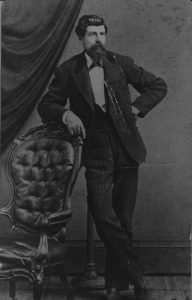
Fernando Tico
Fernando Tico

The entire Ojai Valley of over 17,000 acres was once an outright gift of the Mexican government to a prominent Ventura man, Don Fernando Tico. It should be added, too, that in the ensuing years the Ojai Valley was sold and resold for sharply advancing prices of approximately 45 cents to 62 cents, and then one dollar an acre!

The Ojai Valley had long been in the possession of Mission San Buenaventura when the Mexican government, in 1833, secularized (confiscated) all Mission property. In 1837 “Ranch Ojay” was granted to Don Fernando Tico, who held a high appointive position in the civil government of the Ventura area.

Fernando Tico built a little house in, what is now, the eastern part of the present city of Ojai and lived there some years. But he soon found that he was “land poor”. Taxes were too high. For that reason he even refused an additional gift of the Rancho Santa Ana, which was offered to him by Governor Alvarado. He moved back to Ventura, after selling the entire valley for $7,500 to Henry Storrow Carnes of Santa Barbara. In 1856, Carnes sold Rancho Ojay to Juan Camarillo for $10,000.

Juan Camarillo had come from Mexico in 1834 and was a successful merchant in Santa Barbara. He had soon begun buying and selling land grants, one of which was the Rancho Ojay. After holding it for eight years, he sold it in 1864 for $17,754 to John Bartlett.

It might be said that year 1864 marked the first subdivision of the Ojai. Four days after he purchased the land, Bartlett sold one-third to John B. Church for $6,000 and two-thirds to John Wyeth for $12,000. A month later Church and Wyeth sold half the valley to Charles H. Russell and Henry M. Alexander. These gentlemen bought the rest of the grant in the same year, and in 1868 the entire Ojai Valley was reunited again when it was sold to John P. Green, acting as attorney for Thomas A. Scott, former Assistant Secretary of War under President Lincoln.

There were no roads here when Ayers arrived

The following article was printed in the Ojai Valley News on Oct. 8, 1969; Page D-6.  It is reprinted here with their permission. We have made several minor adjustments to update the article.

There were no roads here when Ayers arrived by Ed Wenig

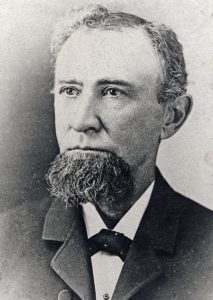
Robert Ayers
Robert Ayers

It is hard to visualize Robert Ayers, his wife, and their seven children making their way into the roadless Ojai Valley of 1868, over a hundred [and fifty] years ago, as the first American family to settle in the valley.

After staying a short time in the old Tico adobe, Robert Ayers bought a ranch in the Upper Ojai. At that time the Upper Valley was the more desirable of the two valleys on account of the level, rich land, with abundant water flowing through it.

Four years later in 1872 Ayers bought a 400 acre ranch in the Lower Valley which extended north to the mountains from what is now Soule Park Golf course. Then in 1887 he sold this property and bought the 7,000-acre Casitas Ranch on which he raised some of the finest race horses in the county.

Ayers had come to California in 1850. After two years of gold mining, in which he had been exceedingly successful, he brought his family to California from the east, and settled in Sonoma County, not far from Petaluma. Here he farmed, built and operated the Washoe Hotel, and acted as postmaster of Stony Point.

The Ayers family were truly pioneers when they arrived in the Ojai Valley in 1868. There was no town of Nordhoff and no grade road from Ventura. Ventura County did not exist as a political unit, but was part of Santa Barbara County.

Six years later in 1874, we find the names of Mrs. and Robert Ayers and their daughter, Agnes, on the guest list of the promotional ball sponsored by R. G. Surdam and A. W. Blumberg to arouse interest in the establishment of a town which was later to be named Nordhoff [now Ojai].

Robert Ayers organized the first Ojai Grange in 1875, as a part of the national organization of farmers which had been started eight years before as the “Patrons of Husbandry”, and whose national membership numbered some 750,000 members. Soon some 20 prominent Ojai Valley farmers belonged to the local Grange. Robert Ayers provided the organization with a building in which they could store flour, potatoes, coffee, sugar, and soap that had been shipped from San Francisco.

Ayers served as county supervisor from 1885 to 1889, during which time he planned and constructed part of the first grade road from Ventura to Ojai.

Although Mr. and Mrs. Robert Ayers and their family of seven children have long since passed away, there are many descendants. Among the Ayers’ grandchildren who live[d] in the Ojai Valley are Frank and Kenneth Ayers, and Mrs. William Suytar. [Today there are no descendants of the Ayers living in the valley.]

PATH OF FLAMES MARKED BY BARE HILLS AND RUIN (ARTICLE #2)

PATH OF FLAMES MARKED BY BARE HILLS AND RUIN (ARTICLE #2)

There were two articles published on the front page of THE OJAI on Friday, June 22, 1917. THE OJAI is now the Ojai Valley News. The first article was posted on OjaiHistory.com on Sept. 23, 2016 with their permission. Following is the second article, posted with the approval of the Ojai Valley News too. The author is unknown.

Courageous Hearts Bravely Face Situation, With Hopefulness for an Even Greater Ojai, Inspired by Mr. Libbey’s Telegram of Sympathy and Cheer

Out of the ruin and desolation wrought by the greatest disaster in the history of all Southern California will arise a greater Ojai. The indomitable will of our citizens, bolstered up by the good offices of such men as E. D. Libbey, Chas. M. Pratt, W. M. Ladd, O. W. Robertson, Geo. O. Carpenter, F. H. Osgood and many others, has so willed it.

But the first thoughts of our people turned to the homeless and suffering–the refugee victims of the great catastrophy. While the embers were still smoking on the site of leveled homes, where the bare chimneys stood as monuments of the untoward disaster, and while the firelines in the hills about us still held the brawn and bravery of the community fighting for the mastery with tireless zeal, the Men’s League began to act, and with what grand and noble purposes they labored, and the good accomplished, may be gleaned from the following report of the secretary:

EMERGENCY RELIEF COM.

Meetings of the Executive Com. of the Men’s League were held at the Boyd Club Monday and Tuesday afternoons. A special Relief Committee was appointed as follows:

Harrison Wilson, chairman.
Boyd Gabbert, secretary-treasurer.
J. J. Burke
G. H. Hickey
S. D. Thacher

This committee was authorized to collect funds and to disburse them for the good of those suffering from the recent fire.

The chambers of commerce of Los Angeles, Oxnard, Ventura, Santa Barbara, and other cities, have been requested to act as treasurers for relief funds which may be subscribed by people in their various localities, and to notify their local newspapers to this effect, remitting funds thus collected to the Ojai committee.

The Emergency Committee has established its headquarters in the office of the Ojai Realty Co. (Burke & Gabbert) and have met daily to work out plans for effective action. They have posted the following notice on the inside window, which represents the spirit in which they propose to work:

Consult us freely if we can be of
any use, to you or anybody else.
We are here to help.
Don’t be backwards.
We are ready to act at once.

NOBLE WOMEN TO THE FORE

The co-operation of the Women’s Club has been cordially given. All supplies of garments, bedding, utensils, etc., may be left at the clubhouse, and applications for such things may be left there.

Money subscriptions may be left with or sent to Mr. Gabbert, and requests for aid of any kind should be made at headquarters. Anyone will be welcome to state his or her own difficulties, or the needs of him or herself. The committee is anxious to aid everyone and to handle applications as confidentially as possible.

The Ojai State Bank is ready to make special loans or longer time than usual and at lower rate of interest.

FOR A GREATER OJAI

The committee is very anxious to help in rebuilding and hope they will be able to help every citizen of the Ojai who was burned out, back to as good a position as he was in before the fire. The committee is specially interested in the rebuilding and to have all structures built in the best possible taste. They hope to consult Mr. Requa or other competent architect in regard even to the simplest buildings, and they beg everyone who contemplates building without any assistance to consult with them, without charge, in order to obtain such architectural help as may be practicable.

It is hoped that the dreadful disaster of the fire may thus in many ways prove a blessing to the people of the Ojai, making it a better and more beautiful region than ever before, and the committee begs co-operation to this end.

The committee will cordially welcome at their headquarters, at all times anyone who has any suggestions to make as to ways in which the committee may be useful, or anyone who can tell of the need or special suffering of others.

No one should think of this help which the committee and the subscribers to the fund are giving as in any sense charity. It is merely ordinary neighborly helpfulness, such as any of us would be glad to receive. It is really a kind of mutual insurance whereby those who have not suffered desperately bear part of the burden of those who have lost heavily.

PATH OF FLAMES MARKED BY BARE HILLS AND RUIN (ARTICLE #1)

PATH OF FLAMES MARKED BY BARE HILLS AND RUIN (Article #1)

There were two articles published on the front page of THE OJAI on Friday, June 22, 1917. THE OJAI is now the Ojai Valley News. The first article is reprinted here with their permission. The author is unknown. The second article will be posted on this site at a later date.

Where the Fighting was Fiercest Along Great Battleline of Flame, with Figures, Facts and Fancies Concerning the Devastating Disaster

In our last issue we were only able to refer briefly to the devastating fire which with almost resistless force swept the adjacent hills for miles, leaving the watershed of a green forest reserve bleak and barren; then lashed into fury by a terrific gale, shot into the valley by leaps and bounds, leaving in its wake a checkered area of ruins, where a short time before stood the homes of our citizens, or the rich fruitage of orchard and field.

And even now, no word picture can be traced upon paper that would adequately and accurately portray scenes and incidents following closely the first realization that the civic center was in the lurid path of danger. It was the noon hour, or thereabouts, when the contingent of Ojai’s heroic fighters headed for the fireline in the Matilija, where the first struggle for mastery over the relentless fire demon was staged by our home guards and citizens generally, although at Wheeler’s a brave band of sixteen were at that moment facing a hell of fire, which commanded a position cutting off possible assistance, having eaten its way through the north fork, over and along the ridges, at a point near the new bridge at the turn leading to Matilija Springs, jumped into the canyon, while another lurid line reached out towards Fred Sheldon’s and the more open valleys beyond, until shooting hither and yon the billows of flame penetrated to and beyond Lyon’s Springs. Even then the hot breath from the seething furnace had not shaken us in our deep-seated sense of security. Men, women and children watched the rising pillar of smoke blacken and broaden without fear or apprehension, little dreaming that a few hours later the somber hues would be reflected in a bright red glare up and down the post office tower from the Ojai Avenue and Signal St. sides, with ominous significance.

It was at about this time that reports passed from lip to lip, highly tinged with exaggeration—Lyon’s Springs, rumor said, was burned and that Mrs. Lyon had perished in the flames; that the Sheldon place was in ashes and sixteen women and children were hemmed in at Wheelers, the latter statement being true. Then followed the terrorizing news that the Farnum place was in ashes and that the Lamb house did not burn and the family was safe, Mrs. Land and a few days old infant, with the nurse, finding refuge in a near field. The infant has since died, and the death of the nurse from shock was reported early in the week in these columns.

Forest Ranger Bald, at one time hemmed in by the fire at Wheelers, made his way to Ojai, reaching here almost exhausted at about 4 o’clock Saturday afternoon, to get in communication with Santa Barbara forest service station. The telephone line at Wheeler’s going out of commission 15 minutes after the first sweep of flames, but more particularly to get a line on the situation here. He found that most of the available men were fighting in the Matilija, at Fred Sneldon’s and in the vicinity of Cozy Dell and Loring Farnum’s. When asked his opinion of the situation here, he said it was very grave, and immediately began to muster a fighting force here and to get some of the 150 or more men back from the hills. It was then that the first real alarm was felt, and only shared in by a few. But as the moments flew by the menace grew, and with the approach of dusk the threatening tide of fire was rolling onward, nearer and nearer. After the Farnum home had been wiped out, the word passed along that the beautiful Sinclair home was doomed, and from the tower an appalling sight fairly blanched the faces of those who watched. A little before 7 o’clock, machine after machine rolled in from Ventura, in response to the call for aid to move out the women and children, and a little later Santa Paula got the startling message: “Ojai is doomed” and the response was immediate. At 7 o’clock, or a little later, a terrific wind added to the fury of the conflagration, which had divided and spread, reaching the southward to Sid Graham’s and beyond, cutting off escape in that direction and thereafter, for hours, cart loaded with terrified refugees sought safety in Santa Paula and Ventura via Sulphur Mountain Springs, until, so far as known, only Mrs. Hudlburg, Mrs. Munger, Mrs. Gallantine and Mrs. Russell remained, all refusing to go, but some time after midnight Claude Gallantine forced his mother out although at that hour most of the carnage had been done.

Before 9 o’clock a perfect whirlwind of fire was roaring through the northern, northwestern and western portion of the village with freakish, uneven strides, refusing to be conquered, the the cry, “we are doomed!” on many tongues, or reflected in the faces of those upon the street, and while it seemed a bedlam with whirring , honking cars, there was but little disorder and no hysteria when the excitement and danger was greatest, although the scene was most appalling to the clearest heads and stoutest hearts.

Fanned by the gale the flames shot upward from base and brow of the hills beyond the Foothills hundreds of feet, and the drop into the valley was swift and sudden. The destruction of property was just as rapid. When the Foothills hotel formed a pyramid of fire, with the Robertson and Sinclair homes in ruins, the work of havoc had begun in the valley. The streets were carpeted with ashes and cinders like glaring torches hurtled through the air, starting fresh fires far from the parent body of flame. Its early entry into the village was heralded by the report that the Hudlburg home was afire, to this was soon added Judge Wilson’s, but neither had to see his home and sit upon the porch (where a chair had caught fire and gone out) before he would believe it.

But there was still an abundance of costly fuel for the flames, which ate their way into the heart of the residence section, leveling the homes of F. H. Osgood, A. Rudolph, R. P. Menefee, S. L. Smith, D. D. Schurman, G. W. Mallory, Mrs. F. Weir, Mrs. B. S. Stewart, John King, John Timms, Jim Fraser, Geo. Foreman, Morris Cota, P. A. Crampton, C. A. Stewart, O. H. Busch, Mrs. W. L. and Clarence McKee, Mrs. T. G. Gabbert, Mrs. Wermuth, Frank Wolfe, Frank Kelley, C. C. VanFleet, P. K. Miller, Mrs. Ella Miller, G. B. Turner, Ed. Haas, Boyd Gabbert, Chas. Gibson, A. W. Helm, and further north and east those home of Jack Edwards, Dave Warner and Mrs. Rich. In the work of destruction on the hill and the flat below, Dr. Van Patten, Fannie Johnson, Miss Draper and Miss Scott shared the same fate.

Sweeping through Libbey park, the fire reached the high school grounds and reduced to ashes the Manual Arts building, leaving the main building and Domestic Science building to pounce upon the home of W. W. Bristol, the Bristol private school and Presbyterian manse, all being destroyed, while opposite, across the highway, the new residence of John Flanagan, not then occupied, and S. D. Nill escaped, after scorching shrubbery and burning paths around the houses. How the Kenworthy home in the open field south of the high school escaped, is one of the mysteries of the freakish fire. It was burned bare to the house and out buildings, but in spite of the wind the family conquered in the desperate fight. The escape of the Ojai Inn was just as miraculous, although mighty hard fighting was in progress in that quarter, and the fire was kept at bay along the west line of Ventura street, and little damage was done in that entire section of town, but close shaves were many and frequent during the rain of fire and reign of terror.

When a cinder-torch dropped into Frank Wolfe’s eucalyptus grove, sown to grain, short work wa made of the task of wiping out the home, and crossing over to Hugh Clark’s barn quickly reduced to an ash heap, clearing the yard of a valuable collection of wagons, buggies, ranch and road machinery. Tom Clark’s t * o tally-ho coaches were in the ruined area. In the tool house were stored Bill Clark’s fine saddle and Chas. Brady’s tool chest—now a scrap heap.

From there the fire swept down the alley between the Drumgold cottages and Drown place, burning outbuildings of Mr. Findley; setting fire to Willard William’s woodpile, burning our portable hen roost and charring the back-porch railing of the house, but the entire row was saved through the heroic efforts of Andy Crowe, who was on the job all the time.

The successful struggle to save Taylor and Clark homes and the garage, with the fighting sentinels back of the business houses, and on top of them, saved the entire row and the arcades, and probably about everything else now most happily in sight.

At that moment, all north of Ojai avenue and to the west was baptized in flames—the buildings heretofore mentioned, with the Baptist and Catholic churches, barns, garages, etc., included, were scattered heaps of smoking, blazing ruins, and that the village was not laid waste completely is an incident entitled to a place with the miracles.

An abundance of water, judiciously applied, backed by a strong fighting force, saved the Hermitage ranch of the Orr estate and the Fordyce place. Chas. Orr’s loss was confined to orchards and apirary, and Fordyce lost a line of flume along with the orchard loss.

Water also save Judge Daly, Mrs. Gardner, the Stetsons and others. The Limonerie firefighters numbering 35 accomplished heroic work on and near the Orr place, and on Sunday were hurried to Wheelers to relieve the high tension, it being the first outside help to reach that blazing inferno, where Forest Range Reyes, with a determined but inexperienced squad of employees of the Springs, and guests, including Webb Wilcox and his plucky wife, made a name for himself that will go down in history. Jacinto is a demon of the fire line, and the work done by Geo. Bald, his son Howard and Bert Cooper—all rangers—was of high order of efficiency, and Geo. Macleod, int the rural carrier service, aided loyally.

And the women of the Red Cross, and others—God bless them!—how they worked to sustain the firefighters! Mrs. Wilda Church kept open house for days, preparing food. Over 600 meals were carried by messengers to the exhausted men.

There wa not busier place—not even where flames were the thickest—than the telephone office. Miss Lewis, local manager, was at her post of duty, assisted by Miss Myrtle McQuiston when the excitement was at its zeneth, and a perfect bedlam of calls kept the wires hot. These young ladies kept their mental faculties clear and hands and tongues busy, but the strain was terrible, and when the danger was over Miss Lewis suffered a partial collapse, and Miss Ethel Dear, of Fillmore, has been assisting at the board for several days, and Miss Gifford is on duty for her regular shifts. Saturday night Mrs. Sam Hudlburg, former manager, came up from Ventura to do relief work, and was on duty when the fire burned brightest and when the shingles were hottest. All honor to there brave young women, one and all.

The work of Santa Paula and Ventura was the sort that makes mankind more akin. The response to the dry distress was instant and the efforts were unceasing. The honor roll is too long for publication, but Ojai is too deeply grateful to find expression in words. They inspired courage: they threw open their homes to the flood of refugees. None were neglected. Let us not forget.

THE INSURANCE

With the ruins of many homes still smoking, President E. W. Gerry, Secretary L. P. Hathaway and John Burson, representing the Ventura County Mutual Fire Insurance Co., arrived on the scene Tuesday, and without any quibbling passed out checks to the policy holders of the full amount of the risks, as follows:
C. A. Stewart…………………………………$1100
G. W. Mallory……………………………………1400
G. B. Turner………………………………………3000
R. P. Menefee……………………………………1550
Boyd E. Gabbert…………………………………750
Mrs. E. H. Hass…………………………………..800
Presbyterian Manse…………………………1800
Dr. P. S. Van Patten………………………….1000
F. A. Crampton…………………………………..1400
W. W. Bristol……………………………………….400
John Timms………………………………………….500
F. J. Bates (3 res.)……………………………3200
Mrs. Ceorgena Kelley……………………….4500
Baptist Church…………………………………….600
Total paid…………………………………….22,000
Frank E. Wolfe, insured for $1300—not adjusted as yet.
Boyd E. Gabbert is the legal agent and is fully justified in feeling proud of the prompt action of his company.

Representatives of five insurance companies—the Aetna, Hartford, Firemens Fund, N. Y. Union and Home—have been busy since the fire adjusting losses, the following are the fortunate policy holders, with the amount of insurance, several having more than one policy, covering different classes of property, the figures being in the aggregate.
O. H. Busch, $1100
Olive L. Bristol, $3750
Charlotte S. Draper, $2500
Loring Farnum, $5650
Fred W. Hawes, $1500
Edward H. Hass, $1500
Krull & Roeper, $800
J. B. King, $500
R. H. Miller, $1000
Geo. L. Marsh, $1000
P. K. Miller, $1000
John Meiners heirs, $1000
R. P. Menefee, $800
F. H. Osgood, $8800
Ojai Improvement Co., $37,650
Lucy Rudolph, $2200
Louis Roeper, $500
C. S. Rich, $2400
Harriet Robinson, $3000
Grace Sinclair, $10,400
Mrs. B. S. Stewart, $2000
High school, $3000
D. D. Schurman, $1400
Mary N. Smith, $2700
Henry Teideman, $200
Phillip S. Van Patten, $5500
Emily A. Van Patten, $1000
Frank E. Wolfe, $300
Susan D. Weir, $700
David Warner, $1000
Isabella Warmuth, $800
Total $107,100