“Nordhoff vs. Ojai”

This article first appeared in the Ojai Valley News in the October 22, 1969 edition. It is reprinted here with their permission. The author is Ed Wenig.

“Nordhoff vs. Ojai
by
Ed Wenig

Legend has that Mrs. A.W. Blumberg, wife of the builder of the first hotel in the Ojai Valley in 1874, insisted on naming the proposed new town “NORDHOFF” because she said, Charles Nordhoff had called attention to the valley. Husband A.W. Blumberg and promoter R.G. Surdam graciously went along with the suggestion.

Nordhoff did write much about California in a book titled “CALIFORNIA For Health, Pleasure and Residence”, but Ojai Valley was not mentioned. He also wrote for newspapers and magazines and, it is said wrote about the valley. The claim is controversial and has not been substantiated, in the view of historians of recent times.

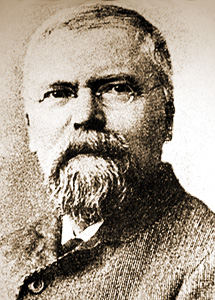
CHARLES NORDHOFF (1830-1901)

In April 1894, Charles Nordhoff did register at the Gally Cottages, and a few days later lectured at the Congregational Church in Nordhoff on “OLD TIMES IN CALIFORNIA.” The local newspaper reported in two columns everything Nordhoff remembered, but he apparently said nothing about visiting the valley before the town was named for him.

In 1894, the people of Ojai Valley were really stirred up about the name “Nordhoff,” for the only town in the valley. The editor of “The Ojai” suggested in an editorial that the matter had been fully discussed, and that every man, woman, and child in the two valleys, resident or visitor, should be polled. The result of such an election would determine whether the question should be forever dropped, or the proper steps be taken to have the name changed.

Feelings run high

Letters literally poured into the editor of “The Ojai” for and against changing the name of the town. Feelings ran high. In a later editorial the editor gave a mild admonition that letters on the subject should be “cleanly worded communications intended for the common good.”

Those who favored changing the name NORDHOFF to OJAI argued that postal clerks throughout the nation were mistaking Nordhoff for Norwalk; that people outside of the valley were confused as to what the post office address really was; that Ojai Valley was losing the effect of much advertising by having another name associated with Ojai; that the name Ojai was unique, the only name of its kind in the whole wide world! One petition was even circulated in east Ojai Valley for the establishment of a new town in the valley to be called “Ojai”.

Those who opposed the name change explained the “Nordhoff” was the name chosen by the people who founded the town 20 years before in honor of Charles Nordhoff, New York writer and traveler, who, they said, had mentioned the Ojai Valley in a newspaper article; that “Nordhoff” had too long been attached to the location to cast it aside unceremoniously.

Twenty-three years later, without much fanfare, “The Ojai”, on March 31, 1917, carried this notice under the Headline: “Now it’s Ojai”: “This telegram from Washington is self-explanatory. H.R. MORSE, FOOTHILLS HOTEL, YOU MAY ANNOUNCE CHANGE OF NAME FROM NORDHOFF TO OJAI. BEST WISHES. (SIGNED) JAMES D. PHELAN, U. S. SENATOR.”

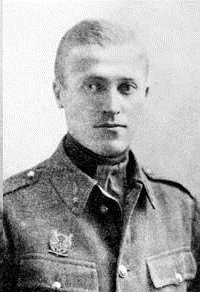
Footnote: Those who have read “Mutiny on the Bounty” will be interested to know that its co-author, Charles Bernard Nordhoff, who was a student at Thacher School in 1898-1899, was the grandson of the Charles Nordhoff for whom the town was named.

Charles B. Nordhoff in 1918.

SEARCH AND RESCUE TEAM ORGANIZATION UNDERWAY

The following article first appeared on the front page of the Thursday, November 28, 1957 edition of “THE OJAI”. “THE OJAI” is now the “Ojai Valley News”. It is reprinted here with their permission. The author is unknown.

SEARCH AND RESCUE TEAM ORGANIZATION UNDERWAY

The first steps in organizing an Ojai Search and Rescue Team to aid in searching for persons lost in Ventura County’s wilderness areas were taken Saturday evening by a small group of Valley men experienced in riding and hiking in the back country.

Prompted by the two recent deaths of persons lost in the Ojai area, the group met at the Sarzotti Park scouthouse to formulate the basic plans for an organization trained to cope with all types of search and rescue operations.

Although specifically designated as an independent team, not directly connected with any particular law enforcement or government agency, the unit would be at the disposal of any such agency needing its services.

The team would be divided into mounted (horse) and foot groups with each having a separate experienced and selected “special” unit.

The “general” groups would be open to anyone wishing to participate but would be used only for searches in the immediate Ojai Valley area during daylight hours. No special equipment would be required and it is expected that organizations such as the Boy Scouts, Ojai Trails Association, and Thacher School would join as individual units.

The “special” mounted and foot units will be limited to persons experienced in riding or hiking in the mountains and those with their own equipment for remaining in the back country from one to three days. This membership will also be limited to persons with their own trailering facilities and those who are prepared to leave their employment on short notice for a period of from one to three days.

These “special” units would be called upon for search or rescue operations in isolated areas, regardless of season or time of day or night and must be prepared to reach a base camp with their own transportation.

Neither group would operate as a “posse” or have any blanket law enforcement powers.

In any search and rescue operations in Ventura County’s huge unincorporated regions, the organization would work directly under Capt. Guy Fremlin of the sheriff’s office, who was recently appointed to head all such operations in the county.

Representatives of the Ojai Valley Search and Rescue team met with Capt. Fremlin earlier to work out details of cooperation between his office and the team.

The members of the “special” foot unit will probably be taken from experienced Explorer and Sea Scout groups and supplemented with adult leaders.

It is also hoped that a Scout mobile canteen, capable of feeding up to 300 people, will be made available for use at base camps, and that a separate Red Cross unit can be added later. All members of the “special” units will be urged to take or renew Red Cross first aid training.

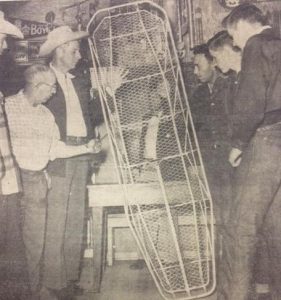
The organization also plans to accumulate its own special rescue equipment and already has obtained a “basket-type” stretcher for carrying injured persons out of mountainous areas. Donations may be sought at a later date to help increase the amount of equipment.

A BASKET-STRETCHER of the type used to carry injured persons out of mountain areas is examined by a group of Valley men meeting last Saturday evening to organize an Ojai Search and Rescue Team to aid in hunting for lost persons n Ventura County. The stretcher was donated to the new group by a local scout troop. Applications are now being sought for membership in the Team and will be divided into mounted and foot units. An attempt is being made to organize the units on the basis of ability to provide immediate aid to any county agency needing help in search or rescue operations. From left to right are: Jack Huyler, Bill Bowie, Jesse Kahle, Frank Rio (behind stretcher), Ado Ruiz, Dwayne Bower, and Bud Bower. The Ojai Staff Photo

A series of practice drills for the “special” units will probably be held each year with simulated searches into the mountain areas.

Saturday’s organizational meeting resulted in creation of a table of organization for the team in which at least three persons were named to each office so as to guarantee uninterrupted operation should key personnel be unavailable at the time of a search.

Heading the overall operation of the team will be William Bowie, Ado Ruiz, and Bill Klamser, Jr. The mounted groups will be under Jack Huyler, Bud Bower, Gene Meadows and Jesse Kahle and Bowie said that leaders of the foot groups will be announced later.

A telephone system of relaying calls of members was established so that once the initial call from Capt. Fremlin or some other agency reaches the Ojai Police Department, a complete mobilization of the team can be made on short notice.

The team will also make itself available to Ojai area civil defense director James Alcorn, for use in the event of any major disaster in this area.

Application forms along with letters of information about the team will be distributed late this week and may be obtained at the Ojai city Hall or the Ojai Publishing Co. by anyone interested in joining the organization. Further information on the team may be had by phoning any of the three organizational directors listed above.

Ojai was ‘torn apart and rebuilt’

This article first appeared in the August 26, 1970 edition of the Ojai Valley News. It is reprinted here with their permission. The author is Ed Wenig.

Ojai was ‘torn apart and rebuilt’

(Editor’s note: this is the second in a series of articles by historian Ed Wenig on Civic Center Park and the man responsible for its gift “to the people of the Ojai Valley” — Edward Libbey).

On September 1, 1916, THE OJAI printed an editorial from the Ventura Free Press, written by Editor D. J. Reese, who had attended the Men’s League Banquet in March at the Foothills Hotel:

“Some morning, not far distant, the village of Nordhoff is going to wake up and find itself famous. The work being done in that section just now would make the man who has known Nordhoff of old rub his eyes in astonishment if he was brought into the place suddenly. Great things are in store no doubt. The town has been torn apart and several sections have been removed hither and yon. There has been a general clearing up of everything, and everybody has an expectant look as though wondering what will happen next. The main street has been piled full of terra cotta brick, and no one seems to know what is doing. Old landmarks like the Clark stables and the Ojai Inn have vanished as before a Kansas cyclone. Only the beautiful oaks, and here and there a substantial house like the bank or the clubhouse or the Nordhoff fountain and splendid Ojai atmosphere seem to be left. Something is surely doing. Ask what it is and the Nordhoffite will throw up his hands and mention the name of Libbey. You hear about Libbey every time you ask a question. Everywhere you go you note that somebody is working hard at something or other in digging ditches or burying water pipe or clearing underbrush or building massive and magnificent cobble walls. Why, it is to be another Montecito, you are told . . . “The people there are to be congratulated that they have a Libbey who has taken an interest in their affairs. It is to be hoped they will give him free rein.”

Vast Land Holdings

At an Ojai Valley Men’s League banquet at the Foothills Hotel J. J. Burke, speaking of improvements, told of a well of Mr. Libbey’s which “will pump at least 65 inches, and if Mr. Libbey’s plans materialize he will spend $20,000 in getting the water to his ranch. . . . The old Ojai Inn and all but one of the Berry Villa buildings have been torn down or moved away, making room for more extensive improvements in the future. Through the generosity of Mr. Libbey, Signal Street was cut through and graded to the railroad.”

In the spring of 1916 Libbey was reported to be visiting his friend, H. T. Sinclair and discussing with Mr. Thacher, Colonel Wilson and W. W. Bristol “sundry matters of importance to the community.”

On June 9, 1916 it was announced that E. D. Libbey had bought 200 more acres to add to his previous 300-acre property. “Among the early improvements will be the laying of a water main from his well on the Gally tract to his large holdings. And that is not all, as the entire square upon which once stood the Ojai Inn, is to be improved in a manner that augurs well for the future of Nordhoff, which is good news to the entire community. Mr. H. T. Sinclair has been taken into Mr. Libbey’s confidence and will be the directing head during his absence. Let us be glad, as well as thankful for so generous a promoter as E. D. Libbey.”

On June 16, 1916, we are told that Mr. Libbey has bought the last parcel of privately owned land in what is now the Civic Park. In the local paper, “The plans Mr. Libbey is making to benefit both the town and the Valley has met with the highest approbation of the committee and the cooperation of the League in every way is assured.”

It was reported on June 30 that the Berry Villa, “an historical step-sister of the Ojai Inn, now a demolished antiquity,” had been torn down and the lumber hauled away.

By July 14, fifty men in one crew were working on the Libbey pay roll. Tom Clark destroyed his barn north of his livery stable and constructed a rock wall for a modern garage. This wall can still be seen as part of the Village Drug Store.

Early in November, Architect Requa, of the San Diego architectural firm of Mead and Requa, went to Toledo and got full approval of the plans for the renovation of the main street of Nordhoff. The local newspaper reported, “The post office tower, penetrating the lower heavens 65 feet is to be a reality. There are many features that we shall be delighted to prattle about when fully assured that the architect has removed the censorship.”

In March, 1917, representatives of the Men’s League met with Mr. Libbey. A corporation was formed under the name of THE OJAI CIVIC ASSOCIATION. The incorporators were E. D. Libbey, S. D. Thacher, J. J. Burke, Harrison Wilson, H. T. Sinclair, A. A. Garland, and H. R. Cole. Said the editor of the paper: “The initial purpose of the corporation is to assume title to the valuable property acquired by gift from Mr. Libbey . . . This beautiful park and the tennis courts, covering more than seven acres, is to become the property of the people of Nordhoff and the Ojai Valley.

Concurrent with the changes in the appearance of the town of Nordhoff came a popular move to change the name of the village to Ojai. A petition was circulated under the auspices of Supervisor Tom Clark requesting the name change, and received so many signatures that it was five feet long by the time H. D. Morse, manager of the Foothills Hotel, sent it to Washington D. C. In March, 1917, Senator James D. Phelan sent the following telegram: “You may announce the change of name from Nordhoff to Ojai.”

Early School Days in Valley Recalled for Clara Smith’s Party

The following article first appeared on the front page of the Friday, May 24, 1935 edition of “The Ojai.” “The Ojai” is now the “Ojai Valley News.” It is reprinted here with their permission. The author is unknown.

Early School Days in Valley Recalled for Clara Smith’s Party

A committee of the grammar school Junior Red Cross attempted to compile a history of the schools of the Nordhoff district, for inclusion in the memory book to be presented to Miss Clara Smith a the banquet celebrating her 50 years of teaching Tuesday evening. But Mrs. Inez T. Sheldon, principal of the school, reports the task a difficult one because memories conflicted. However the following was put together as the best record that could be secured:

First School in Valley

In the extreme east at the foot of the grade on the left going toward Santa Paula H. J. Dennison taught perhaps a dozen children even earlier than 1869. A path up the grade led to the spring just beyond the present first sightseeing stop (Lookout Point) almost to the top of the grade. The big boys carried water if the barrel became empty before the appointed time to haul the next barrel full.

The district then comprised all of the present Matilija, Upper Ojai, and Lower Ojai valleys. The school was laughingly called “The Sagebrush Academy.” The last teacher there whose name no one seems willing to recall was at any rate a very loyal Democrat. He presided strictly—chastising the children of Democrats lightly with a pure white ruler, while little Republicans suffered under the strokes of a very black longer ruler.

In 1895 Mr. Van Curen circulated the petition to divide the district. Inez Blumberg (Mrs. J. B. Berry) and Miss Nina Soule remember Miss Skinner vividly. Earl Soule was too young but learned “his letters” in the second school, the one-room brick.

Brick School

On the present Alton L. Drown residence property, 244 Matilija Street, then an unoccupied tract, was erected the first Ojai School. The sagebrush academy was removed to the Dennison ranch, and later again to the present Upper Ojai where Mrs. E. P. Tobin is now teaching.

While the bricks were being made near the present tennis courts of the Civic Center, a small temporary shed was hastily put up on the same lot to house the school. Rough boards stood straight up and down. Horizontal boards for the roof kept out the sun. On planks facing the wall the children sat using planks against the wall for desks. But this was necessary only a short time. And the little brick school seemed verily a palace, laughingly recall the Soules, Piries, Bakers, John Larmar, and others. A. W. Blumberg made the bricks, and his daughter has an interesting souvenir—a brick on which a lion left his track. The hole from which the clay was taken may be seen to this day in the Civic Center near the railroad.

Noted Pupil

In the biography of David P. Barrows, former president of the University of California in Berkley, it is written that he learned his “ABC’s” with his little bare toes dangling over Mother Earth from rough wooden boxes in which nails had been surreptitiously placed as seats. At least this is found to be historic!

Steepleton Private School

On the present Y-T ranch, just off Grand Avenue, a mile and a half east of the village, in 1874, Mrs. Joseph Steepleton, who later taught in the new brick school, kept private school. Also in the same location as late as 1928, Frank Gerard established a private school. Both private schools were short lived. Mr. Barrows recalls many funny experiments in the old brick school. It is suggested that he be asked for his “wart yarn” when next he visits Ojai.

The Fruit Pickers

Mr. Buckman, the first county school superintendent of Ventura, was one of the first teachers in the brick building. He planted the first orange tree in this now famous valley. Also he grew strawberries to help maintain his financial independence. By getting permission from home, his pupils were permitted to go from school during school hours, to the Topa Topa ranch, (then his home), and pick his strawberries for him. Great was the jealousy of those whose parents would not permit them to stop studying their three R’s long enough to go up to the ranch to pick berries.

So few of the school registers are to be found of the old brick days that only an attempted list of the teachers there can be recorded. Miss Allen, Miss Haight, Mr. Goodman, Mr. Alvord, and Miss Hawks taught before Miss Agnes Howe, who was probably there the longest time of all. She was Miss Clara Smith’s first teacher in California.

Miss Smith had taught in Ohio but here more education for a teacher’s certificate was required so for a short period in 1884 she was a pupil in the old brick school. Thompsons, Clarks, Robinsons, Hunds, Ayers, Spencers, and others already mentioned remember those “old days.” After studying in Santa Barbara, Miss Smith returned and taught in the same brick building. Eva Bullard Myers, Bill Raddick, the Gally brothers, Sam Hudiburg, and others, were some of her pupils.

After teaching in the Ventura schools at the same time that Miss Blanche Tarr taught there, Miss Smith worked her way through the State University at Berkeley and returned to Ojai to teach three years in the new building at the corner of Montgomery and Ojai Avenue. Fred Linder, S. Beaman, and Clark Miller were pupils of hers at this period.

Brown Bungalow

When perhaps as many as 60 pupils were enrolled, it became necessary to add a little brown school, one room, on the same lot as “the new brick.” Miss Pellam taught the little people there until it was moved. George Black, Ventura County School Superintendent, and later the State Superintendent of Public Instruction, married her sister. In 1895 both schools on this site were purchased, the brick building vacated, and the little brown school moved to its present location, 570 North Montgomery, on the Snow property between Millard’s and Lafkas’.

It is interesting to note that the present Drown residence was built by J. E. Freeman in 1911, on the same brick foundation as the old school building. Captain Sheridan of the old Ojai Inn, grandfather of the Sheridan brothers, was responsible for the laying of these bricks.

The Wolf Family

The Wolf family had the first good pictures of this section. Mr. Wolf acted as a trustee of the district, and interested himself considerably in the work. Quite tragically one day his son fell from an oak on the school and was killed.

San Antonio School

Mrs. Lillian Bennett Carnes, Mrs. Margaret Hunt, the Mungers, and Ryersons, tell many fascinating stories of the first San Antonio school, located on Ojai Avenue on what is now the Edward L. Wiest property.

Thacher School

Sherman D. Thacher was refused a position there, being told to go on with his little orange grove. Thus in 1889 with only one pupil this now famous Thacher School was begun.

The Present Wood Building

The wooden grammar school building was first occupied in 1895. It was moved back on the northeast corner in 1927. The sum of $1,250 was paid for the lot. The bond issued failed by one vote at the first election, but was carried for $9,000 at the second one. Mr. Zimmerman was awarded the contract for $7,825. However the building of the assembly hall with the other incidental expenses brought the total cost to around $10,000. It was necessary to use the money obtained from the sale of the “brick school” and the “brown bungalow” plus the building fund, plus the school bonds, to meet this debt.

Miss Mabel Pendergriss was presumably the first teacher in the new school. Amy Hamlin, Eleanor Hammack, Anna Cordes, and others are recalled, but C. L. Edgerton is always remembered when anyone is asked regarding the history of the building. For ten years following the time Miss Smith taught there, Mr. Edgerton was principal.

First High School

The year 1909-10 was W. W. Bristol’s first year as the first principal of the first high school in Nordhoff. School was held with Miss Maybyn (Mrs. Howard Hall) assisting, in the upstairs of the grammar school building. Miss Ruth Forsyth assisted Mr. Bristol the second year. School was so crowded it was necessary to send some freshman to the lower floor under Mr. Edgerton’s supervision.

High School Building

May 17, 1909, there were 108 votes cast for establishing a high school, and six votes against. Of the 25 pupils that first year Edna Leslie (Mrs. Edna Grout) rated as “the best citizen”, and Grace Hobson (Mrs. Fed Smith) as “the best scholar.” The bond issue voted the following year was 151 to 8 for $20,000. Words fail to express the hot times over the proper location of what is now known as the Junior high school. The first trustees are all deceased: S. D. Thacher, F. H. Sheldon, Frank Barrows, Mr. Hobart, and Dr. Saeger. Irma Busch (Mrs. William T. Frederick), Abbie Cota Moreman, Carolyn and Thornton Wilson were in this pupil group.

Old Grammar School Building

When J. F. Linder was first trustee of the grammar school (1912-13) there were 82 children enrolled, and four teachers using all the rooms. Queen E. Kidd was principal, with Katherine Donahue, Olivia Doherty and Celia Parsons as teachers. The principal received $810, the teachers between $675 and $712.50. W. A. Goodman, Mrs. Canfield and E. L. Kreisher, up to 1919 earned $1,200. Miss Abbie Cota and Miss Edna Leslie were teaching during this period; also Mrs. Fred Burnell as Mrs. H. S. Van Tassel and as Mrs. Louise Thompson.

Miss Iris Evans graduated in the first eighth grade held in the old grammar school. In 1924 the 7th and 8th grade books were transferred to the Junior high. Her brother Jim in June, 1925, was in the first sixth grade graduating from the grammar into the Junior high school. Roscoe Ashcraft was principal both years. Miss Anna Gilbert (Mrs. Sexton) preceded him. Mrs. Hathaway and Miss Agnes Howe returned and both were principals during the time the old wooden building was in use.

Matilija

By private subscrition in 1890, W. L. Rice, carpenter and liberal contributor, built the first little Matilija school near the river bed in a lovely oak tree setting. Anna Stewart was the first teacher. The three Soper children, three Rice girls, Blumbergs, and Lopez children were the first pupils.

There were 20 different teachers in the 24 years before February 20, 1914 when in the flood the building was completely washed down stream. A small building was immediately erected on this side of the river, high and dry. It was located on the Meiners’ property a half mile from the Rice residence at the corner. Miss Mary Freeman taught here, and Mr. Krull of the present Johnson place was the Matilija trustee until his death. Four years later the building was sold to the Matilija rancho and removed while the lot reverted to the Meiners’ estate. Miss Pope leaves a very complete record of this period.

In 1918 Matilija united with Nordhoff Union grammar school district. This district averages 10 to 15 children to educate and great was their rejoicing when the school bus in 1919 regularly transferred the children to Ojai.

Nordhoff Kindergarten

In 1920, ten pupils attended the first kindergarten established in the Valley with Miss Clara Newman as the teacher. The next year, in 1921, the name was changed to Ojai Kindergarten.

Miss Matilda Knowlton (Mrs. Joe Misbeek) taught in the Boyd room at the Woman’s Club for four years with an average daily attendance of 25. Then, in 1927, Miss Ruth M. Hart (Mrs. John Recker) moved across the street into the corner room of the present stucco building.

Following is a record of the teachers and the number of kindergarten pupils since that time:

Mary A. Wharton (1928-29) 26; Alice Connely (1929-30) 26; Mrs. Gladys Raymond (1930-31) 31; Elizabeth Pell (1931-32) 23; Elizabeth Pell Wellman (1932-33) 23; Mrs. Mildred Rodgers, present teacher.

Arnaz School District

Dr. Jose Arnaz of the large Arnaz land grant in 1877 gave to the County Superintendent Buckman (formerly of the Nordhoff brick school) the use of one room in his home for a school. His second wife was Adolph Camarillo’s sister, Pet Seymour, who later became Mrs. Drake, was the teacher. Mrs. Ventura Arnaz Wagner recalls how comfortably several years were spent until John Poplin arrived and agitated for a new school building. He hauled and donated lumber as well as contributed labor to the new plant. It was, and still is (what is left of it) a mile from the cider mill (Fergerson or Arnaz home) on the Creek road a few steps down off the present highway (Fergerson grade.) During heavy rains the footbridge washes out and of course it was impossible to hold school.

Young Dick Haydock was the first teacher in this new schoolhouse. He boarded with Poplin who became clerk of the board, until Mr. Healy moved in. Very soon he “ran the school” and the teachers boarded there. His children were the only American children in school at that period.

T. O. Toland’s wife taught this school in 1888 so it probably had been opened three years. Little of note occurred after Mr. Welsh’s resignation until the fall of 1926.

By the fall of 1926 the school had grown to such extent that it became necessary to expand into the coat room. Mrs. Hubbard was the teacher in the school room while Gretchen Close taught in the coat room. However very shortly, Miss Close’s room was moved to Laidler’s grocery store in Casitas Springs. This was the living room in which were housed for a time 37 school children.

Arnaz united with Nordhoff Union grammar school district in 1927. Mr. Nye was their representative on the union board of five members. This section is in the unique position of being part of the Nordhoff Union grammar school district and the Ventura high school district. At the present time, May 1935, Arnaz uses two school buildings, the Casitas Springs buildings, and the Oak View Gardens building.

Casitas Springs School

Mr. Nye in 1927 gave the present school lots to the district with the request that the building be known as the Casitas Springs school. A one-room school was built by Mr. Hitchcock at the contract price of $2,407. Miss Hattie Conner was the first teacher with 43 children in the three grades. All the children of grades four to six were transported by bus to the Nordhoff building.

Mr. Nye was succeeded as school trustee in 1928 by Charles G. Crose, who was succeeded by Victor McMains, and now I. V. Young is trustee for the district.

The teachers in the Casitas Springs school were Hattie Conner, Mrs. Paul Woodside, and the incumbent, Miss Ruth McMillian who has held the position since January, 1930.

Nordhoff Stucco Building

The stucco building of Nordhoff grammar school was built by Johnson and Hanson of Santa Barbara. They were awarded the contract for $34,982. J. R. Brakey had the $1,600 contract for moving the old building back on the northeast corner. Heat, lights, plumbing, blackboards and furniture increased the cost to around $48,000. During Mrs. Inez T. Sheldon’s first year as principal it was found necessary to add a teacher (Mrs. Estes, the wife of the principal of the high school). The assembly hall held two classes and the next year Mrs. Murphy taught in the Boyd Club where the Little Theatre now is. Then in 1927 after the uniting of the Arnaz with Nordhoff, eight rooms of the present building were filled to overflowing. It was two years before the last three rooms were added.

The old building is entirely occupied now and there is a faculty of 18. From 150 pupils in Mr. Ashcraft’s last year, the school has grown to 589 in 1934-35.
PARKING IN OJAI A GROWING PROBLEM

The following article first appeared on the front page of “THE OJAI” in the Thursday, March 14, 1957 edition. “THE OJAI” is now the “Ojai Valley News”. The article appears here with their permission. The author is unknown.

–Auto Club Report–
PARKING IN OJAI A GROWING PROBLEM

A meager handful of Ojai citizens, including only four or five local businessmen and merchants, showed up at the Ojai Elementary school auditorium Tuesday evening for a town-hall type forum on the city’s parking problems and an extensive parking survey report compiled by the Auto Club of Southern California.

The survey, prepared after careful study of parking facilities and related problems in Ojai’s business district, was presented by Auto Club engineering and technical services director Joseph Havenner, and in brief brought out the following points:

1. Ojai, in Havenner’s opinion, is not yet ready for a parking district, such as proposed by a Chamber of Commerce Committee.
2. Ojai has an exceptionally poor street and traffic circulation setup and this must be corrected through a master plan for streets and a similar plan for installing curbs, gutters, and sidewalks in the shopping area before any actual parking program is undertaken.
3. Ojai should have a plan for controlled development of its business district, primarily to the north, and should not deviate from it.
4. Parking meters, in Havenner’s opinion, would not be practical in Ojai.
5. The rear of the Arcade district offers the best opportunities for expanded parking areas.
6. Two hour parking limits should be established in the city parking lot.
7. All possible off-street parking areas should be preserved and improved.
8. A parking committee should be established.
9. Businessmen should help police themselves and their employees on better parking habits.
10. New business buildings should be required by city law to provide certain amounts of off-street parking space.

The Auto Club survey was conducted at no charge to the city at the request of city manager J. Julien Baget last December when the question arose as to whether or not the city should participate in the C of C parking district plans.

The study was deliberately made during the pre-Christmas rush when parking facilities would be taxed to peak loads.

Careful records were made of daily usage of parking spaces, origin of cars as to whether they were local or out of town, number of parking violations, and the overall flow of traffic in the business area.

In the central shopping regions, Auto Club surveyists tabulated a total of 281 parking spaces — 198 at the curb and 83 off-street lots. Most of these were kept in use during the two day count, reaching the peak occupancy about 11 a.m. each day, and the primary demand was found to be for a short time (one hour or less) parking spaces rather than all-day or part day usage.

It was found that 67 per cent of the cars parked in the business district were registered residents of the city; 19 per cent to be Valley and county areas, and 14 per cent to outside visitors.

To the city council and planning commission officials and about 15 citizens present, Havenner emphasized that proper street alignment, continuous traffic circulation, and adequate curbs, sidewalks, and gutters were problems Ojai must solve before it tackles the actual parking situation.

“The longer you delay, the more severe the problem will get and the more its solution will cost you “, Havenner pointed out. “Your present system could not serve a greatly expanded business area because the streets are not properly aligned to handle traffic circulation.”

Illustrating the report with colored slides of Ojai traffic and various parking locations, he noted that a large potential parking area behind the Arcade buildings is not being put to use.

Havenner said he did not think Ojai would ever experience the development of major shopping centers but that business places to accommodate local needs would be ever increasing.

Asked by Lynn Rains about the parking district plans, he said that such districts are not easy to form because often the property owner is not the same person who operates a business but merely leases the site. “It can be a fair and equitable solution in some cities but I don’t think Ojai is quite ready for that kind of operation now,” Havenner added.

Summing up before a brief question and answer period. Havenner, told the small audience, “The factual findings of the study indicate that the parking problem in Ojai is not so difficult to alleviate as outward appearance would lend one to believe. The problem appears to be one of traffic management which has not kept pace with the growth of the area and the changing character of parking demand and traffic movement.

“To improve the efficiency of off-street space will require the understanding of the problems by businessmen and citizens and calls for the formation of organized leadership.

“It must be recognized that off-street facilities to be attractive to customers must be located within the block of the customer’s designation and on the same side of the street.

“Appearance is an important factor in the successful operation of off-street parking facilities. Paving and marking , cleanliness, and improvement of store access by attractive rear entrances are most important considerations.

“An immediate halt should be placed upon the establishment of new businesses without adequate provision for off-street parking needs generated by them. For the present all-day parking demand special study and local leadership must be given to locate adequate parking both off-street and at the curb in areas where this type of parking will cause a minimum blight upon the area.

“The physical obstructions caused by the arches and high curbs on the north side of Ojai avenue in the Arcade compel motorists to egress from their cars from the left side into the street, causing a traffic hazard.

“Angle parking is not advised at the curb and should be used only in low speed urban areas where parking requirements take precedence over smooth operation of through traffic.”

Havenner concluded, “Ojai’s growth had had and will continue to have serious impact on the traffic and parking problems and on the general economy of its established business district.”

During the course of the meeting he also praised Ojai’s police department for its excellent enforcement of traffic and parking regulations and commended the city for its cooperation in assisting with the survey.

A limited number of copies of the published survey in book form will be available at the city hall for merchants or others interested in the parking situation.

THE OJAI VALLEY MUSEUM AND “THE OJAI’

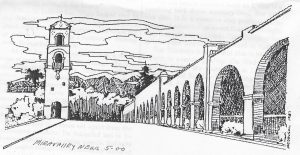
This article first appeared in the Miravalley News in May of 2000. The author is Al Warren.  The color photo was added by the Ojai Valley Museum.

THE OJAI VALLEY MUSEUM AND “THE OJAI”
by Al Warren

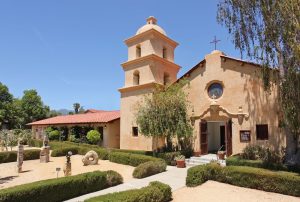
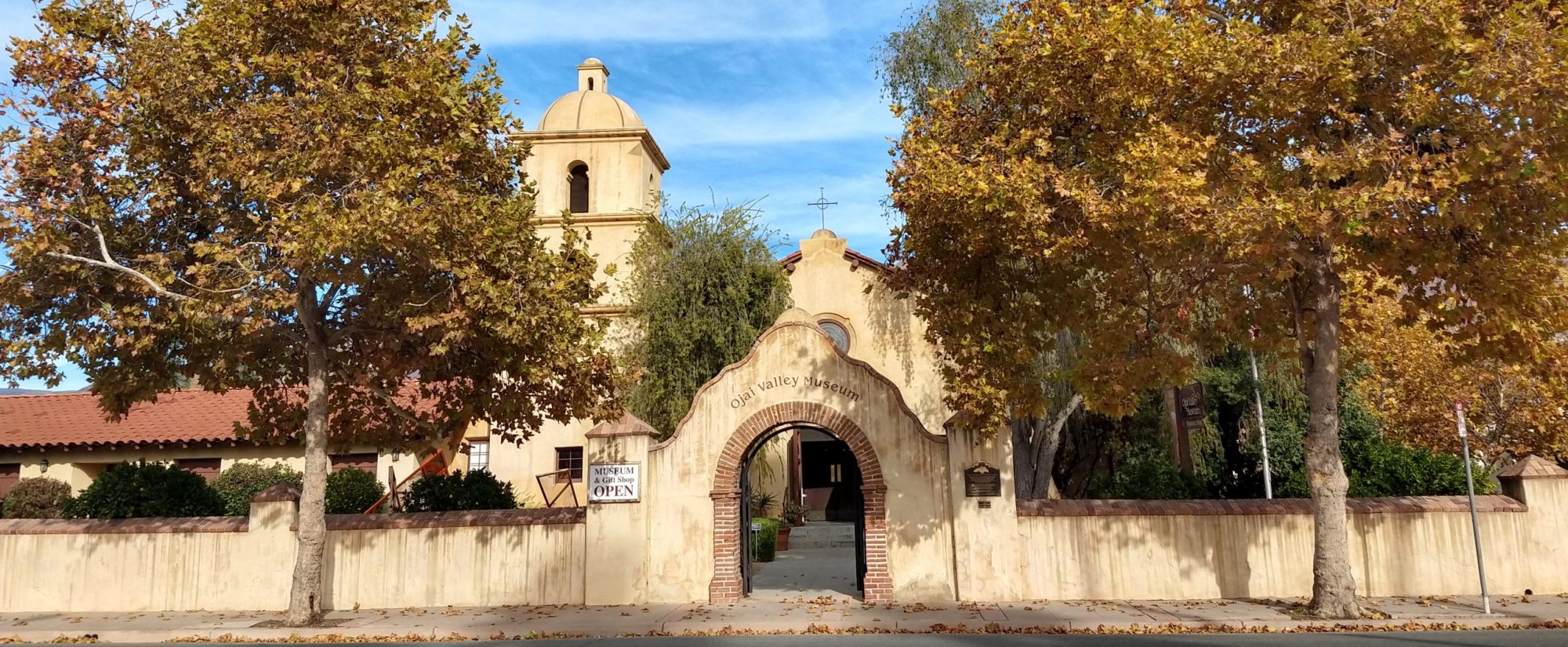
By taking just a few short steps across a sunny courtyard, you may escape the activity of Ojai Avenue and enjoy the serenity of the 18th, 19th and early 20th centuries. The locale is the Ojai Valley Museum, housed in an exquisite replica of early mission style architecture. Built as a church in 1919, the museum is the only building in Ojai on the National Register of Historic Places. A striking stained glass window and massive wooden doors adorn the front of the structure. In 1969, the Ojai Valley Historical Society was incorporated to give Ojai’s history a fitting home. After several moves, the Museum has found its home.

The “Ojai Valley Museum” is located at 130 W. Ojai Avenue in Ojai, California.

Inside is a remarkable collection of documents, artifacts, newspapers, and pictures that recreate the Ojai scene from time before the Spanish intrusion in 1542 through the early settlement years, long before the area changed its name from Nordhoff to Ojai.

Fittingly, the exhibit nearest the entrance is devoted to the earliest inhabitants of this area – the Chumash people. Tools, weapons, utensils, ornaments attest to the presence of rich Canalino/Chumash cultures. For as long ago as 2000 years well organized villages existed, including permanent sites on the Channel Islands.

Adjacent to the Chumash story is an equally well displayed collection of memorabilia recounting the history of the settlers who established the roots of this community. Names that now identify streets, schools, and parks become real people through photographs and documents that record their accomplishments. Tico, Blumberg, Pierpont, Baker, Libbey, Soule, Thacher are a few of the many who contributed to the history of the Ojai valley.

A highlight of a visit to the museum is the diorama depicting the Sespe Wilderness area. A beautifully painted backdrop surrounds lifelike representations of the wildlife and vegetation indigenous to The Sespe. The scene is breathtakingly real, including the huge boulders. Museum Director Robin Sim told me that these were man-made and added, “Real stone would be much too heavy.”

I had to believe her. They looked real to me. She assured me also that what I saw as a blank wall next to the diorama, she could see as a door to a children’s section — coming soon. Remarkable vision!

As you leave the Sespe diorama, a sculpture of real stone is visible through the rear windows of the building. This magnificent piece, “Condor Soaring”, was sculpted by Carlyle Montgomery who died in 1998. The condor appears alive. Sculpted from a 9000 pound slab of black Belgian fossilized limestone, “Condor Soaring” stands in the patio at the rear of the museum.

The Gallery is a room set apart from the permanent exhibits. Its intended use is for viewing exhibits of ongoing events. Subjects are changed periodically. Currently featured is “The Ojai”, one of the most durable and respected tennis tournaments in the world. The exhibit billed as “100 Years of Tennis” is a nostalgic tribute to the Ojai residents and organizations whose time and enthusiasm have maintained the tradition of quality tennis competition for over 100 years. Actually, the present format of single elimination matches began in 1899.

It isn’t necessary to be a tennis buff to enjoy this beautifully executed exhibit. Photographs and manikins display the gracefully inappropriate feminine tennis wear. Pictures of the players and spectators abound. The placards record the history of Ojai as well as that of tennis. Displays of old rackets and tennis balls evoke fond memories for anyone who has ever stepped on a court.

The greatest players in the world have competed on Ojai courts. The list is long: Bill Tilden, May Sutton Bundy, Helen Wills Moody, Ellsworth Vines, Pancho Gonzales, Alice Marble and Billie Jean King are among the best known, but not necessarily the best of a distinguished list.

For old tennis hackers such as I, this is a touching trek down memory lane. For anyone else, it is a creative and professionally prepared exhibit of an event that has brought very favorable attention to Ojai. Competition in “The Ojai” begins the last week of April.

Our Museum is proof that size is not necessary to assure quality. On Wednesday through Friday the doors open at 1:00 P.M. Saturday and Sunday the opening hour is 10:00 A.M. A gift shop is on the premises.

The Museum is located on the corner of Blanche Street and West Ojai and the phone number is 640 1390.

A Place for Potters

This article was published in the Winter 2018 edition of the Ojai Valley Guide magazine. It is reprinted here with their permission. All photographs are copyrighted to their respective creators, as named and credited. The content is copyright to the author. ©2018 Anca Colbert – All Rights Reserved

A Place for Potters

A rekindled interest in pottery activity around the Ojai Valley.

                                     Story by Anca Colbert

In Ojai’s history and reputation of attracting artists and creatives of all kinds we know that potters and ceramic artists have long been drawn to live and work here, in this place, this small town nestled in a heavenly mountain valley.

Naturally, Beatrice Wood’s storied life and career first comes to mind. “Beato” lived here from 1947 (when she built her house and studio in the East End) until her death in 1998, at the ripe age of 105. For many, she put Ojai on the map. She did so for this then-young art lover, freshly arrived from Paris to Los Angeles, who first came to Ojai in 1973 invited to lunch by Beatrice, who at the time was just settling into her new home in the Upper Valley, next to the Happy Valley School. That home and studio, now transformed into The Beatrice Wood Center for the Arts, welcomes visitors on pilgrimage seeking a glimpse into the famed artist’s inner and outer landscapes.

Read the rest of the article in the Ojai Magazine. 

THE ROAD TO OJAI

The following article first appeared in the Thursday, Sep. 11, 1958 (Vol. 1, No. 35) edition of THE SENTINEL. THE SENTINEL was purchased by the Ojai Valley News. The article is reprinted here with the permission of the Ojai Valley News. The author is Percy G. Watkins.

THE ROAD TO OJAI
by Percy G. Watkins

(continued from last week)

THE ROAD AT THE ARNAZ GRADE

As the road to Nordhoff (Ojai) in 1900 passed La Crosse, (near Casitas Springs), it followed the railroad tracks to pass the home of Ed Goodyear, son of the man who owned part of the Arnaz Ranch at that time.

Here the road split. The Nordhoff Road turned to cross the railroad to go up the San Antonio Creek Valley. The other road went straight up the Ventura River Valley.

After passing the Goodyear home (built like so many of the houses that were here at that time) the traveler passes a large barn which was across highway 399 from the present Rancho Arnaz Cider Mill. West of it, the road wound up to the top of the hill to the farm land of Ed Goodyear (which now belongs to Henry Olivas). Mr. Goodyear was killed on this grade a few years later after being run over by a wagon loaded with corn.

The road then proceed up the Creek past a house which belonged to a man named Amesbury. He was, I think, one of the members of the crew who was drilling the oil well Van Epps managed. This house, and the land which belonged to it was sometimes known as the Harmison Ranch. Alfalfa grew on this land. (It’s now known as the Littlefield Ranch).

The road again leads to Ranch No. 1, with its No. 1 well flowing sulphur water. Beyond the barn and shop stood the house Tom Bard built to house and feed the men associated with him in drilling California’s first drilled oil well.

Across the Creek was the Arnaz School (Oak View’s first school), which was built in 1883 and is still standing. (It is now occupied by the N. Amescua’s). Not far from this point, the road forked and the Creek Road continued on up the San Antonio Creek Valley. And the other one went up the old grade to what is now the central part of Oak View.

At this point was a row of mail boxes which marked the end of the Ventura Star Route. An old fashioned steel-perforated sign indicated the distance to Ventura and to Nordhoff by both routes. A U.S. Geodetic Survey marker stood at this point.    (to be continued)

THE ROAD FROM VENTURA TO OJAI

The following article first appeared in the Thursday, Sept. 4, 1958 (VOL. 1, NO. 34) issue of THE SENTINEL on the front page. THE SENTINEL was purchased by the Ojai Valley News. It is reprinted here with the permission of the Ojai Valley News. The author is Percy G. Watkins.

HISTORY OF THE VALLEY


Chapter Two: THE VALLEY IN 1900

(Ed. Note: This is another in a series of articles about the valley. Mr. Watkins has been a resident of the Oak View area since 1901. THE SENTINEL is highly honored to print this exclusive series.)

by Percy G. Watkins

THE ROAD FROM VENTURA TO OJAI

From Rocky Flats (Casitas Springs) north, the Ojai road followed the course of 399 to where it starts to run parallel to the railroad now. Then it crossed the tracks to stay close to it on the west ford of the San Antonio Creek. About where 399 leaves the railroad on to go up the San Antonio Creek Valley. The old road then continued about parallel with the railroad on up the Ventura River Valley.

A short distance from the ford, it crossed a private road going from the Hollingsworth Ranch House passing by La Crosse Station (near Casitas Springs) to fording the San Antonio Creek. It reached dry ground near where drying equipment was used in the processing of apricots. The apricot orchard was then south of the Hollingsworth home.

A man named Meyers (I do not know if he spelled his name that way), rented the ranch form Jack Hollingsworth, father of James Hollingsworth who lives there now. The apricot orchard was later very nearly taken away by floods.

The private road went on over the hill as does the Sulphur Mountain road now. On the left further on, where the road starts up the grade over Sulphur Mountain, was a small house with pens and some farm buildings.

Here William (Bill) Foreman lived with his wife and small children. He had horses and wagons and hauled for others—-hay, wood, etc. The place was known as “The Sheep Camp”.

This private road was also used by a Mr. Jennings, who lived where the Rocky Mountain Drilling Co. has its yards. He owned the land from there to Ranch No. 1 (now the Willet Ranch) in the Arnaz area. Here lie the remains of oil well equipment at the first summit of Sulphur Mountain road. However, the road at that time went up the canyon instead of over the present grade.

About a half mile or less up the canyon, in 1900, a crew was drilling a well with cable tools. The man in charge of this venture was a man named Van Epps, who in later years became well know in oil well drilling circles. He was killed several years ago in an oil well explosion near Fillmore. The well, of course, did not produce.

Next Week: A continuation of the road to Nordhoff (Ojai) as it proceeded past the home of Tom Bard (later U. S. Senator) and the first oil well drilled in Calif.

“DEATH VALLEY DODGE” AT THE ISIS

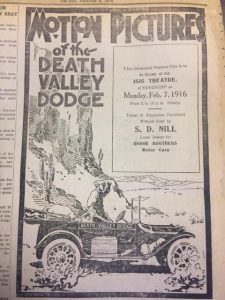
This article first appeared on the front page of the Friday, February 4, 1916 edition of THE OJAI. THE OJAI is now the Ojai Valley News. The article is reprinted here with the permission of the Ojai Valley News. The author is unknown.  The photos have been added by the Ojai Valley Museum.  

“DEATH VALLEY DODGE” AT THE ISIS

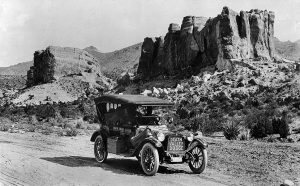
Through an arrangement made by S. D. Nill, it is now possible to see in Nordhoff, the nationally celebrated “Death Valley Dodge”. This unusual car has battled its way through every noted desert of the Southwest, has climbed inconceivably steep mountains and holds the unique double record of having been driven from below sea level to the highest point ever reached by an automobile on the Pacific Coast. It has conquered all sorts of obstructions, defying the laws of equilibrium and gravitation.

1915: Death Valley Dodge car at unknown location during 1,000 mile drive around the California desert including Death Valley.

In the motion pictures you will see a car actually turning corners on two wheels with passengers in its tonneau, racing the “Owl” a mile a minute, tearing up 35 percent grades with ease and speed, fighting its way through an inconceivably rough country where there are no roads, and climbing down rocky bluffs so steep and rough that a mountain goat would find difficulty in doing what “Death Valley Dodge” actually does before your eyes. It flashes its way through grease-wood, cactus and yucca growing to twice the height of the car, conclusively showing to what extreme limits of strength the master builders of this latest motor product have been able to install into a motor car.

These unusual pictures will be shown at the Isis Theatre of this city on Monday, Feb. 7th, from 2 to 10 p. m.

You can get free tickets by calling on S. D. Nill, the local Dodge Brothers dealer.

This ad was on the front page of THE OJAI in its Friday, February 4, 1916 edition.