Body found in Sespe area probably Manson attorney

The following article first appeared in the Wednesday, March 31, 1971 edition of “The OJAI VALLEY NEWS” on the front page. It is reprinted here with their permission. The author is unknown. The photo of Ronald Hughes was added to this article by the “Ojai Valley Museum”.

Body found in Sespe area probably Manson attorney

Ventura County sheriff’s deputies traveled to Los Angeles today to pick up dental records which will conclusively tell if the body found Saturday in the Sespe area is that of missing Manson case attorney Ronald Hughes.

Although the body is the right size and a friend has said he is “firmly of the opinion that it is Hughes,” tests conducted so far by the Sheriff’s Department and the county coroner have proved inconclusive. The body was of a large man. Hughes weighed 235 pounds.

Hughes disappeared in the remote area of the Sespe Hot Springs during a sudden storm Thanksgiving weekend. The body, found Saturday by two fishermen, lay in ice cold water about 7 miles south-east of the hot springs, the Sheriff’s Department said. The spot is in the middle of the Condor refuge near Pigeon Flat, close to the west fork of the Sespe Creek and Alder Creek.

Although search and rescue teams and a mystic-led party had combed the general hot springs area, they had not entered the region where the body was found.

“It was not searched before because the area is so rugged and the creek was up so far it was inaccessible,” a sheriff deputy said. “The area is known as the narrows. The creek runs from mountain to mountain.”

Although the fishermen found the body Saturday, it was not reported to the Sheriff’s Department until Sunday night. The body was lifted out by helicopter Monday and taken to Skillin Mortuary in Santa Paula.

Same head form

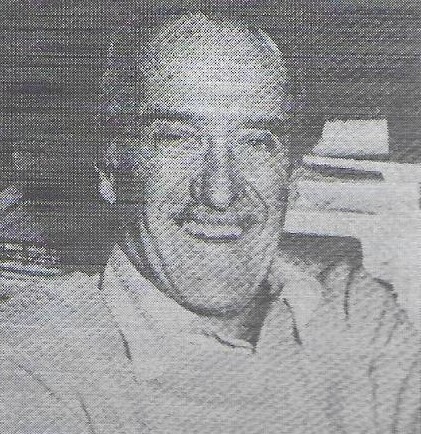
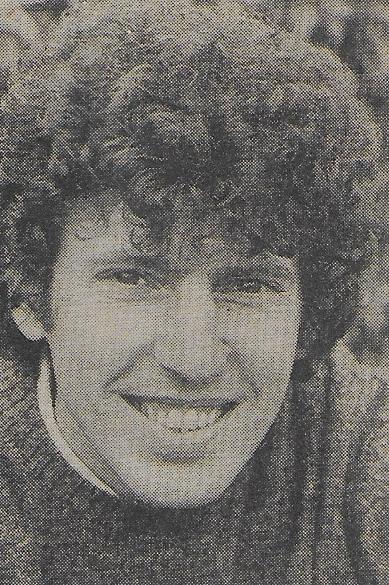
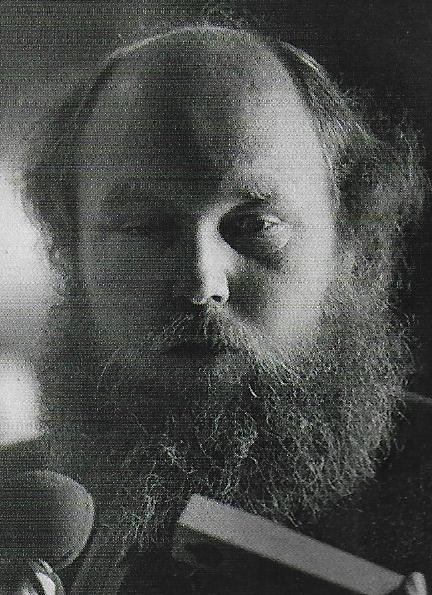
Ronald Hughes, Manson defense attorney.

The body was naked except for remnants of a shirt around the neck. Although the head was battered beyond recognition apparently from the body being washed downstream, officials said the remains were quite well preserved by the icy water.

Autopsy work began Tuesday and is expected to take another couple of days. There were no outward signs of foul play. Along with dental records, fingerprints will be used to aid in the identification.

Samples of Hughes’ fingerprints were provided by the lawyer’s friend, Paul Fitzgerald, also a defense attorney in the Manson case. Fitzgerald was in Ventura County Tuesday to view the body. He said he was positive it was Hughes’:

“He had a strange shaped head, sort of a majestic configuration,” Fitzgerald said. “The head is the same. Some of the beard is still there.”

The discovery of the body came on the same day that Charles Manson and his three female co-defendants were given the death penalty for committing the Tate-LaBianca murders.


Exiled To Mira Monte

The following article first appeared in the “Ojai Valley Guide” (VOLUME 37 NUMBER 2/SUMMER 2019) on pages 154 and 155. The “Ojai Valley Guide” was published by the “Ojai Valley News.” The article is reprinted here with their permission.

Exiled To Mira Monte
(LOOK BACK IN OJAI)

with Drew Mashburn


My parents built their dream home in 1963 in Mira Monte on South Rice Road just at the crest of the steep hill. We moved into it that summer. I dug on having my own bedroom for the first time, but we were no longer in downtown Ojai where I had lived my entire life with all my neighborhood buddies. I had just turned 12 years old and was about to begin junior high school and would have to ride a school bus for the first time. I had always enjoyed the freedom of walking and riding my bicycle to school. Dang it! I had to figure out how to entertain myself now that I lived out in the sticks.

Read the rest in the Ojai Magazine.

Betzino Casino : Analyse complète d’une plateforme de jeu nouvelle génération

L’univers des casinos en ligne évolue à une vitesse fulgurante, et il n’est pas toujours simple pour les joueurs, qu’ils soient novices ou vétérans, de s’y retrouver parmi les centaines de plateformes disponibles. En 2023, un nouvel acteur est entré dans l’arène avec une proposition audacieuse : Betzino Casino. Opéré par Purple Bay B.V., ce site a rapidement fait parler de lui grâce à une interface épurée et une promesse de simplicité.

Mais au-delà du design alléchant, que vaut réellement cette plateforme ? Nous avons exploré les moindres recoins de ce casino pour vous offrir un avis transparent, basé sur une expérience réelle de jeu. Si vous cherchez à comprendre comment fonctionne un casino moderne sans vous perdre dans le jargon technique, vous êtes au bon endroit.

Pour les joueurs en France, Betzino Casino se positionne comme une solution adaptée aux attentes du marché local. La plateforme propose une navigation en langue française, des méthodes de paiement couramment utilisées par les utilisateurs français ainsi qu’un service client réactif. L’accent est mis sur la sécurité des transactions et la protection des données personnelles, afin d’offrir un environnement de jeu fiable et encadré. En combinant accessibilité, transparence et diversité de contenus, Betzino cherche à répondre aux standards modernes que privilégient aujourd’hui les joueurs français.

Une immersion immédiate dans l’univers Betzino

Dès nos premiers pas sur le site, nous avons découvert une interface pensée pour l’efficacité. Contrairement à certains concurrents qui surchargent l’écran d’informations clignotantes, betzino france mise sur la clarté. Pour un débutant, le concept est simple : c’est une plateforme numérique sécurisée où vous pouvez jouer à des jeux de hasard (comme des machines à sous ou de la roulette) avec de l’argent réel, depuis le confort de votre canapé.

L’opérateur Purple Bay B.V. a clairement voulu créer un environnement où la navigation est intuitive. Que ce soit pour trouver un jeu spécifique ou accéder au support client, tout se fait en quelques clics. Nous avons testé la réactivité du site sur différents appareils, et la fluidité reste constante, ce qui est un point crucial pour le confort de jeu.

Pourquoi cette plateforme se démarque-t-elle ?

Au cours de notre évaluation, nous avons identifié plusieurs atouts majeurs qui distinguent Betzino de la masse des casinos en ligne actuels. Voici ce qui a retenu notre attention :

  • Une bibliothèque massive mais organisée : Avec plus de 7 500 titres, le choix est vaste, mais les filtres de recherche permettent de ne pas s’y perdre.
  • La rapidité des transactions : C’est souvent le point noir des casinos, mais ici, les délais de traitement des retraits sont optimisés pour réduire l’attente des joueurs.
  • L’accessibilité mobile : Pas besoin de télécharger une application lourde. Le site s’adapte parfaitement aux navigateurs de smartphones et tablettes.
  • Un support client réactif : Nous avons interagi avec l’équipe d’assistance, et les réponses sont rapides et pertinentes, souvent disponibles en français.

Pour un joueur débutant, ces points signifient moins de frustration technique et plus de temps consacré au divertissement pur.

Plongée au cœur de la ludothèque

Le nerf de la guerre, c’est évidemment le jeu. Nous avons analysé le catalogue pour voir si la quantité annoncée (plus de 7 500 jeux) ne se faisait pas au détriment de la qualité. La réponse est rassurante : Betzino collabore avec des éditeurs de renom comme Play’n GO, Pragmatic Play ou encore Evolution Gaming.

Voici comment se décompose l’offre :

Les machines à sous

C’est la catégorie reine. Vous y trouverez des “slots” classiques à trois rouleaux, rappelant les casinos terrestres, mais aussi des machines vidéo modernes avec des graphismes en 3D et des scénarios complexes. Pour les novices : il suffit de choisir sa mise et de lancer les rouleaux. Si les symboles s’alignent, vous gagnez.

Les jeux de table

Nous avons exploré les classiques indémodables : Blackjack, Roulette, Baccarat et Poker. Ces jeux demandent souvent un peu plus de stratégie que les machines à sous, mais les règles de base s’apprennent très vite.

Le Casino Live

C’est l’expérience la plus immersive. Grâce à la technologie du streaming, vous jouez face à de vrais croupiers filmés en direct. Nous avons testé quelques sessions de Blackjack en direct, et l’interaction humaine ajoute une dimension sociale très appréciable, même derrière un écran.

Zoom sur l’offre de bienvenue

Un casino en ligne cherche toujours à séduire ses nouveaux inscrits, et Betzino ne déroge pas à la règle avec une offre plutôt généreuse.

Actuellement, le bonus de bienvenue se présente souvent sous la forme d’un package : 100 % jusqu’à 1 000 € + 100 free spins (tours gratuits).

Concrètement, qu’est-ce que cela signifie ?
Si vous déposez 100 €, le casino vous offre 100 € supplémentaires en bonus, vous permettant de jouer avec un total de 200 €. Les 100 free spins sont des tours de machine à sous offerts, parfaits pour tester un jeu sans risquer votre propre argent.

Cependant, nous avons appris qu’il faut toujours lire les petites lignes. Ce bonus est soumis à des conditions de mise (le “wager”). Cela signifie que vous devez jouer le montant du bonus un certain nombre de fois avant de pouvoir retirer les gains qui y sont liés. C’est une pratique standard dans l’industrie, mais il est important de l’avoir en tête.

Sécurité et confort d’utilisation : notre verdict technique

La confiance est l’élément clé lorsqu’on joue de l’argent en ligne. Nous avons vérifié les protocoles de sécurité mis en place par Betzino. Le site utilise un cryptage SSL avancé pour protéger vos données personnelles et bancaires. C’est le même type de sécurité que celui utilisé par les banques en ligne.

Côté paiements, la flexibilité est au rendez-vous. Vous pouvez utiliser :

  • Cartes bancaires (Visa, Mastercard)
  • Virements bancaires
  • Portefeuilles électroniques (Skrill, Neteller)
  • Cryptomonnaies (Bitcoin, Ethereum, etc.)

L’expérience mobile mérite une mention spéciale. Nous avons testé le site sur un iPhone et un appareil Android : l’interface s’ajuste parfaitement, les menus sont accessibles au pouce, et les jeux se chargent rapidement sans faire surchauffer l’appareil.

Betzino est-il le choix idéal pour votre prochaine session ?

Après avoir passé plusieurs heures à tester, déposer et jouer sur cette plateforme, le bilan est globalement très positif. Betzino réussit le pari d’allier modernité et simplicité. L’opérateur a compris que les joueurs cherchent avant tout une expérience fluide, sans friction, où le plaisir du jeu prime sur les complications administratives.

La combinaison d’une ludothèque riche, d’un bonus de bienvenue compétitif (jusqu’à 1 000 € et 100 tours gratuits) et d’une sécurité robuste en fait une option très sérieuse sur le marché francophone. Que vous soyez un curieux désireux de faire tourner vos premiers rouleaux ou un habitué des tables de blackjack, Betzino offre un environnement de jeu sain, dynamique et résolument tourné vers l’avenir. C’est une plateforme qui a su capter l’air du temps pour proposer un divertissement de haute qualité.

Attention : plonger dans l’univers des jeux d’argent, c’est comme ouvrir la porte à une dépendance. Pour explorer les ficelles de la gestion de cette dépendance, vous pouvez consulter ce lien : https://gaeconseil.fr/addictions-2/tout-savoir-sur-laddiction-aux-jeux/
Mixin’ it Up AT TOPA TOPA ELEMENTARY

The following article first appeared in the WINTER 2021 (VOLUME 39 NUMBER 1) issue of “Ojai MAGAZINE”. The magazine is published by the Ojai Valley News. The article is reprinted here with their permission. Photo of Drew Mashburn and George Turner together, and photo of Kent Campbell added by the Ojai Valley Museum.


LOOK BACK IN OJAI
with Drew Mashburn
Contributed on behalf of the Ojai Valley Museum

————————————————–

Mixin’ it Up
AT TOPA TOPA ELEMENTARY


Mikey Payton broke my spectacles more than once; in all fairness, I busted his several times, too.

1947-1948 Yell leaders Arlou Wells (my Mom) at far left, Marie Ford at far right.

Mom (Arlou) moved to the Ojai Valley in 1947 with her mother (Peg Wells). The school year had already begun at Nordhoff High School when Mom enrolled. She wound up being one of the four yell-leaders. She became lifelong friends with one of them, Marie Ford. Marie married George Turner. Their eldest child was George. Mom married Dad (Harold) and I ended up as a result. Georgie is a few weeks older than me. He’s the first kid I ever knew. I’ve always liked him, but he did convince me to get into his toy box, then he sat on the lid and scared the pee-waddin’ outta me! I shoulda pounded him when I finally got out, but I was raised to respect my elders.

Read the rest of the article in the Ojai Magazine.

Rampaging storm damages valley

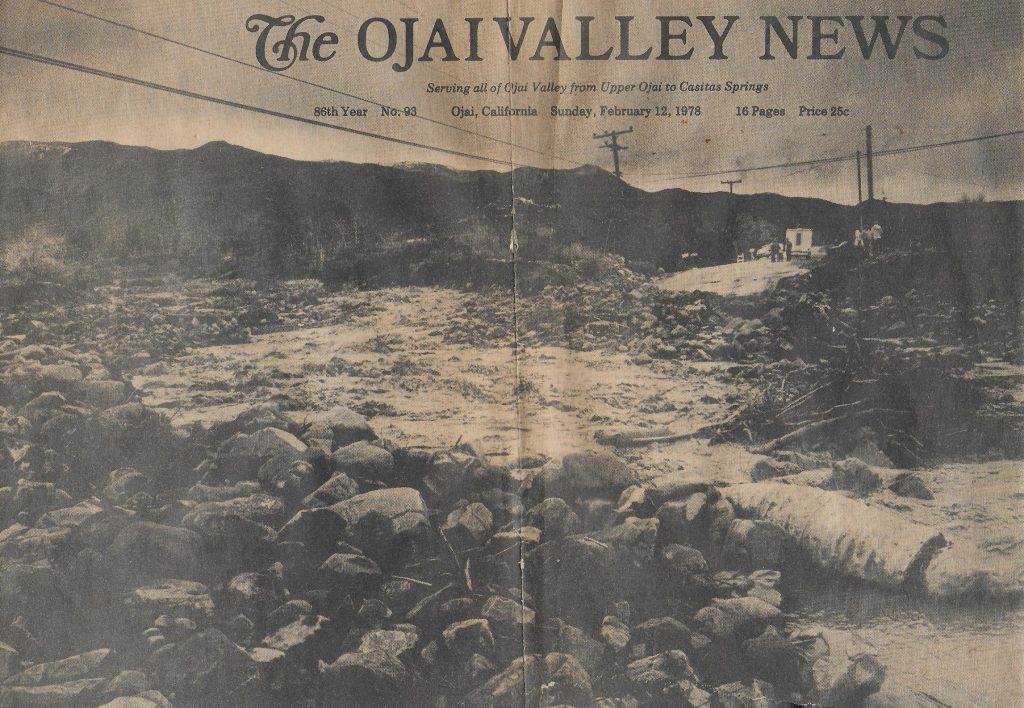
The following article was first run in the Sunday, February 12, 1978 edition of “The OJAI VALLEY NEWS” on the front page. It is reprinted here with their permission.

Grand Avenue after the storm: LOOKING EAST up Grand Avenue Friday across what was once the little “dip” in the road. The flood ravaged homes when the barranca broke its banks. (Seba photo)


Rampaging storm damages valley

— Wind, flooding rampant —
by
Polly Bee


Ojai Valley geared for a possible repeat of the devastating floods of 1969 after a storm roared through Thursday night, dumping nearly nine inches of water in 24 hours and leaving a wake of destruction.

Undersheriff John Gillespie, as Disaster Services Chairman, declared a state of emergency Friday morning, and supervisors called an emergency session for Monday, Feb. 13 to assess damage. If destruction is as severe as it appeared Friday noon, the county could be declared a disaster area to make it eligible for state and federal assistance.

AT PRESS TIME the rampaging Ventura River, San Antonio, Lion, Matilija, and Thacher Creeks still threatened homes and property. The valley’s water supply was cut off near Casitas Springs, electricity was still out to many homes, a gas main, bridge, and sewer lines were endangered on Creek Road.

Witnesses said four homes washed into Matilija Creek in Matilija Canyon and were destroyed, at least four homes in the East End were severely damaged when Thacher Creek jumped its banks, one man died of a heart attack while sandbagging his home in Siete Robles, and eight persons were airlifted from Matilija Canyon.

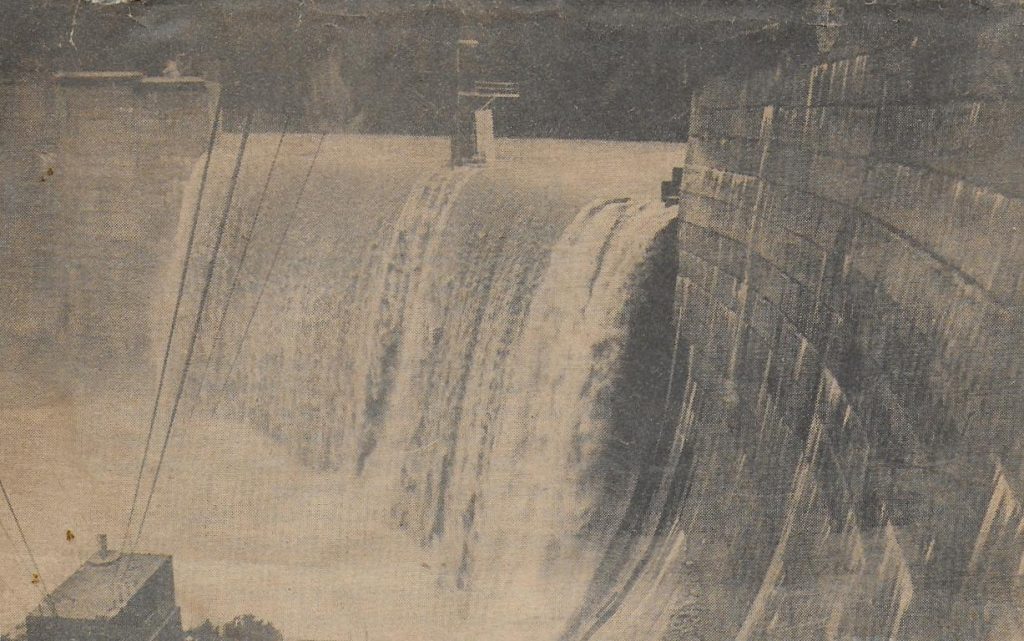
MATILIJA DAM on Thursday afternoon. The “notch” in the dam was cut as a safety measure some years ago. Four homes were lost up the canyon. (Horner photo)


A BARGE carrying a backhoe was swept over Matilija dam, the barge eventually wedging against a gate at the Los Robles diversion dam causing a build-up of tree limbs and debris. The diversion pond in front of the canal gates completely silted so that water roared unchecked down the river. Crews were taken out Thursday night at the diversion canal because of hazardous conditions.

The Red Cross set up evacuation headquarters at Nordhoff High School to assist persons forced from their houses. At least 20 homes were abandoned in the Riverside and Santa Ana Boulevard area in Oak View after firemen and sheriff’s deputies issued warnings. Trailers in the Arroyo Trailer Park at Casitas Springs — hard hit in 1969 — were pulled away from the river bed, as floodwaters eroded embankments.

Innumerable trees toppled and power lines failed. The Edison Company said that 30,000 customers were out of service in the county Thursday night. Service still had not been restored to 5,000 by Friday noon. Officials said that power outages were greatest in the Ojai Valley because of falling trees.

AT SOULE GOLF Course floodwaters threatened the No. 5 green and took out part of the No. 10 fairway. Crossings teetered dangerously, and numerous small trees crashed. A big oak by the No. 5 green fell, as did several behind the No. 9 tee. On Friday the course was still too wet for crews to thoroughly assess damage.

Schools closed Friday because of flooded grounds and hazardous road conditions. They will remain closed Monday because of the Lincoln birthday holiday.

GRAND AVENUE bridge linking the East End to the city was isolated when San Antonio Creek washed out one approach. Roads throughout the valley were closed at intervals as streams and barrancas rampaged over culverts and bridges.

Highway 150 was closed from Lake Casitas to the county line, and from Gorham Road to Santa Paula at the height of the storm. In Upper Ojai water poured over the Ferndale bridge, which was seriously threatened. Mudslides closed Highway 33 at Wheeler Gorge.

Dead of an apparent heart attack from sandbagging his home is Wesley Frazee of 386 Avenue de la Vereda. Frazee died while trying to protect his property from floodwaters pouring off Ojai Avenue, according to reports.

Ojai’s police department was bombarded incessantly with calls reporting power outages, falling trees, flooding conditions, wind, and lightning. Public Works Director Barry Lockton said an estimated 70-100 trees and branches were reported down throughout the city. Extensive debris compounded drainage problems.

At least two Ojai homes were inundated, Lockton said. One was at the corner of Grand and Shady Lane and another in the Golden West tract. Friday roads were thick with slippery mud to make driving extremely hazardous.

ROBERT MCKINNEY, general manager of the Casitas Municipal Water District, issued a press release Friday afternoon to announce a break in the 42-inch water line that serves the entire Ojai Valley. The rupture occurred south of Casitas Springs, and the mainline was shut down Friday morning. Water in storage tanks, however, could serve valley needs for several days while a bypass line is constructed, McKinney said. Valleyites were asked to use water sparingly until full service is restored, however.

At the Grand Avenue bridge in the East End, another CMWD line was also endangered. Plans were underway to bypass it Friday with an additional line, McKinney said.

Only about 50 cubic feet of water was being diverted from the Ventura River through the Los Robles Diversion Canal Friday because of debris piled up against gates. Normally 500 cubic feet would be sent down the canal, McKinney said.

Sheriff’s deputies and firemen were called to the aid of a man in Matilija Canyon Friday night when his home was flooded. Mudslides blocked the canyon road, however, and it was not until Friday morning that the man could be flown out when eight were airlifted.

About 20 other residents elected to stay in their homes in Matilija canyon, although a major mudslide blocks access. How long it will take to remove that block was not known Friday.

The storm dumped 10.36 inches of rain in Ojai, (6.77 inches in a 24 hour period) for a total of 32.15 inches for the season. Some 13.25 inches were recorded at the Summit station for the storm total, bringing the season to date there to 31.42 inches. In Oak View, only 7.55 inches of water fell during the storm, for a season total of 28.81.

Bike lanes on Hwy. 33 presages future

The following article was first run in the Wednesday, February 15, 1978 edition of the “Ojai Valley News” on Page B-16. It is reprinted here with their permission. Photo inserted by the “Ojai Valley Museum”.

Bike lanes on Hwy. 33 presages future

Editorial by Fred Volz


The fact that the shoulders of Highway 33 are torn up right now between Villanova Road and Tico Road in Mira Monte is good news. That’s because CALTRANS, of all people, is building bike lanes on both sides of the road, as was announced in this newspaper last month.

California’s highway bureaucracy has finally become aware and is doing something about the 75 million or so of us in America who use bicycles as an alternate means of transportation. In 1975, over 7.5 million foreign and domestic bicycles were sold in this country — twice as many as were sold 10 years ago.

THIS TREND is increasing, as is evident to people-watchers in Ojai Valley. As our area becomes increasingly congested with automobiles, and the benefits — to the rider and to the environment — become more and more evident, we expect bike-riding locally to outstrip by far the national trend.

The long-time baby of this writer, in gestation for a decade, is about to be born. Last week, supervisor Ken MacDonald reported that he is confident the county will be able to acquire the abandoned Southern Pacific Railroad right-of-way, whether or not supervisors re-allocate the $300,000 currently earmarked for the project. That’s because the state is pushing the project.

Valleyites must be concerned that this marvelous strip of land which links the three major communities in the valley becomes “multiple use”: hiking, biking, riding. We’ve heard bureaucrats say that the three aren’t compatible. “You can’t have a horse trotting on an asphalt bike path,” has been cited. That’s true; so you pave one side for the bikers and roll dirt on the other half for the riders.

At least, this was the way it was done by the state and City of Sacramento in its marvelous hiking, biking, riding pathway we visited last year in the state capitol. The “trail” stretches along the American River from the suburbs to downtown along a spur line railroad right-of-way that’s still in daily use by freight cars. The pathway was built along the railroad right-of-way to one side of the tracks, which for the most miles run along an elevated embankment. Works fine.

THE MULTI-USE pathway has a 6-foot strip of asphalt down one side with a white center line divider down the middle to mark the opposing directions. Alongside is graded an ample dirt strip for horses.

One Sunday we trotted along the asphalt for 5-6 miles on our usual morning jaunt. Along the way we met other runners and were passed in both directions by hordes of bikers. Horses followed other paths along the river embankment. We all had a fine time waving and greeting each other. The morning proved sunny and clear; the air off the river and the fields was fresh and cool; the experience was such that we remember it vividly.

So, let’s get on with our own pathway on the abandoned railroad, so that someday we may experience the joy of riding/hiking/biking through our beautiful valley.


Fred Volz — Publisher and editor of the Ojai Valley News from 1962 to 1987. (Courtesy of Ojai Valley News)

East end houses “just a big mess”

The following article first appeared in the Sunday, February 12, 1978 edition of the “Ojai Valley News” on Page A-2. It is reprinted here with their permission.

East end houses “just a big mess”
by
Fred Volz


The East End of the valley took on a familiar look Friday morning. 1969 all over again.

As usual, the disaster area stretched along the infamous Thacher Creek barranca from “the dip” on Grand Avenue (500 yards west of McAndrew Road) all the way to Reeves Road. Thursday night a torrent of water poured out of Horn Canyon and gaining speed on a downhill slope ripped out the walls of the barranca and poured into houses and acreage along the way.

THE R. HARGETT FAMILY at 4370 Grand Avenue had moved into their new house two days ago. Thursday night they moved out. That was just before the barranca broke on its east side and re-routed itself in a torrent of water 5 feet wide on either side of the house leaving it sitting on an island. Hargett, a plumber from Redondo Beach, has been building the home himself for the past year and one-half. The fast-moving water undermined the foundation and part of the house caved in. It appeared that no water reached its inside.

“I’m going to jack her up, fix the framing, and move back in next week,” Hargett said Friday morning while watching the flood roar by. “Soon as the water’s down and I can get a bulldozer in here. This is not going to discourage me.”

TO THE FRED WACHTER family at 4184 Grand Avenue on the other side of the barranca the mess WAS discouraging. A branch of the barranca about 6 feet deep and 40 feet wide had ripped right straight through his home, demolishing his carport, carrying part of the deck away, and running into the house. The bedrooms were a sea of mud and the living room rug soaked. Thousands of dollars of landscaping were on their way to the ocean.

Next door at this writer’s house was a similar scene. This time the flood didn’t reach the inside of the house, coming to within one inch of the front door. The house is about 5 feet off the ground at that point.

Next door at the Russell residence a fire truck full of sandbags stood in what was once the front yard. It was buried up to its door handles. When the barranca broke loose, a wall of water surged around the house and fire personnel standing by ran for high ground. The Russell’s car was buried and their acre of landscaping buried under boulders and mud.

On down the barranca were houses belonging to two other families — the Ditchfields and the Ghormleys. Ditchfields fared well. Although their front yard and driveway are now a 12 foot wide, 10 foot deep channel, no water poured into their home.

Ghormleys have a sadder story to tell. Wall-to-wall mud fills the house and their garage is completely totaled. Thanks to a neighbor, Del Garst, however, much was saved. Garst went into the home before flood waters swept through, piled furniture high and blocked doorways.

Gary Hachadourian took builder Chuck Thomas with him Friday morning to check his East End acreage near Thacher Creek where he planned to start construction next week. No lot existed.


Feds doing council’s job

The following article first appeared in the Sunday, February 12, 1978 edition of the “OJAI VALLEY NEWS” on Page 4. It is reprinted here with their permission.

Feds doing council’s job
by
John E. Nelson, M.D.

___________________
Our
environment
___________________


“Clean Air — Or No Growth, City Told,” a recent OVN headline proclaimed.

Thanks for the choice. But we’ll take both.

Here’s the situation as it now stands. Because Ojai’s City Council and the county board of supervisors have proved themselves shamefully unwilling to halt rampant growth and air pollution in our valley, the big-brother federal bureaucracy is going to do it for us.

The means they’ll use is through our outmoded sewage treatment plant which has long been fouling the Ventura River in violation of federal health standards. If the plant is not upgraded soon, we could be fined $15,000 a day. In order to get the job done, a large federal grant must be approved.

BUT THE FEDS seem to be more concerned about the quality of our air than our own elected officials have been. They know that an upgraded sewer plant opens the gates to new development and overpopulation with inevitably increased air pollution.

Because we have failed to meet the standards set forth in the federal Clean Air Act, our valley has been designated as a “non-attainment area” — bureaucratic jargon which means that our air is unsafe to breathe during 98% of summer days. So the federal government is saying that it’s not about to give us money to make our air even more unhealthy.

Their hand so forced, the Ojai city council responded by postponing the final decision on the all-important general plan which will set the limits of future growth. They had hoped to push through their version of the plan before March 7 when the people will have a chance to elect a more environmentally aware council. This change again underscores the importance of this crucial election in determining the future of the entire valley.

MEANWHILE, the city planning commission and the county Air Pollution Control District are pointing their fingers at each other in a pointless dispute over where the air pollution comes from. APCD officials, who live outside the valley, say we make our own. Commissioners, who live inside the valley, say it blows in from elsewhere. Both sides seem to be clouding the issue and protecting their own interests.

The APCD, which is responsible for controlling air pollution on a countywide basis, has inexplicably been playing a now-you-see-it-now-you-don’t game with Petrochem’s nitrogen oxide emissions. One wonders about their motivations for so compromising the health of the citizenry it is enjoined to protect. Perhaps they are covering the incredible mistakes of the board of supervisors in allowing Petrochem and oil drilling to exist in the first place.

The city planning commission, which now faces a mandate to halt new sources of air pollution within the valley, prefers to believe that there are no polluting industries here (ignoring the oil-drilling industry), and that “all we have is traffic and homes” (as if traffic were not the single major source of smog).

The truth is that there is too much pollution coming from both inside and outside the valley. Each side in the dispute seems to be engineering a monumental cop-out designed to relieve themselves from responsibility in dealing with the problem. Such thinking hardly seems worthy of the great challenge created by our ever-mounting smog hazard.

The solution to this problem lies in a vigorous effort from both agencies not just to keep our air from getting worse, but to clean up the already unacceptable levels of disease-producing smog. This column calls upon the APCD to increase its monitoring of Petrochem and oil-drilling sites, and to publish weekly reports on its activities. The Ojai Planning Commission must likewise do their part by halting all population growth now. The recent public outcry which resulted in the denial of an ill-conceived tract development clearly indicates that this is the will of the people.

FORTUNATELY, the voters of the City of Ojai will on March 7 have an opportunity to seat a majority of environmentally committed councilpersons who will do more than wait for Washington to tell them how to preserve our valley. The candidates have been crystallizing their stands, and our choices are becoming clear. Look for an update on this crucial election in a future column.


DR. JOHN NELSON

Meet Milton Charles, organist of silent movies

The following article first appeared in the Wednesday, February 15, 1978 edition of the “Ojai Valley News” on Page A-9. It is reprinted here with their permission.

Meet Milton Charles, organist of silent movies
by
Brenda Loree


“Critics consider him one of the greatest organists in America,” says Arthur Eddy of his friend Milton Charles, who is now retired in Ojai.

Charles was born in San Jose “a long time ago,” and reminisced recently about what it was like playing the organ in the silent movie days of the 20’s among other things.

Milton was taking piano lessons by the time he was seven — he was part of a musical family — and considers that his first lucky break was when well-known San Francisco teacher Benjamin Moore accepted him as an organ student at no fee.

His first paid job was at age 13, when he “got my first church” at $25 a month. He continued with his lessons, too, until he heard that they were using organists in movie theaters. At age 15 he was earning $50 a week playing San Francisco movie theaters, very big money at that time. And no longer took lessons because his teacher highly disapproved of his new job.

MILTON SAYS the musical accompaniment he provided for the silents was strictly improvisation. He never played the same thing twice, although he would occasionally keep using the same musical theme if he hit on one he liked.

He was still a teenager when he got his first “big time” break. “I got a call from Sid Grauman (of Grauman’s Chinese Theater) one night. He offered me a job at the Million Dollar Theater in L.A. at $85 a week.”

Milton took the job and began a friendship with Grauman which ended up spanning decades, many hirings, firings and hirings again, and Milton’s introduction to such Hollywood notables as Gloria Swanson and Charlie Chaplin, both of whom became big fans of his music.

Milton told of being second organist at the Million Dollar Theater, taking turns playing with the lead organist, C Sharp Minor, from 11 in the morning until midnight.

MR. MINOR would occasionally just disappear,” smiles Milton, “and I’d be left playing straight through from 11 a.m. to 11 p.m. We always did a concert in those days before the silent movie started. They’d send out to the Owl Drugstore nearby for sandwiches and milk for me. Afterwards, I’d often get a call from Sid Grauman to come over to his house and play for a few of his friends out from New York. Gloria Swanson would sit on the bench with me a lot and sing along. She had a beautiful voice.

“Sid was an eccentric guy,” remembers Milton. Often Grauman would have all of those people wanting to break into show business come to his house to audition in the evening, with Milton accompanying. Some of them were good, says Milton, but he remembers some nights being so bad as to remind him of today’s Gong Show.

As one of only three or four professional organists in the country in the 20’s, Milton came to be in big demand, playing the Tivoli Theater in Chicago — by this time jus solo numbers — and back to the Metropolitan and then Paramount Theaters in L.A. again.

MILTON remembers when the Paramount Theater was about to go up at 6th and Hill in L.A. “They’d just started excavating, and it was just one big hole in the ground. Sid Grauman came around for me and took me to the site. ‘Okay, Milton, you stand here and yell at me when I get to the other side,’ instructed Grauman. ‘Hello, Mr. Grauman,’ I yelled. ‘Okay, kid, I just wanted to check the acoustics,’ Grauman yelled back.”

Milton was, to his knowledge, the first performer to use a microphone (carbon mike) in his act. He came up with the idea accidentally, while trying to solve an acoustics problem in a theater, and just stayed with it.

By this time Milton was touring Europe and the Eastern United States, playing the Mastbaum Theater in Philadelphia with a 200 orchestra. Milton remembers going to Paris to begin an engagement at a theater and having such a good time he never showed up at the theater.

By 1930, sound movies were in, and Milton appeared, playing and singing, in the movies for a while. He then began a long stint playing background music and lead-in music for CBS Radio in Chicago, finally rising to Music Director of CBS. But before he was named director he remembers mad days of playing for five soap operas a day.

THERE WOULD be a sound stage for every show, and I would race — I had 20 seconds — from one studio and organ across the hall to another studio, organ, and another soap,” he said. Milton adds that he would usually get a copy of the story line an hour before going on the air, and he would score the shows as much as he could in that time. Ma Perkins, Road of Life and Amos and Andy Shows were some of the ones he did.

Missing California, he signed on with CBS Radio in L.A. as a staff musician and played the background music for both the Roy Rogers an Gene Autry radio shows, besides playing with the CBS Orchestra for many years, when he lived in Toluca Lake.

As he approached retirement age, he took on another career. He began playing at a plush new restaurant in L.A., the Kings Arms, as a sideline career, and ended up staying there almost 20 years.

“I really loved doing that, and you have to, since most of the people around you in a lounge like that are feeling their oats,” Milton smiles.

MILTON STARTED coming to the Ojai Valley Inn occasionally in the early 70’s and fell in love with the valley.

He moved to Ojai permanently some five years ago and thinks he has the best of all worlds — 1 1/2 hours from Los Angeles, 45 minutes from Santa Barbara, while living in one of the “most beautiful places in the world.”


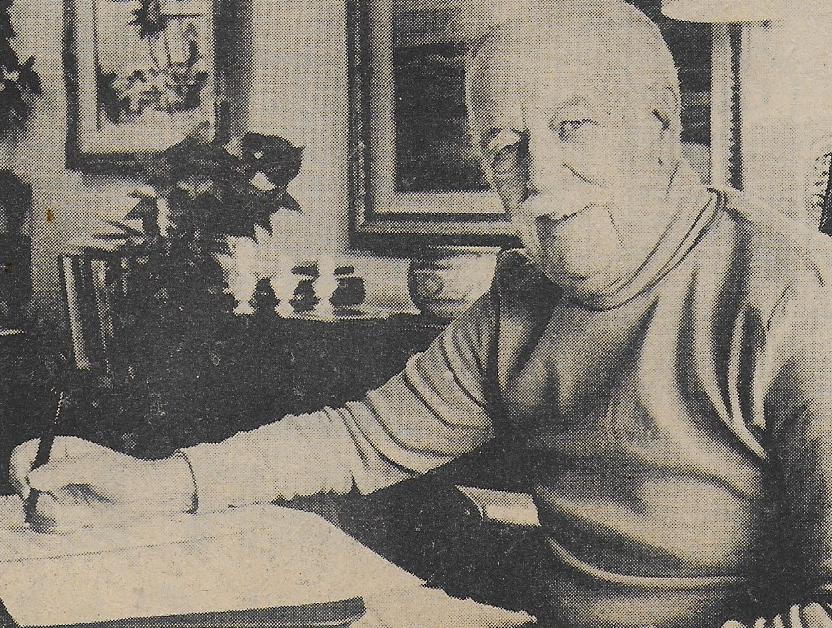
MILTON CHARLES scores the wedding march he’s writing for his granddaughter’s upcoming marriage. (Seba photo)

Laugh!!!

The following article first appeared in the Winter 2019 (VOLUME 37 NUMBER 4) issue of the “Ojai Valley Guide” magazine on pages 146 & 147. The magazine was published by the “Ojai Valley News”. The article is reprinted here with their permission.

LOOK BACK IN OJAI
with Drew Mashburn
Contributed on behalf of the Ojai Valley Museum

LAUGH!!!
Go ahead and laugh! I would have laughed too.

DURING MY 1960’S HIGH SCHOOL DAYS, THERE WERE FEW JOB OPPORTUNITIES FOR TEENS. I TOOK A VARIETY OF JOBS TO MAKE A FEW BUCKS TO KEEP FUEL IN MY LITTLE YAMAHA 80 cc MOTORCYCLE, OCCASIONALLY BUY A NEW PAIR OF LEVIS, SEE A MOVIE, ATTEND A HIGH SCHOOL DANCE, BUY A CONTAINER OF FISHING WORMS, AND SO ON. I’D ALWAYS HEARD THAT THE VALLEY TEENAGE BOYS SMUDGED CITRUS DURING WINTER MONTHS AND MADE SOME DECENT COIN. NOW, IT WAS MY TURN TO DO IT!

Read the rest of the article in Ojai Magazine.