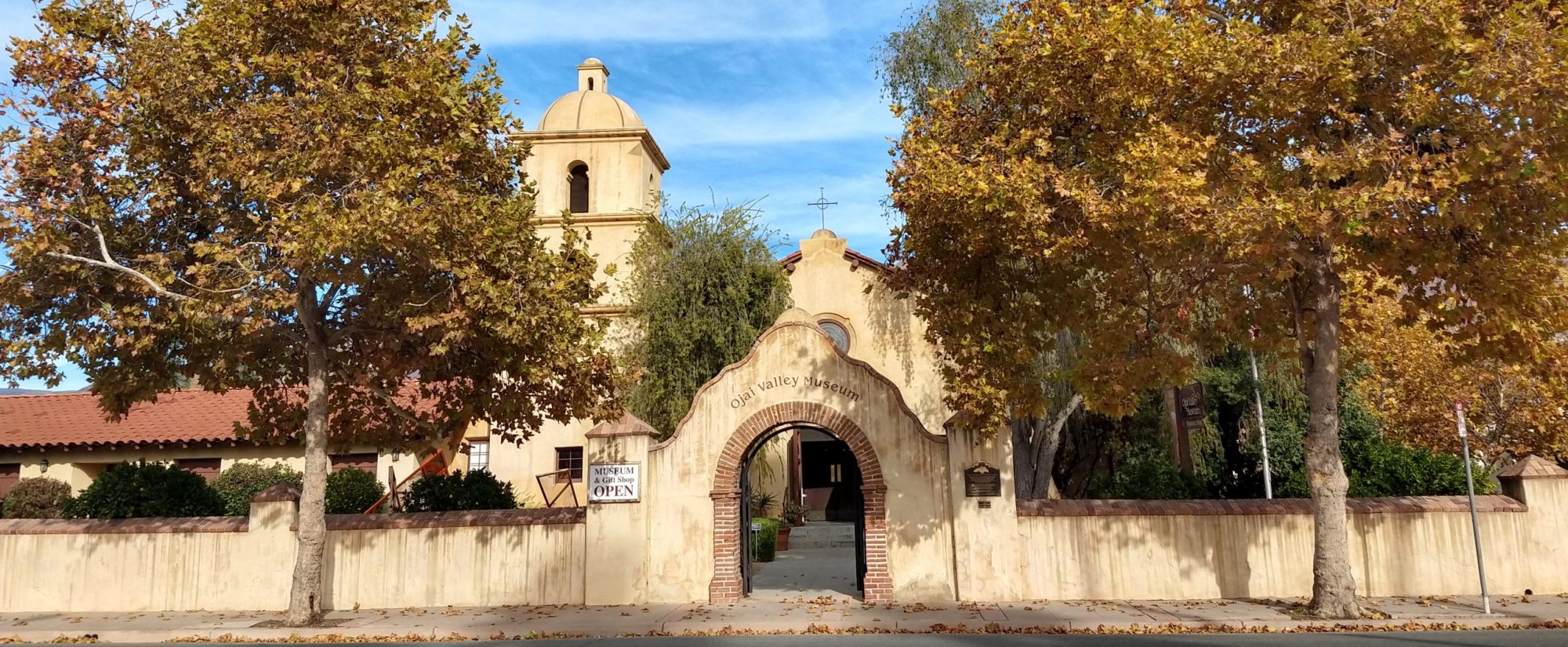
Jeff Mann is among the Ojai Studio Artists participating in this year’s OSA group exhibit at the Ojai Valley Museum. In conjunction with the exhibit, we present Ojai Quarterly arts columnist Anca Colbert’s piece on Mann, which ran in the OQ’s Spring 2015 issue: Drawn to Drawing(s): Anca Colbert on Jeff Mann
The Mason Chronicles (2)
The San Antonio School
By David Mason
“Amid much rejoicing, San Antonio’s new school building was formally presented to the district last Friday night. The whole community has been watching with interest the erection of this attractive structure, which makes of the San Antonio corner another beauty spot for our valley.”
– The Ojai, April 8, 1927
The year was 1887, and President Grover Cleveland, in his first of two terms as president, was still enjoying his honeymoon with the former Frances Folsom. The White House was a hub of social activities, while in a little valley in California, a new school was being formed. The importance of this rather small school may not have made the national news, as the White House wedding had, but to the people of Ojai, it was another step in the development of the valley.
The San Antonio School was established in 1887 and was formed as an independent school district. An even smaller school, The Sagebrush Academy at the foot of the grade road, had closed down because most of the students lived in the upper valley and they wanted a school closer to home, so they had created the Summit.
The few children living in the East End of the valley were then left without a school to attend, except for some small private schools that were scattered around the area.
At first, the students gathered and held their classes under a large oak tree. Then an old granary that was no longer in use on a nearby ranch was put into operation as a classroom. Finally, three acres on the southeast corner of Grand Avenue and Carne Road were purchased from the Beers family for $25, and the first San Antonio schoolhouse was built. The schoolhouse was a lovely Victorian structure, put up in record time using volunteer carpenters, and when completed it was an impressive building, especially for such a small, rural community. It had a fancy bell tower and a flagpole with the American flag flying high in the sky.
Fred Udall Jr., an early student, wrote about his years in attendance at San Antonio School:
“Even the Pledge of Allegiance was simpler in those days, but we put a great deal of sincerity into saying it. As I recall, it went something like this: ‘I pledge allegiance to the flag, and to the republic for which it stands. One nation, indivisible, with liberty and justice for all.’ Our teachers asked us to think about the words we were reciting as we faced the flag before starting the school day. We didn’t need to name the country in the pledge, we knew we were Americans.”
By the late 1920s, classes had outgrown the stately Victorian schoolhouse, so the school board commenced to make plans for building a new and larger school. The school board, wanting a special type of building, hired Roy Wilson, a Santa Paula architect.
Wilson came with his family to Los Angeles in 1902 and settled near the Arroyo Seco, in an area known today as Highland Park. Roy left school after the seventh grade and took various jobs to supplement the family’s income. One of those jobs was as a draftsman for local architect, Edwin Thorne, who inspired him to learn more about architecture, and Roy was persuaded to move to Berkeley to study at the university.
Upon his arrival in 1906, the great San Francisco Earthquake hit and destroyed much of the city. His formal education was abruptly cut short and through his help in the re-building of the city, practical experiences became his teacher.
In 1914, Wilson discovered the small town of Santa Paula, purchased 40 acres of land and planted a citrus orchard. He opened a small architectural office in Santa Paula, and in 1924 became the first licensed architect in the county of Ventura. Many of the outstanding buildings that add to the beauty of The Ojai are the creations of this talented man.
Among his structures are the Ojai Elementary School building; the Nordhoff High School campus, now Matilija Junior High School; Bill Baker’s Bakery; various buildings at Krotona; and the science building at The Thacher School. Many of our 1920s-style Spanish mansions are also the work of this great architect.
One of the San Antonio School trustees was originally from England, and he was in favor of the new building being built in the English Tudor style, because the style would then remind him of his homeland. The school board voted in favor of that style, so Wilson was instructed to design a building that would have the look of being English, in contrast to the more familiar Spanish style that was being used in
Ojai Valley.
When completed in 1927, the architecture was indeed unique, yet harmonizing with the surroundings, and would symbolize a school district within the community whose choice it was to preserve its own individuality, but whose earnest desire it was to work with the other buildings for the good of all. The interior of the building was roomy and pleasant and adequately equipped. The two classrooms, separated by a large folding divider, could be opened up to make an auditorium. The stage area was the largest in the valley at that time. The overall effect was delightful, and it served the East End of the valley well.
The school year of 1929 opened with an enrollment of 28 students in the entire school. When I went to school there, from 1949 to 1951, my class consisted of five students, two boys and three girls. My class, however, was not as small as my mother’s class. She attended San Antonio when it was still in the Victorian building, and she had two students in her class.
The little English Tudor school finally gave up its independence in 1965 and joined the Ojai Unified School District. The school building continues to bring a lot of joy to people in the Ojai Valley. The Ventura County Cultural Heritage Board wanted to declare this building a county landmark, but was turned down by the school board. Perhaps someday, this worthy building will have the honors bestowed upon it that it so rightfully deserves.
The above column originally appeared in The Ojai Valley News in 1999. Republished with permission.
Ojai People: Sergio Aragones
Ojai’s Cartoonist in Residence
By Jerry Camarillo Dunn, Jr.
To look at him, you might think he’s just another guy loafing around an Ojai coffee shop, staring into space. But if you could peer inside his head, you’d see that he’s hard at work.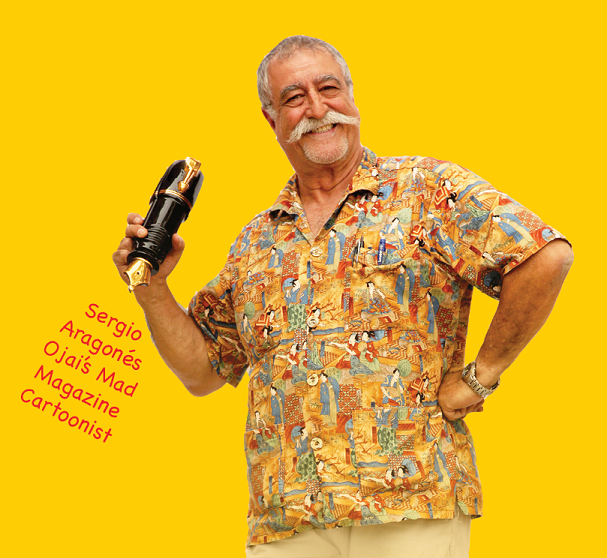
Sergio Aragones is a cartoonist.
That chortling you hear as he doodles on his napkin? It means Sergio just thought of another gag for MAD Magazine, where he’s been a creative force of nature for more than 50 years.
It all began in 1962, when the fledgling cartoonist left his home in Mexico to try his luck in America. He arrived in New York with twenty dollars in his pocket and a portfolio of funny drawings under his arm. After learning that cartoonists visited the city’s magazines on Wednesdays to sell their work, he started making the rounds. “Your cartoons are crazy!” everyone said. “You have to take them to MAD. That’s where they belong.”
MAD was the nation’s top market for silly pictures, but the 24-year-old cartoonist screwed up his courage and appeared at the magazine’s office. The editors took his samples into a little room . . . and there was a deafening silence. But at last Sergio heard guffaws of laughter echoing off the walls. His cartoons were a hit, and they’ve been off the wall ever since.
The editors assembled some of Sergio’s wordless gags into a two-page story about the U.S. space effort. One drawing showed a space capsule in orbit with a dismayed astronaut in the window, watching a paper airplane sail past.
“I wanted to sell MAD more drawings,” Sergio recalls, “and I saw all the empty areas around the borders of the pages.” So began the legendary “Marginals,” gags that Sergio tucks into the white spaces throughout the magazine. The only thing not marginal is the humor.
Sergio characterizes himself as a “writer who draws,” and each Marginal is a short story in itself — like the drawing of a bearded psychiatrist so absorbed in taking notes that he doesn’t notice his patient leap off the couch and out the window.
MAD’s editors thought the Marginals were a cute idea but couldn’t last long. They told Sergio, “Well, we’ll publish them until you run out of ideas.” Since then his work has appeared in every issue except one. (“The post office screwed up.”) Over nearly five decades, he has drawn thousands upon thousands of his trademark wordless gags.
In fact, Sergio is reputed to be the world’s fastest cartoonist. He is definitely the most honored, having won every major award including the National Cartoonists Society’s Reuben, which is the Oscar of the field.
Even as a schoolboy in Mexico, where his father eventually relocated the family after leaving Spain for France during the Spanish Civil War, he was always drawing funny pictures in class, which entertained his pals and exasperated the teachers. (“Sergio, pay attention!”)
He also developed his imagination by playing make-believe, but in a way most kids could only dream about. His father was a movie producer at Mexico City’s Estudios Churubusco. “Whatever movie they were shooting, that’s what I played. If it was cowboys and Indians, I’d go to the prop department and get myself a big hat and a set of guns,” Sergio says. “The western town was my favorite. In front of the cantina was a railing for the cowboy actors to tie up their horses. When there wasn’t a movie being made, I loved to go there and challenge invisible bad guys. I’d come banging out through the cantina doors, get shot, flip over the railing with my legs in the air, and land in the dusty street. Then I’d do it again and again — because I was a kid!
“Your imagination really goes wild on a movie set. I think it helped my cartooning later on, in thinking up ideas.” His formal schooling continued at the University of Mexico, where Sergio studied architecture. “But my friends were actors, artists, and directors,” he says. “I learned pantomime from Alexandro Jodorowsky,” the avant-garde filmmaker. “I wanted to study pantomime so I could apply it to my cartoons. I love cartoons without words! They’re like silent movies.”
When Sergio announced his intention to be a cartoonist, his father was terrified because cartoonists don’t always make a great living. At age seventeen, though, Sergio started selling his work professionally when an art teacher sent his drawings to the Mexican humor magazine Ja-Ja. “I realized that cartoons have to be published for people to enjoy them,” he says. He also realized that America offered a much larger market than Mexico for his drawings.
Soon after his arrival in the U.S., Sergio began writing scripts for comic books — ranging from House of Horrors to Young Romance — for the top publisher in the field, DC Comics. By the early 1980s, he decided to launch his own comic book.
Groo, the Wanderer is a takeoff on the “sword and sorcery” genre, particularly Marvel’s Conan the Barbarian. Sergio’s writing partner, Mark Evanier, describes the main character as “an ugly, large-nosed buffoon of surpassing ignorance who constantly misunderstands his surroundings. Possessed of superlative skills in swordsmanship (the only task in which he’s remotely competent), he delights in combat but . . . unfortunately he is also indiscriminate and incredibly accident-prone, and despite generally good intentions causes mass destruction wherever he goes.”
With Groo, Sergio took up a new artistic challenge. He explains the differences between his two chosen formats: “Comic books are a mix of storytelling and drawing — sequential art, panel after panel. A cartoon is a compressed idea; you simplify it to the maximum. You can tell a story in a whole comic book, or take panels off until you have just one. Then take the dialogue off, and in one panel, without words, you have a whole story! That’s why I think pantomime is very impressive.
“A comic book, on the other hand, is like a mini-movie. You write, direct, act it out, tell the characters what to do, design the scenery and the costumes. I feel fortunate to have my own little universe.”
Sergio’s artwork in Groo may start with a “splash page” depicting a medieval village, hundreds of people in different kinds of garb, animals, wagons, tools, and weapons. All the details are painstakingly researched for accuracy in National Geographic and the cartoonist’s library of visual reference books.
Sergio also sneaks in his own feelings about issues of the day. “A comic is a great vehicle for helping: pollution, deforestation, women making less money than men, and other social problems. You realize you have a good platform for making a comment, and you use it.
“I wanted to criticize television in an issue of Groo, and it took me forever to figure out how to do it. There was no television back in barbarian days, so I finally used puppetry, a Punch and Judy show. Groo, with his violent tendencies, invents violence on television, not to mention TV dinners and commercials.”
The whole town gets hooked on puppet shows. In one scene a kid tries to get his parents to look at the beautiful sunset. Shhh! they hiss. We’re watching! “Kids love the silliness of the whole thing,” says Sergio, “but they also see how damaging television can be. I hope they ask questions of their parents.”
These days Sergio also works as a guest artist for The Simpsons comic books, writing and drawing whole issues by himself. And he’s writing a series of tales from his own life, a sort of comic-book memoir called Sergio Aragones Funnies. “I’m fortunate that I’ve met a lot of remarkable people,” he says. The stories depict his encounters with everyone from Richard Nixon to a high lama in Tibet. One story tells about meeting the famous cellist Pablo Casals in Acapulco.
Always curious, Sergio has traveled broadly and radiates the sophistication of a citizen of the world. Spanish and French were his first two languages. (His old friend Mark Evanier jokes that Sergio “does to English, his third language, what Picasso did to faces.”)
For many years he visited far-flung places such as Kenya, Paris, Hong Kong, Tahiti, and Venice with the staff of MAD. The publisher, Bill Gaines, organized a free trip every year for the magazine’s regular contributors — the cartoonists, writers, and editors listed on the masthead as “The Usual Gang of Idiots.” Once, when they traveled to Haiti, Gaines had the whole group driven directly to the house of the magazine’s one and only Haitian subscriber, where he formally presented the baffled man with a renewal card.
But Sergio’s heart belongs to Ojai. “I had always lived in a big city,” he says, “Mexico City, New York, Los Angeles. When my daughter, Christen, was very young and we came from L.A. to Ojai in 1982 for her to attend Oak Grove School, I never thought I could live here. But it took me no time to realize how comfortable, how conducive to thinking, it was. I loved it almost immediately.”
Sergio donates his time all over town, generously speaking to school kids and drawing cartoons for posters, the Ojai Library wall, and just about any group that asks. “You feel so much a part of the town,” he says. “It’s fun belonging.”
Sergio is a familiar figure around Ojai, usually dressed in shorts, his guayabera shirt untucked and pockets bulging with pens, his gray hair in a ponytail, his familiar moustache as wide as his smile. Greetings follow him down Ojai Avenue, and everyone feels they know him.
His warm feelings for the town led him to mount a retrospective exhibition of his work at the Ojai Valley Museum in 2009. “My art doesn’t really fit in a museum,” he points out. “I felt people might not understand the drawing of a cartoon, so I was always reluctant to exhibit. But Ojai is like showing my work to friends and family.”
The museum’s exhibit hall looked as if there had been an explosion in a comic book factory. An astonishing variety of Sergio’s work was on display, starting with his boyhood sketchbooks and continuing through his nearly 50 years at MAD, as well as his stint as a performer on television’s classic comedy show Laugh-In, illustrations for national advertisements, and cases displaying his hundreds of comics and books. (His recent anthology, MAD’s Greatest Artists: Sergio Aragones: Five Decades of His Finest Works, is already in its third printing.)
The cartoonist did one thing that museums definitely frown on: He drew all over the walls. “One of the basic ideas for a MAD Marginal is the corner cartoon, where the borders of the magazine connect,” he explains. “Something is coming from one way, something is coming from the other way, and you know what’s going to occur if they meet: A criminal is trying to hold somebody up on the corner, and a bunch of policemen are coming from the other corner. Your imagination fills it in.
“Well, there were a lot of corners at the museum. I could draw on a physical corner, putting a cartoon on each side, and visitors could see what was going to happen. It was perfect!”
On a narrow wall Sergio arranged three of his framed awards in a vertical line. But he hung the fourth one cockeyed and halfway down to the floor. Then he took a black marker and drew cartoon “speed lines” down the wall to show that the frame was falling. Below that, he drew a guy getting whacked on the head with a corner of the frame.
Sergio often subtly incorporates Ojai in his MAD cartoons: the Arcade, Starr Market, a kid on the street wearing an Ojai T-shirt. “Every chance I get!” he says, chortling.
If you see Sergio Aragones around town, say hello — that is, unless he’s sipping coffee and doodling on a napkin. Then you know he’s at work. “Well, it’s not really work,” he says. “Cartooning is a state of mind . . .”
(This story originally appeared in the Fall 2011 issue of The Ojai Quarterly. Republished here with permission.)
Art Town: How OSA Put Ojai On The Map
By Mark Lewis
(A somewhat shorter version of this essay originally appeared in “OSA: 3 Decades,” a book published in 2013 by the Ojai Studio Artists. Republished with permission.)
Ojai has always prided itself on being a mecca for artists. But up until 1984, the truth was far less impressive. People who came to town expecting to see artworks often were disappointed, because the works were inaccessible, hidden away in the artists’ studios. The Ojai Valley was filled with art, but for all intents and purposes it was invisible.
“It was like the best-kept secret in Southern California,” says longtime Ojai gallerist Hallie Katz, co-owner of Human Arts.
That began to change when a group of local artists banded together to launch an open-studio tour, which became an annual event. Three decades and 31 tours later, Ojai has come of age as a haven for artists and a travel destination for art lovers — and the Ojai Studio Artists have been instrumental in turning the perception into reality.
The OSA story begins in 1983, when the painter Gayel Childress took charge of the moribund Fine Arts Branch at the Ojai Art Center. The venerable building on South Montgomery Street housed California’s oldest continually operating non-profit community art center, but its dilapidated gallery space offered an uninspiring venue for art shows. At the time, there were relatively few galleries in town, and the Ojai Valley Museum did not concern itself with contemporary art. Apart from the Art Center, artists who wanted to show their work generally had only one option: The parking lot of the Security Pacific Bank (now the Bank of America), which on Sundays hosted an outdoor art market.
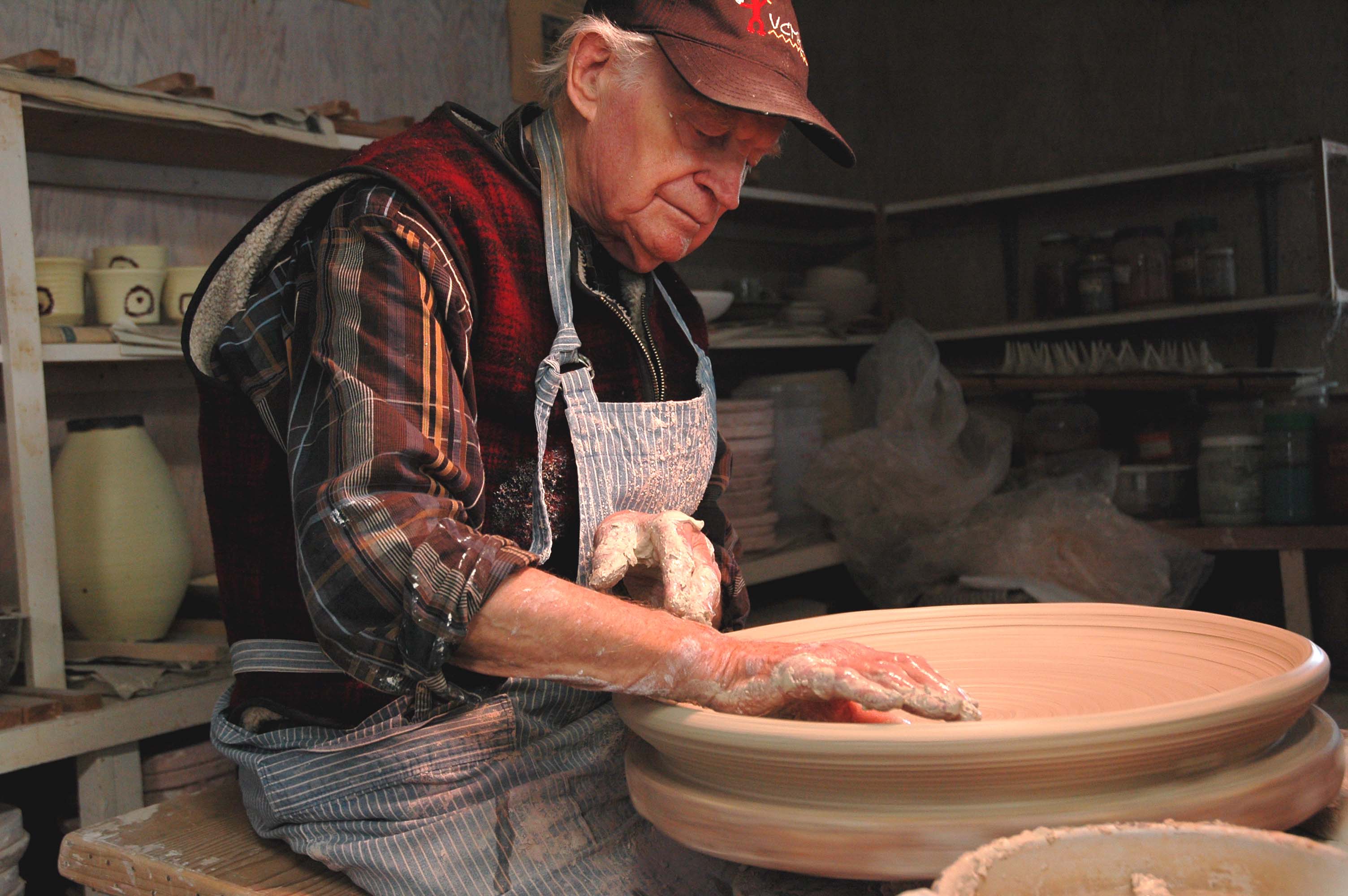
Childress’s first priority was to raise money to fix up the Art Center’s dowdy-looking lobby and decrepit gallery, to give local artists a better showcase. Two Arts Branch members, painters Bert Collins and Marta Nelson, had an idea. They recently had taken a tour of private homes in Los Angeles as part of a fundraising event for the L.A. Philharmonic.
“We thought, ‘Hey, what if we did that here with our studios?’ It was kind of like, ‘Hey, let’s put on a show,’ “Nelson says.
Childress, Collins and Nelson organized the first “Ojai Artist Studio Tour,” which took place on Nov. 3, 1984. Eighteen local artists opened their studios to visitors, who paid $5 to take the self-guided tour. The organizers billed it as “A Day In Art Country.”
“It was supposed to be a one-time thing,” Nelson says. “But it was so successful that we thought we’d do it again.”
The second and third annual tours were even more successful. Now known as “The Artists Of The Ojai Studio Tour,” the event attracted the attention of Sunset Magazine, which praised it for providing visitors with ready access to celebrated artists like Bert Collins, George Stuart and Beatrice Wood. (A list of other prominent artists associated with OSA at one time or another during its history would include the potters Otto and Vivika Heino and the photographer Horace Bristol.) After only three years, the studio tour was already well on its way to becoming an Ojai institution.
“It was the work of naive enthusiasm,” Childress says. “We had no idea what we were doing. But we were so passionate about it that we made it work.”
By 1986, putting on the tour had become almost a full-time job for Childress, Collins and Nelson, leaving them little time to paint. They had accomplished their initial goal, which was to refurbish the Art Center. After the third tour, they handed the event over to a local impresario, John Hazen Perry, who had big plans to take it to the next level.
Under Perry’s guidance, the 1987 tour featured an impressive, expensively produced brochure that was almost akin to an exhibit catalog.
“Everything he did was kind of epic,” recalls his daughter, Rain Perry. “That was his style.”
Perry aimed to turn the event into a full-fledged arts festival by adding music and dance. So he produced a multimedia extravaganza at Matilija Auditorium to coincide with the tour. Thirty-five artists opened their studios to the public that year, but Perry’s new features cost a lot more than they brought in, and the tour lost money.
“The vision was beautiful and breathtaking,” Rain Perry says, “but his ability to stay within a budget was not.”
Exit Perry, after only one year at the helm.
The tour then passed to Ojai Events Ltd., which consisted of several local business owners (including Les Gardner of the Attitude Adjustment Shoppe) who tried to operate the tour for a profit. But this group had little experience managing artists.
“We were out of our element,” Gardner says. “And it was a very difficult group to work with.”
In what turned out to be a controversial move, the new producers brought in an outside art expert to jury the tour and thus raise its artistic standards. Unsurprisingly, this created ill will among those artists who did not make the cut. Things did not go smoothly for Ojai Events Ltd., and in 1988 the tour lost money for a second consecutive year.
Meanwhile, some of the artists were beginning to take matters into their own hands. One day in 1988, the printmaker Linda Taylor and the potter Vivika Heino were lamenting the tour’s decline, and wondering how it could be restored to its original purpose: to showcase art and benefit the community.
“We could do this ourselves,” Heino told Taylor.
That conversation planted the seed. About 20 artists, including the tour’s three co-founders, convened on the back deck of Taylor’s Drown Street home to form a new artists’ cooperative. They decided to adopt standards for membership, to ensure that everyone in the group would be a professional artist whose work had been recognized for its quality. And they decided that they would operate the group on a nonprofit basis, using the proceeds to support the arts in Ojai.
At this point, Ojai Events Ltd.was still operating the annual studio tour. But Gardner and his partners bowed out after the 1989 event. “It became a lot more hassle than it was worth,” he says.
But the fledgling artists’ cooperative was not yet in a position to take over the tour. So in 1990 there was only an informal mini-tour, featuring four artists with studios in the East End or the Upper Valley — Gayel Childress, Audrey Saunders, Nancy Whitman and Beatrice Wood. Meanwhile the artists’ cooperative struck an alliance with the Ojai Valley Chamber of Commerce, which agreed to act as the tour’s financial receiver in return for a cut of the proceeds. And so the event was reborn in 1991 as the Ojai Studio Artists Tour – the 11th annual tour but the first under the OSA name, which it has proudly carried ever since.
In 1993, OSA began awarding scholarships to promising local students to help them further their arts education. (By 2013, the total amount awarded would reach surpass $100,000.) The group also began its outreach program, under which OSA members welcome budding artists into their studios for instruction and inspiration. Other regular beneficiaries of OSA’s largesse include the Ojai Library, which has reaped a bounty of donated art books over the years; and the Art Center, which continues to benefit from its historic connection with the art tour. (OSA also organizes a group show in the Art Center gallery each October in conjunction with the tour, and mounts another group show each spring at the Ojai Valley Museum.)
“We don’t do the tour just to show our artwork and to have people come; it’s because we have a purpose,” Bert Collins says. “We’re doing it to raise money to support arts in the community.”
Khaled Al-Awar, who owns Ojai’s Primavera Gallery, credits the OSA tour with boosting the community’s reputation as a destination for art lovers.
“People love to say that they’ve met the artist,” he said. “It personalizes the art.”
In 1994, OSA acquired a copycat competitor, the Ojai Art Detour, which holds its own studio tour each October on the same weekend. (Unlike OSA, whose members must be voted in, the Detour is open to any artist who lives in the valley and wants to participate.)
In 2006, OSA acquired its 501(c) 3 designation as a non-profit organization, severed its connection with the Chamber of Commerce, and began operating the tour entirely on its own. The Great Recession that began in 2008 posed a daunting challenge, yet OSA has endured. Each year, more than 50 members open their studios to visitors as part of the annual tour. Taking the Detour participants into account, more than 100 art studios in the Ojai Valley typically are open to the public each year during the second weekend in October, reflecting the enormous growth of Ojai as an arts mecca since the original 1984 tour first put the town on the map.
The OSA story reveals how a group of talented, temperamental artists have managed to work together to create an enduring legacy: Ojai as a special place where school-age artists are nurtured, emerging artists are supported, and mature artists are celebrated.
“We established Ojai as an art town,” Linda Taylor says. “It’s been a lot of work, but we showed the community that Ojai is an art town.”
Â
The Mason Chronicles (1)
Ojai Was The “Journey’s End” For The Gorham Family
By David Mason
“Plans are completed and the contract let to A. Pefley for the construction of a unique and attractive foothills residence. H.M. Gorham, a banker of Santa Monica, will occupy the new villa, to be constructed entirely of cobble stones and moss-be-whiskered rocks, with tile and slate roof.”
-The Ojai, April 21, 1916
In a large formation of rocks piled high overlooking the East End of the Ojai Valley lies a silent giant.
Emerging from the earth and dominating the serene landscaping is a life-size stone whale. Its features are so detailed that it is hard to imagine that it is a sculpture done by Mother Nature during one of her more playful moods.
The area is a shady retreat with a freshwater stream that runs nearby. The early Indian population of this valley must have felt the reverence that prevailed in this area, for they would spend much time in the shadow of this great wonder.
Harry M. Gorham also must have felt the serenity when he first arrived in the Ojai. He was a man who could very well have afforded any other location in the world to build his home, but he chose the Ojai Valley.
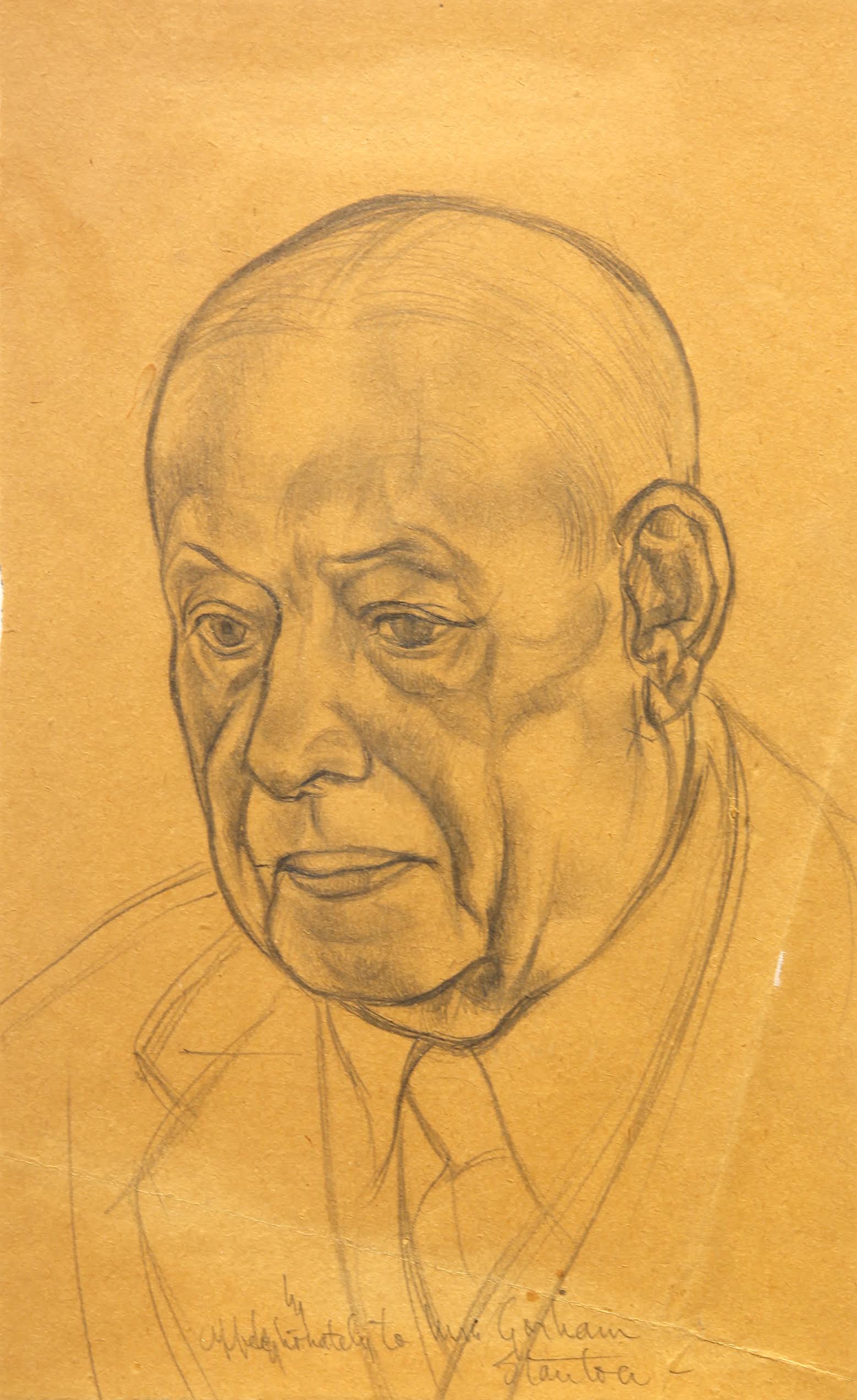
Gorham was born in Cleveland, Ojai in 1859. He attended school there and was preparing to attend Harvard, but his plan did not materialize. Gorham’s uncle, John P. Jones, was a U.S. senator from Nevada, and he persuaded young Gorham to go to Virginia City to take a job in the Comstock silver mines, which Jones owned. The year was 1877.
The Comstock Lode would hold Gorham’s interest for 26 years, during which time he progressed up the ladder of success to superintendent of mines. He assumed a great deal of company responsibility because of the absence of his uncle, who was busy with the senatorial affairs and his vast real estate holdings in Santa Monica, Calif.
After a brief illness, Gorham left the mines and went to Southern California to join his uncle in his business ventures there. Gorham eventually became president of the Bank of Santa Monica.
Senator Jones’ daughter Marian developed great skills in tennis, winning the National Women’s Championship for two years. Gorham’s son Hal shared his cousin’s interest in the sport and in 1905 they both came to Ojai to compete in the interscholastic singles division of the Ojai Tennis Tournament. Harry Gorham, a widower, always attended the matches in which his son participated, and he became interested in the Ojai Valley during the tournament here.
Gorham met Mrs. Florence Rogers during one of his trips to the Ojai Valley. She was born in Cairo, Ill., and as a young lady, she had also been very active in the game of tennis. She attended Vassar at the age of 12 and achieved an outstanding scholastic record. She had met her first husband, Emery Rogers, a Harvard man, in Chicago, and after they were married they lived in Boston. Two children were born to them, a boy named Emery and a girl named Constance and called Connie. They were a very happy and proper family until Mr. Rogers died at a very young age of tuberculosis.
After the loss of her husband, Mrs. Rogers took an extensive trip to Europe. Her thoughts were that they would live in a different country each year and perhaps never come home.
As the children grew older, Mrs. Rogers became concerned that her son was falling under corruptive influences. She had this notion that he was going to get himself a mistress and steal off to live “la vie boheme” in some Paris garret. So she set about hunting down a stern, rigorous prep school to pack him off to.
Rogers cabled her mother and asked her to check into a school she had heard about that was in the small town of Nordhoff (now Ojai), called The Thacher School. After receiving the word back that the school was held in high regard, the Rogers family left Europe in 1907 on the first boat home.
Arriving in the Ojai Valley, the family found a small village with a post office and a few stories clustered together. The houses were scattered about the sagebrush-covered valley.
The family stayed at the Pierpont Cottages while waiting to get young Emery into Thacher. The school had a waiting list, but Mrs. Rogers was determined that her son would go there.
Since most of the people of the valley depended upon horses for transportation, she ordered an elaborate cart from Ireland for the family to use.
Shortly after she settled in the valley, she met Harry Gorham and they fell madly in love. They married a short time after their first meeting.
In 1908, the newlyweds built Casa de Paz on McAndrew Road, but when young Emery finished his schooling at Thacher, the Gorhams sold the house and moved to Santa Monica.
By 1916, with the purchase of the Whale Rock Ranch in the Ojai Valley, the Gorhams had decided to build a small stone cottage for a weekend retreat. They named it Journey’s End.
The house was built entirely of rock, hand-selected from the property. When finished, it commanded a view of the entire valley. It had one large room, with a fireplace that doubled as a source of heat and a means of cooking.
The beams for the house were put into place with the use of donkeys and ropes, under the supervision of Mrs. Gorham.
The extensive use of tile manufactured by the Gladding McBean Co. added color and character to the strong appearance of the stone. To quote the front-page headline of The Ojai: “New Modern Home to Beautify Valley.” That, indeed, was a true statement.
Young Emery Rogers joined the Army during World War I, and from his description of Major Carlyle H. Wash, his commanding officer, Mrs. Gorham decided that since the major was also a graduate of West Point, he might be the perfect gentleman for her daughter Connie. They were married in 1919.
The newlyweds moved with the military from base to base until 1921, when Wash was assigned as air attache to the American embassy in Paris, where they lived for three years. Carlyle Wash would continue his success in the Army, eventually becoming a general.
In 1932, when Mr. and Mrs. Gorham left Santa Monica to live at Journey’s End permanently, they added a small kitchen, bath and bedroom.
During World War II, General Wash was killed, along with his staff, in a plane crash during a storm. Connie and her young daughter Patsy returned to the Ojai Valley and to Journey’s End.
A second home was built on the property for Connie in 1948 by Ojai designer Austen Pierpont. It was built on the hillside with a balcony. The single-story home had a red tile roof and a sweeping view of the valley.
Connie Wash became quite active in events that were taking place in and around the valley. During the war, she was the tri-counties chairwoman of the Camp and Hospital Committee of the American Red Cross. She was also a hardworking member of the Ojai Chamber of Commerce and the East Ojai Valley Association. She spearheaded the movement to replace the street signs with the wooden signs that we now enjoy.
The Ojai Garden Club elected her president, and she helped to get the other members more involved in the city. She was a strong supporter of the Ojai Music Festival.
In 1969, another wing was added to the original Gorham house to make it larger. Through it all, the house retained its charm.
Today, the beautiful Journey’s End is an estate that has withstood all the elements, having been featured on the television show “20/20″ with the 1985 fire sweeping around it. The home has continued to be protected and loved by the same family.
In 1986, the county’s Cultural Heritage Board declared this property Ventura County Landmark No. 103, with the hope and desire that the Whale Rock and the romantic Journey’s End will remain for many future generations to come and enjoy.
As for the large whale, it still looms over the countryside and is now shaded by the many live oaks that cover the area. To all of the Ojai Valley, it remains a place held in high regard, deep respect, love and awe.
The above column originally appeared in the Ojai Valley News on Dec. 3, 1999. Republished with permission.
Focus on Photography: Going Behind the Portraits
In conjunction with the museum’s current exhibit, “Fine Portraits, Fine People,” we present Anca Colbert’s recent Ojai Quarterly essay on the art of photographic portraits, which focuses on Ojai’s own Guy Webster.
A portrait! What could be more simple and more complex, more obvious and more profound.
– Charles Baudelaire, 1859
By Anca Colbert
The celebrated Paris Photo Show came to Los Angeles for the second year last April. The event, held at Paramount Studios in the heart of Hollywood, attracted the interest of the press, celebrities and a public eager to look, get informed and collect new artworks. “Portraits of Our Time,” a monumental limited-edition book of Annie Leibovitz’s work just released by Taschen Books, was drawing crowds and creating a sensation at their booth.On the heels of the two previous fairs held in January, the Photo L.A. show and the Classic Photo show, the huge success of this international event confirms the strength of the photographic art market, and the growing importance of Los Angeles as a city that supports this young and popular art form.
In the Spring 2014 Issue of the Ojai Quarterly we considered the accelerated evolution of photography as a technique and as an art, and the difference between a snapshot and a photograph. We continue our series on photography by taking a closer look at photographic portraits.
Painted portraits were part of art culture for centuries. To this day, Da Vinci’s “Mona Lisa” remains the most celebrated and mysterious of all paintings. But ever since the birth of photography around 1850, portraits in the most accessible and democratic of all art forms have captivated a wider audience, always hungry for more images, and in recent times with an ever-increasing appetite for personalities. From Nadar and Stieglitz to Gertrude Kasebier, Man Ray, August Sander, Cartier-Bresson, Henri Lartigue, Brassai, Diane Arbus, Mapplethorpe, Cindy Sherman, Irving Penn and Richard Avedon, we all have our favorites.
So, what’s the fascination with portraits? And what exactly are they? Are portraits able to capture the psychological character of the sitter? How “personal” is that image of a person? Portraiture is commonly regarded as a window into the soul of the sitter. But is it? Could it be a window into the soul of the photographer?
Photographic portraits, which fast surpassed the popularity of traditional painted portraits once the technology was available, are perceived as a way to capture reality. But how much do they, really? Whether in studio settings or in photojournalism circumstances, a psychological layer adds a twist to the situation, as Richard Avedon plainly put it: “A photographic portrait is a picture of someone who knows he is being photographed.” As we look at a portrait, we look at the dynamic interaction between an artist and a sitter, and at the energy in that space between them.

Photographic portraits are an interpretation of the reality of the person being photographed, as imagined by the photographer, and as perceived by the viewer. It’s all illusion, played by a trio.
Ojai is famous for being home to artists and creatives. Among the distinguished photographers who have lived and worked here are Horace Bristol (renowned for his photos of Dust Bowl migrants), and more recently Cindy Pitou Burton, Donna Granata and Guy Webster.
Guy Webster moved to Ojai 34 years ago. While he still commutes to his studio in Venice for weekly shoots of celebrities, he loves his family life in this heavenly valley, where he rides one of his many motorcycles every day. Guy loves speed, and motorcycles are his lifelong passion.
One of the early innovators of rock ‘n’ roll photography, Guy started by shooting album covers and billboards in the 1960s for groups that included the Rolling Stones, the Mamas and the Papas and the Beach Boys among numerous others.
As the primary celebrity photographer for hundreds of worldwide magazines, Webster has captured a vast range of talent in the world of music and film, from Igor Stravinsky to Truman Capote, Alan Ginsberg, Zubin Mehta, Alan Watts, Sean Connery, Mick Jagger, Jack Nicholson and Michelle Pfeiffer to his longtime Ojai friends Malcolm McDowell, Mary Steenburgen and Ted Danson.
Born and raised in Beverly Hills, Guy became a photographer by accident. It was 1961; he had just graduated from Yale and gotten into the Army. While stationed in Carmel, he volunteered to be a photography instructor without knowing anything about photography. He spent the night reading up on the subject, and the next day started teaching it! Later, back in Los Angeles, he had connections with some rock ‘n’ roll groups and record companies. The photograph that made him famous was the 1965 record cover of the album California Dreamin’ for The Mamas and The Papas: he shot them in a bathtub. After that, Guy says everybody in Hollywood wanted him to photograph them; it was the beginning of his stellar 50-year career.
The essence of photography is light and shadow. Guy Webster’s portraits speak that language fluently. I brought up my keen interest in the light quality of his portraits, particularly in his black and white work; he was pleased to tell me about his love for Italian painters, Caravaggio in particular. Caravaggio’s illumination of his subjects, known as Tenebrism, is a technique similar to chiaroscuro by which strong contrasts of light and dark are used to add emotion and drama to an image as if seen through a spotlight effect or illuminated by a candle. Other Baroque painters used that technique with memorable results, notably Rembrandt, Rubens, La Tour and Vermeer.
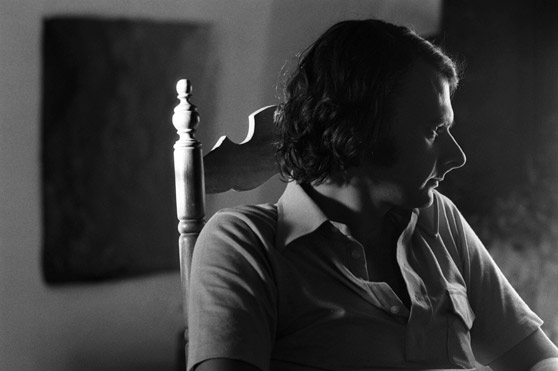
Guy Webster’s portrait of his friend John Nava offers an interesting reflection: double take on the painter living in Ojai, world renowned for his portrait work. Webster catptured the interplay of light and shadow in his old farm house in Spain, every subtle transition in the fabric of the shirt and on the wood of the chair, and the profile of the painter gazing intensely at what we cannot see.
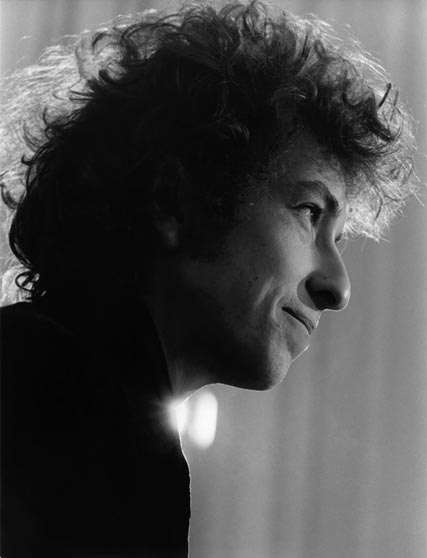
In his early portraits of Barbara Streisand and Bob Dylan, it’s interesting to note the light glowing around their throat area, a subtle indication of their golden voices.
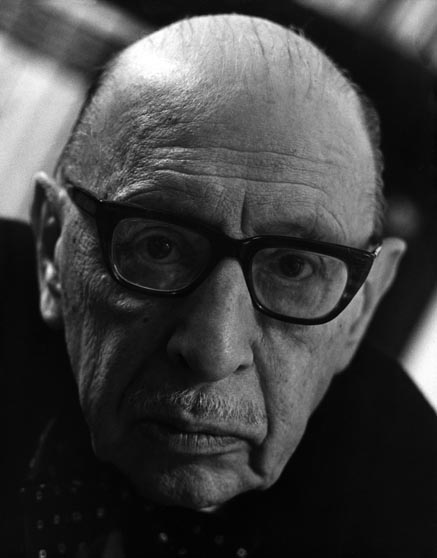
Columbia Records sent Guy on an assignment to photograph Igor Stravinsky at his home: he captured the composer, whom he immensely admired, in a very close-up frontal shot and at an angle focusing the light on the composer’s large forehead, clearly intending to give a hint of his genius.
A savvy storyteller, Guy exudes intelligence and calm. There is kindness, even sweetness, to his portrait work with celebrities — no doubt a reflection of his own temperament projected onto his sitters.
“A portrait is not a likeness. The moment an emotion or fact is transformed into a photograph it is no longer a fact but an opinion. There is no such thing as inaccuracy in a photograph. All photographs are accurate. None of them is the truth.”
— Richard Avedon

The Peter Fetterman Gallery in Santa Monica has been one of the finest galleries to exhibit classic and modern photography in the Los Angeles area since opening their space at Bergamot Station twenty years ago. Fetterman has a penchant for portrait photography, and his recent show “Portraits of the 20th Century” focused precisely on this theme. I asked Peter to share some thoughts about one portrait in the show that particularly moved me, the one of Martin Luther King Jr. by Dan Budnik:
“I have always had a great personal interest in civil rights photography. In my research for images for MLK for a civil rights exhibition, I came across this one. It was 1994. I had never heard of the photographer. He had fallen through the cracks. I found him, met him and discovered an untapped great archive. This is the greatest King portrait ever, taken moments after he had finished his greatest speech, ‘I have a Dream.’ Tears come to my eyes as I write this now, so many years later.”
In my book of art life, to be moved to tears by an image is always a good sign. Art has that power to touch us deeply. As the fascination with portraits retains its appeal with art lovers and remains an essential form of expression for professional photographers, photography continues its irresistible ascension as the visual art form of our times.
Anca Colbert is an Ojai-based art consultant and curator; the editor and publisher of Arts About Town, a guide to the arts life and activities in Ojai; and the arts columnist for the Ojai Quarterly. This column first appeared in the Quarterly’s Summer 2014 issue. Republished with permission.
Gene Lees in Ojai: Quiet Nights of Quiet Stars
By Mark Lewis
Ojai prides itself on its small-town charm, but it is not so small that everyone actually knows everyone. A person can live here for three decades — as Gene Lees did — without being widely recognized. So when Lees died in April 2010 at the age of 82, his friends mourned, and his Foothill Road neighbors took note, but his passing was not big news in his adopted hometown. The Ojai Valley News did not run an obituary.
Elsewhere, it was a different story. The New York Times hailed Lees as “a prolific jazz critic and historian who approached his subject with a journalist’s vigor and an insider’s understanding.” The Washington Post eulogized him as “a multi-talented writer who left a lasting mark on jazz as a biographer, an opinionated critic, and graceful song lyricist.” The Los Angeles Times quoted former New Yorker Editor Robert Gottlieb, who described Lees as “a strong presence in jazz.”
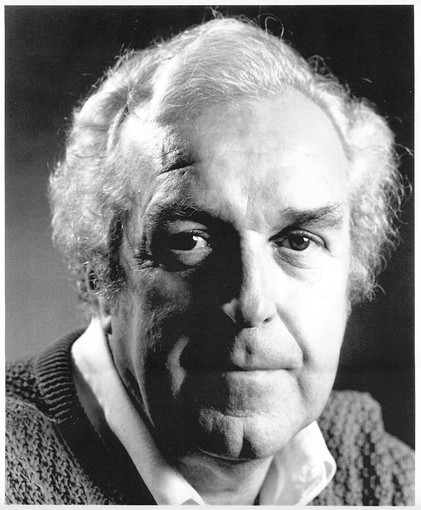
All the obituaries dutifully reported that Lees had died “in Ojai, Calif.” None explained how it was that a legendary jazz writer had ended up in this bucolic valley, so far from the big-city clubs where his favorite musicians plied their trade. A hint can be found in Lees’s most famous lyric, even though he wrote it years before he first set eyes on Ojai.
EUGENE Frederick John Lees was born in Hamilton, Ontario, on February 8, 1928. As a young man he dreamed of becoming a painter. Instead he went into journalism, first in Canada and later in Kentucky, where he served as a music critic for the Louisville Times. By 1959 he was in Chicago, editing the jazz magazine Down Beat.
After leaving Down Beat in 1961, Lees volunteered to tag along with the Paul Winter Sextet on a State Department-sponsored tour of South America. Lees was intrigued by what he had heard of bossa nova music, and he wanted to trace it to its source. When the tour reached Rio de Janeiro, he contacted the songwriter Antonio Carlos Jobim, and they quickly became friends. On the bus trip from Rio to the tour’s next stop, Lees jotted down some English-language lyrics for Jobim’s “Corcovado.” (The original lyrics, of course, are in Portuguese.) This is how the Lees version begins:
Quiet nights of quiet stars
Quiet chords from my guitar
Floating on the silence that surrounds us
Quiet thoughts and quiet dreams
Quiet walks by quiet streams
And a window looking on the mountains and the sea, how lovely
When the tour ended, Lees headed for New York City. He had written a novel, which he hoped to sell to a publisher, and he also had aspirations as a lyricist.
“That first year in New York was one of the most difficult of my life,” he recalled in his book Friends Along the Way: A Journey Through Jazz. “I couldn’t, as they say, get arrested. I couldn’t sell my prose, I couldn’t sell my songs. At any given moment I was ready to quit, scale back my dreams to the size of the apparent opportunities, leave New York and find some anonymous job somewhere.”
Then things started to click.
“I was the pianist on the first recording of one of his songs,” recalls the composer Roger Kellaway, a longtime Ojai resident. “The song was called ‘Fly Away My Sadness,’ and the vocalist was Mark Murphy.”
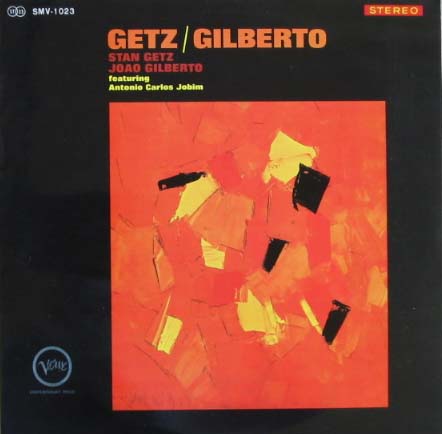
A few months later, Tony Bennett recorded “Quiet Nights (Corcovado)” for his hit 1963 album I Wanna Be Around. Then came Getz/Gilberto, an epic event in jazz history. Released in March 1964, this album by Stan Getz and Joao Gilberto transformed the bossa nova craze into an international phenomenon. The hit single was “The Girl From Ipanema,” for which Lees did not supply the lyrics. But he did write the album’s liner notes, and the LP also featured Astrud Gilberto singing Lees’s version of “Corcovado.” (The English version eventually would become better known as “Quiet Nights of Quiet Stars.”)
Lees had made a successful transition from journalist to songwriter. His lyrics for his friend Bill Evans’s tune “Waltz for Debby” became another standard. But there was a cloud on the horizon, because 1964 was also the year of Meet the Beatles. Rock ‘n’ roll was the coming thing, and sophisticated jazz-pop songs — the kind Lees wrote — would soon be on their way out.
“Oh my God, he hated the Beatles,” recalls his widow, Janet Lees, chuckling at the memory of Gene’s bitter fulminations against rock music.
The next few years constituted a kind of Indian summer for jazz singers, who continued to score occasional Top 40 hits. Lees had the privilege of watching Frank Sinatra record “Quiet Nights” for the classic 1967 album Francis Albert Sinatra & Antonio Carlos Jobim. Lees also supplied the lyrics to “Yesterday I Heard the Rain” for Tony Bennett, and he translated “Venice Blue” for Charles Aznavour.
“Venice Blue” also was recorded by the rocker-turned-crooner Bobby Darin, whom Lees considered a talented singer. This association with Darin “was probably about as close to the pop industry as he ever got,” Kellaway said of Lees, his old friend and frequent collaborator.
Kellaway himself was more adaptable; he went on to work with the likes of George Harrison. But Lees could not accommodate himself to the new order.
“Had Gene been born sooner, he would surely have been as famous and successful as the top songwriters of the ’30s and ’40s,” the Wall Street Journal critic Terry Teachout wrote after Lees’s death. “But he came along after the cultural tide of jazz had started to ebb … Not surprisingly, he despised rock, which he believed had laid waste to the lost musical world of his youth.”
 As he turned 40 in 1968, Lees faced diminishing prospects as a songwriter. His personal life was also unsettled after two failed marriages (one of which had produced a son). Then Lees met Janet Suttle. By 1971 she was Janet Lees, and they were living in Toronto, where Gene ran Kanata Records. (Among the albums he put out during this period was his own Bridges: Gene Lees Sings the Gene Lees Songbook.)
Things were looking up on the songwriting front, too. The legendary director Joshua Logan was developing a new Broadway musical called Jonathan Wilde. Composer Lalo Schifrin, already famous for his Mission: Impossible theme, was writing the music. Logan brought Gene in as the lyricist. “Logan told Richard Rodgers, ‘I’ve found the next Hammerstein,’ ” Janet Lees recalls.
The job required Gene to make frequent trips to Southern California, where Schifrin was based. Eventually, Gene and Janet made a permanent move from Toronto to Tarzana, where they bought a house. To their great disappointment, Jonathan Wilde was never produced, due to a legal dispute between Logan and the show’s original writers. But Gene kept busy with other projects, such as collaborating with Roger Kellaway on the songs for an animated film, The Mouse and His Child. There was still a market in Hollywood for the sort of lyrics he wrote, even though rock music and disco now completely ruled the Top 40.
But Lees’s career was about to enter an entirely new phase. And the turning point can be traced to a weekend trip he and Janet made to Ojai.
LEES already knew Ojai fairly well. “He used to come up here and work with Lalo Schifrin, who had a house behind the Presbyterian Church,” Janet said. But on one particular weekend, sometime in the late ’70s, something special happened. The clock-radio alarm in their motel room was tuned to the only station in town: KOVA-FM, owned by jazz expert Fred Hall. On Sunday morning, Gene awoke to sounds he did not readily associate with small-town living.
“I heard first Count Basie, then Jack Jones, and a man who discussed them with great knowledge,” Lees later wrote. “This brought me to full wakefulness, and when I heard the station’s call letters, I telephoned and spoke to him. That’s how I met Fred. He invited me to visit the station, which I did later that morning.”
Ojai in those days was something of a jazz hotbed. The famous trumpet player Maynard Ferguson lived here. The annual Ojai Music Festival always included a jazz component, organized by Fred Hall and Lynford Stewart. Later on in the ’80s, Wheeler Hot Springs began to host performances by the likes of Ray Brown, Mose Allison, Charlie Byrd and the Manhattan Transfer. At the heart of it all was Hall, whose radio show “Swing Thing” reached a national audience via syndication. Gene and Janet immediately hit it off with Fred and his wife, Gita. The Leeses also fell in love with Ojai, a place where quiet nights of quiet stars are almost a nightly occurrence. At some point, Gita asked the obvious question: “Why can’t you live here?”
The answer, essentially, was “No reason at all.” The Leeses left Tarzana behind and rented a house on Signal Road. Later they moved into an apartment complex in the Mira Monte neighborhood, before eventually settling in house high up on Foothill Road. Gene, Fred and Lyn Stewart teamed up to produce the “Jazz At Ojai” concerts in Libbey Bowl. And Gene turned from writing jazz lyrics to writing jazz essays.
The catalyst was the 1981 death of his friend Hugo Friedhofer, the distinguished film composer. To Gene’s immense frustration, he could not persuade the New York Times to run an obituary. The giants of his era were passing, and nobody seemed to be noticing. It was time for Lees to return to his roots as a journalist, to memorialize their achievements.
“That’s when Gene started the Jazzletter,” Janet said.
Lees put out his newsletter from 1981 until he died. It featured eloquent essays on a wide range of topics, not all of them jazz-related, but all of them beautifully written and brimming with passion. It became an institution in the jazz world, cherished by its subscribers.
“The Jazzletter was wonderful,” Kellaway said. “There were long, long dissertations on whatever he chose as a subject.”
He filled the Jazzletter with biographical essays, many of which were collected into books. He also wrote full-length biographies of Oscar Peterson, Woody Herman and Johnny Mercer. (At his death, Lees was putting the finishing touches on a life of Artie Shaw, which may yet be published.) Long or short, most of these profiles featured Lees himself in a supporting role, since he was always part of the story.
“Gene actually knew personally everybody that he wrote about,” Kellaway said. “He knew Basie and Tommy Dorsey. He knew everybody.”
At first, Lees continued to work as a lyricist while putting out the newsletter. In the early ’80s he acquired an unlikely collaborator: Pope John Paul II, who as a young priest had been given to writing poetry. Two Italian composers had set these poems to music, and Lees was hired to translate them into English lyrics. The result was a song cycle that was performed in a special concert in Germany, with vocals by Sarah Vaughan. The concert was recorded, but no major record company was interested, so Gene and Janet put the record out themselves with the title The Planet is Alive … Let it Live!
After that experience, Lees focused more on prose than poetry. His readers — and his friends — were seldom in doubt about where he stood. He liked to drink and he liked to argue, and the combination was not always pleasant for the people around him. Nevertheless, the jazz critic Doug Ramsey enjoyed jousting with Lees.
“He had strong opinions about everything,” Ramsey wrote in his Lees obituary. “We argued. Arguing was half the fun of knowing Lees. Every argument with Gene was a win for me because I had learned from him.”
Lees suffered from ill health during his final years, but he kept on writing — and not just about jazz legends from the past. One younger singer he admired was Diana Krall, who returned the compliment by recording his best-known lyric as the title song of her most recent album, Quiet Nights.
During Gene’s three decades in Ojai, the town lost some of its jazz chops. Fred and Gita Hall sold the radio station and later moved away. Wheeler Hot Springs closed, and the Ojai Festival stopped featuring traditional jazz. But Ojai remained well known in the jazz world as the home of Gene Lees and the Jazzletter. (Gene and Janet also deserve credit for bringing the violin virtuoso Yue Deng to live in Ojai, after they took her under their wing and introduced her to jazz.)
When Gene died on April 22, 2010, Janet was stunned by the outpouring of tributes from jazz writers and musicians across the globe. Eulogies were printed as far away as London, where the Times called Gene “one of the most dazzling lyricists in popular songwriting, and the Boswell to a generation of jazz musicians.”
“I just didn’t think of him as being so well-known all over the world,” Janet said.
In Ojai, not so much. Yet it was here that the man who wrote “Quiet Nights of Quiet Stars” finally found his own Corcovado, after first finding the person to share it with. Here’s how the song ends:
This is where I want to be
Here with you, so close to me
Until the final flicker of life’s ember
I who was lost and lonely
Believing life was only
A bitter tragic joke, have found with you
The meaning of existence, oh my love
This article originally appeared in the winter 2011 issue of the Ojai Quarterly. Republished here with permission. Janet Lees died in 2013. Gene Lees’s Artie Shaw biography has not been published. (Posted by Mark Lewis, December 2014)
Jailhouse Rocked
The Ojai murder case that put Johnny Cash behind bars at Folsom Prison
By Mark Lewis
Ojai is not renowned for famous murders. But there was one local case, involving an accused murderer named Earl Green, that deserves at least a footnote in the history books, because it set off an unlikely chain of events which eventually led to the making of Johnny Cash’s legendary “At Folsom Prison” live album.
Cash never did any hard time in his life, but Green did – in Folsom Prison, no less. And Cash never actually shot a man in Reno “just to watch him die” – but Green crushed a man’s skull with a baseball bat near Ojai, just for $9 and a wristwatch. That at least was the DA’s version of events; Green claimed he acted in self-defense. The jury bought the DA’s version and sent Earl to death row. But he ultimately evaded the gas chamber and ended up in Folsom, serving a life sentence. As a result, years later, Green was able to play a key role in bringing Cash there to perform. In fact, if Green had never picked up that baseball bat, Cash’s Folsom concert might never have happened.
The story begins on Labor Day 1954, when Earl Compton Green Jr. and his friend Joseph Oliver LaChance drove from Pasadena to Ojai to apply for work at a local resort.
Green, 27, was an ex-Marine and a convicted felon from Florida, who recently had moved to Pasadena with his second wife and her 3-year-old daughter by an earlier marriage. He found work as a kitchen helper at the Annandale Golf Club under an assumed name. There he met LaChance, 49, an ex-con from Canada who worked at Annandale as a guard.
Green already was itching to move on from Pasadena. He was afraid that his mother-in-law, who resided there, would report him to the Florida authorities for breaking the terms of his parole by leaving the state. (He had served three years for armed robbery. Apparently the mother-in-law did not consider him a suitable match for her daughter.) LaChance had an idea: Why not move to out-of-the-way Ojai, where no one would know who he was?
LaChance apparently had worked at an Ojai resort in the past (probably Matilija Hot Springs), and he offered to use his contacts there to find jobs for both Green and himself. On Labor Day they drove in LaChance’s car to Ojai, stopping several times along the way to have a few beers. When they arrived at the resort, they were told that the man they wanted to see would be away from his office for two hours. So they had a few more beers and drove out to Matilija Lake to kill some time while they waited.
The police theory of what happened next is that Green saw an opportunity to rob LaChance, so he bashed him twice on the back of his head with a bat when the older man stooped down to get a drink of water. Green’s version is that they had driven up there to do some target shooting, but instead LaChance made an aggressive pass at him.
“We got there and he didn’t want to shoot gun, he wanted to play around,” Green told Johnny Cash biographer Michael Streissguth many years later. “And so I hit him with a bat I picked up, and I hit him too hard and I killed him.”
(Streissguth, who filmed a lengthy interview with Green in 2007 for a documentary film about Cash, has graciously shared the interview transcript with the Ojai Quarterly.)
Green took LaChance’s wristwatch and the $9 he found in the man’s pockets, and drove off in LaChance’s 1951 Chevy sedan. He stopped in Pasadena just long enough to pick up his wife and her young daughter, then set off on a cross-country crime spree. He pawned the watch; sold the car somewhere in Ohio; robbed a supermarket in Richmond, Ind.; then committed another robbery in Ocala, Fla. Then he headed west again, moving from town to town, keeping one step ahead of the law. The police finally caught up to him in March 1955 by setting up a roadblock on Route 66.
“They run me down in Amarillo, Texas,” he told Streissguth. “They knew what kind of car I was driving and that’s how they got me.”
In the car they found Green, his wife and stepdaughter and an 18-year-old male accomplice, along with a .22 rifle and a sawed-off shotgun. Green put up no resistance. He had gotten away with $6,000 in cash from that Indiana supermarket robbery, but had less than 75 cents on him when he was arrested.
Three months later, on trial for his life in a Ventura County courtroom, Green admitted killing LaChance, but claimed temporary insanity. Being propositioned by a man, he said, had prompted a violent reaction, essentially in self-defense. The jurors didn’t buy it; they convicted him of first-degree murder and sentenced him to death.
All capital murder cases automatically were appealed, but Green had little reason to think that his conviction might be overturned. He spent the next 16 months on death row in San Quentin, waiting for his date with the gas chamber down in the prison basement.
“I thought, ‘This is it, man,'” Green recalled. “I’ve seen three men go down. They shook my hand and then they took them down the day before [their execution].”
But Green would never take that fatal trip to the basement. In October 1956, the California Supreme Court affirmed his murder conviction but overturned his death sentence, on the grounds that the trial judge had erred in his instructions to the jury. Reversing an 82-year-old precedent, the court stunned the state’s legal community by ordering a new trial to determine Green’s punishment.
Improbably, Green had a new lease on life. But Ventura County District Attorney Roy Gustafson still wanted his scalp, and Green had every reason to fear that the next jury, properly instructed, would send him right back to death row. So he developed a new strategy. He acted so bizarrely that he was declared incompetent to stand trial. This is not easy to do – if it were, then every capital-murder defendant would try it. But Earl Green pulled it off. “Green broke down and was declared hopelessly insane,” the Los Angeles Times reported.
He was sent to the Atascadero State Mental Hospital, where doctors eventually determined that he was fit to stand trial. Unwilling to face another jury, he escaped from Atascadero, but was soon recaptured. Hauled up before a judge in yet another Ventura County courtroom, he once again went into his crazy act. And once again it worked, earning him a return ticket to Atascadero. Then he surprised everyone by admitting that he had been faking insanity all along to avoid the gas chamber. “Green told Gustafson he was sorry he had caused so much trouble and was especially sorry about pretending to be God,” the Times reported.
So, back to death row? Not this time. Green had worn down Ventura County justice officials with all his antics, and they had little desire to put him on trial again. After a brief hearing in February 1958, a judge gave him a life sentence, and at the age of 30 he was sent to live out the rest of his days in Folsom Prison.
“Well, you know Folsom was for hardened criminals,” Green told Streissguth. “Those that were there were on the end of the line. No looking for parole or anything; you run out your life in prison. And it was a prison within a prison. It had them big old six-foot [thick] walls. And then you went through them and went down through the inner part, and there was another wall! And that was the inner prison, I was told.”
Green found Folsom more congenial than San Quentin in at least two respects: It had no gas chamber, and it was not dominated by inmate gangs. A man could “do his own time” at Folsom, meaning that if he minded his business and kept his nose clean, he could stay out of trouble with the guards and with his fellow inmates: “If you won’t bother them, they won’t bother you.”
Green steeled himself for the likelihood that he would pass three or four or even five decades behind those walls. His wife had borne him a son conceived before his arrest, but Earl told her to get a divorce, take the child and forget all about him. She took his advice; apparently he never saw her or the boy again. Nor did he maintain contact with his older son from an earlier marriage. He drew a curtain on the past, and settled in to do his time.
Green found solace by returning to his Christian roots. Raised as a churchgoer, he had fallen away from grace during his hell-raising years. But after his arrest, he had struck up a friendship with the Rev. Floyd Gressett, a Ventura pastor who ministered to county jail inmates. Gressett had visited Green on death row in San Quentin, and continued the visits after Earl landed in Folsom as a lifer.
Green also spent a lot of time in Folsom’s Greystone Chapel, which served both Protestants and Catholics. “I went there for my benefit to get spiritual uplifting,” he said.
To help the time pass more quickly, Green kept busy by playing country music with friends.
“I took up the bass guitar while I was in there,” he said. “I had my mother send me one, an electric guitar. And I learned the bass and I had me a little band. … And it was something that I did on my own to [keep from] going insane. I bet if you sat there watching walls all day you would go insane.”
One day he noticed a new inmate playing a guitar by himself in the prison yard. This was Glen Sherley, who was doing time for armed robbery. Glen was a decade younger than Earl, but the two men had similar musical tastes, and they hit it off. “So we got together and played, and he played me a lot of his songs,” Green recalled. Impressed with their quality, Green urged Sherley to try and sell them to a music publisher. Glen shrugged off the suggestion. “He thought nobody would do nothing with them songs,” Earl recalled. “He didn’t think nobody would do anything for him.”
The years passed and Green thrived in prison, to the extent possible. By 1964, he was serving as the in-house DJ, “the Voice of Folsom Prison,” spinning songs that inmates could listen to on headphones in their cells. Green was big Johnny Cash fan, and he knew that Johnny had performed several times for the inmates at San Quentin. (A young Merle Haggard attended at least one of those shows while serving time for burglary.) If Cash could play San Quentin, why not Folsom?
Green knew from Floyd Gressett that Cash was now living in the Ojai Valley, and sometimes attended services at Gressett’s nondenominational Avenue Community Church in Ventura. As Gressett later related the story to Ventura Star-Free Press reporter Gene Beley, it was Earl Green who now kicked off the chain of events that eventually brought Johnny Cash to Folsom Prison.
“One time when I visited Green,” Gressett said, “he asked me what the possibility was of Johnny visiting the inmates.”
Gressett relayed Green’s invitation to Cash, who eagerly accepted. Green helped sell the idea to the Folsom authorities. It took awhile to set up, but the unpublicized concert finally took place in November 1966, with Green himself serving as soundman. “He come on and did a terrific show and of course he was accepted [by the inmates],” Green said. “They just clapped and clapped and clapped for him.”
The show’s success seems to have inspired Cash to revive a pet project. For years he had wanted to record a live album at one of his prison shows, but his Columbia Records producers always vetoed the idea. Then, early in 1967, Cash was assigned to a new producer, Bob Johnston. When Cash pitched the prison idea to Johnston, he embraced it and made it happen. And so, on Jan. 13, 1968, Cash returned to Folsom with a truckload full of Columbia Records sound equipment to record “At Folsom Prison,” the live album that would transform his career.
Earl Green did not attend that second concert; he had been transferred to a minimum-security prison in Vacaville three months earlier. Nevertheless, he managed to play a key role in the proceedings. While still at Folsom, he had urged Glen Sherley to write a song for Cash. Sherley came up with “Greystone Chapel,” which echoed Green’s own discovery of salvation behind bars:
It takes a ring of keys to move here at Folsom
But the door to the House of God is never locked
Inside the walls of prison my body may be
But my Lord has set my soul free
Green recorded Sherley singing the song in the chapel, and slipped the tape to Gressett, who eventually played it for Cash. Johnny loved the song, and he performed it during his second Folsom concert, after pointing out Sherley in the audience as the man who wrote it. This performance was included on Cash’s live album, thus launching Sherley as a professional songwriter while he was still behind bars.
In 1971, Cash helped bring about Sherley’s parole and brought him to Nashville as a songwriter for Cash’s publishing firm, the House of Cash. Johnny also made Glen a featured performer in his touring stage review, “The Johnny Cash Show.” As a free man, Sherley went on to write “Portrait of My Woman” for Eddy Arnold, and he also recorded some albums of his own. Charismatic, talented and ruggedly handsome, Sherley seemed set for stardom in his own right.
Meanwhile, Earl Green had beaten the odds again: Despite his life sentence, he had become eligible for parole. Gressett asked him if he wanted to seek Cash’s help, but Green rejected the suggestion. He did not want anyone to pull any strings for him. He earned his freedom the hard way, by demonstrating over the years that he was no longer the man who had swung that baseball bat at Joseph LaChance’s head back in Matilija Canyon.
Paroled sometime in the early ’70s – the exact date is uncertain – Green followed his friends Sherley and Harlan Sanders (another parolee-turned-songwriter) to Nashville, where Green worked briefly as a DJ for a local radio station. He also worked (very briefly) at the House of Cash, in a make-work job that Johnny offered him “out of the kindness of his heart, like he felt I needed the money, which I did.”
Green never tried to reconnect with his long-lost sons, but he did marry again, and he helped his new wife, Sheila, raise her sons from a previous marriage. Green also tried to help his friend Glen Sherley, whose Cinderella story did not have a happy ending.
Ironically, Sherley’s main problem apparently was his pep-pill habit, the same addiction that had almost cut short Cash’s career, not to mention his life. Sherley grew sullen and withdrawn, and began to make threatening remarks that intimidated Cash’s other employees. “Back then he was taking them pills and John found out about it and that’s when John kicked him out,” Green said.
Spiraling downward, Sherley gave up on his once-promising Nashville career and returned to California. He had gone through all his money, he had few prospects, his wife had left him. One day in May 1978, he picked up a gun and blew his brains out. He was 42 years old.
“It was just sad, because Glen got on those pills so bad that they just controlled him,” Sheila Green told the Ojai Quarterly in a recent interview.
No such fate awaited Earl Green. He was content to work in a machine shop, and later as a sort of a handyman for the country stars Ricky Skaggs and Sharon White. “I was nanny to their children, and Earl, he did a little bit of everything,” Sheila said.
Sheila said she tried unsuccessfully to get Earl to write his memoirs “because so many things happened in his life. It would have made a real good book.”
Earl preferred not to dwell on the past. But he always remained very proud of the role he had played in helping to bring Johnny Cash to Folsom Prison.
“We stayed friends with Johnny,” Sheila said. “We went to dinners at their house.”
Earl also remained a churchgoer, and he remained married to Sheila for 37 years, until his death in Nashville in 2011 at the age of 84. Spared from the gas chamber, and from permanent confinement in Folsom, he had turned his life around and made it count for something. And that, more than the famous Johnny Cash concert, was his most impressive accomplishment.
“Of course I’m not the person who went into prison,” he told Streissguth. “I’m the person who come out of prison. And I changed. And I did that myself.”
(This story originally appeared in the spring 2013 issue of the Ojai Quarterly.)
Memoirs by Monica Ros, founder of Monica Ros School
In Her Own Words by Monica Ros
Transcription of Mrs. Monica Ros’s handwritten notes from approximately 1984-1986, including her autobiography, the school history, her teaching philosophy and the founding principles of the Monica Ros School.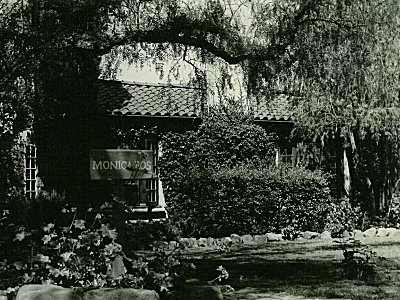
EARLY DAYS
In what I consider, and I think my sisters would have agreed, our best remembered and formative years were spent when we lived in the then undeveloped area of Willoughby on the outskirts of the North Shore Line.
My name before marriage was Monica Horder. Margaret and I were born in Burwood, Australia in 1904 – 1901 respectively and from there we moved to Croyden, both suburbs on the eastern train line, and in 1910 we moved to a large two story house set in the middle of three acres of ground and named Greenacre. The house in Willoughby had been built by a gentleman, a Professor Pitt-Cobett (not sure of spelling) from England who taught at the Sydney University, and who lived at Greenacre in lonely state with his serving-man perhaps with nostalgia for England.
Patricia, known as Pat, our sister, was born in Croyden in 1909 so she was only a baby when we moved. How we loved that sweet and charming house! It was hung with convolvulus creepers and the front door, set in a small porch, looked out on the grass oval with a tall Italian cypress in the center. The gravel drive circled the grass and led straight to the front gate. On either side of the drive was a half-acre of rough grass (one became a tennis court later) and all was surrounded by an arboretum of trees and shrubs. There was a horse and carriage stable but we only aspired to pasturing our grandfather’s beloved old horse Graff for several years which we rode occasionally round the acre paddock. Mother developed a half acre of flower gardens on the east side of the house and from our bedroom window, on the same side, was a distant view of the Middle Harbour Hills and a bit of blue water.
Another feature of the area at that time was the extensive Chinese market gardens and I remember seeing these industrious people jog-trotting with their pails of water balanced on a pole over their shoulders. The water was derived from deep wells in the fields which in turn produced mosquitoes in appalling numbers which I remember doing battle with each night even in a mosquito net shrouded bed.
The extension of Edinburgh Road beyond our house was then a sandy, stony road, which wound down by a bush track to the waters edge. As children we were often taken on boating picnics, a rowboat being hired from a man who accommodated picnickers. We were often accompanied by cousins and by several young uncles, our mother’s younger brothers who taught us to row. Our father, who was a Londoner and twenty years older than our mother, did not feel at home on boating picnics and did not join us, but he liked us to have the fun. He did love Greenacre and I think the setting suited him with its overtones of an English country home.
Our mother had graduated from the Sydney University (not a very usual distinction for a woman then) and was a serious minded, gentle person and avant-garde in her thinking of the day. She married my father when she was twenty-one. She was really suited for an intellectual life, but devoted her energies to home making and seeing that her three girls have a happy childhood. At the same time she was able to follow her own interests and devoted time to writing papers and to the study of philosophical subjects and social change along with close friends of the same mind. While all were involved with husbands and families they shared this mutual desire to pursue philosophical, literary and social interests of the day. Naturally some of this rubbed off on us.
Our father, while primarily a businessman and so hard working, never interfered or opposed mother’s interests, but was devoted and proud of us all.
He really loved music and while he had no actual training beyond singing as a young boy in St. Paul’s choir in London he was sensitive, appreciative and supportive of my interest in music and was always happy for me to play the piano for him. Later he bought me a beautiful violin from my teacher who had purchased it in Brussels when on tour. And later, too, he built Margaret a little studio where she could work at home. She studied at the Julian Ashton art school in Sydney. His spending money in this way was indicative of his cooperation with mother to give us the where-with-all, within his means, for us to make progress in our chosen vocations. It was always understood, too, that we were eventually to be self-reliant financially. Otherwise, we were very limited as to clothes, entertainment and lived very simply at home and were rather serious minded though loving a good time, but most unsophisticated socially.
During our years at Greenacre the tennis court was made on one of the large grass areas either side of the driveway – a big expense for our father – which provided reciprocal entertainment at home with friends. There were tennis afternoons and evenings when everyone stayed to supper and an evening of music followed provided by our respective talents. Our cousins at Chatswood were our model. Tennis on Saturday afternoons at their home was wonderful topped off with supper and musical evenings and dancing on the verandah. As we had no brothers, except an older step-brother who was not much at home as he had taken up going on the land, which was a drawback socially for us, but with our cousins we met their fellow school and university friends and so a congenial group was formed. Tennis courts were prevalent in those days which provided a great deal of social life for families in a round of invitations of this kind.
Summer holidays were spent usually at the seashore where a house was rented, sometimes together with our cousins, sometimes separately. Friends were invited to stay and the entertainment was the beach and surfing. Father came during week-ends. I do remember when we were quite young at Greenacre driving in a four wheeler cab with assorted cats among the luggage over French’s Forest to Collaroy on Pittwater or some such place. The Blue Mountain with marathon walks up and down gullies, was another holiday resort.
For ten years or more we lived in this rather self contained and isolated environment though one with cultural motivation. There were always books, reading aloud and an interest in music and art. Our home also provided a source for the love of reading and acquaintance and taste in literature and the arts. Plays were our passion and took up a large part of self-entertainment during the holidays with cousins and friends. The script was usually original and anything at hand provided costumes and stage props. There was a captive audience of mother, aunts and friends. I am sure the work in my school in later years in children’s dramatics stemmed from those early years of remembered delight.
We were taken for one glorious outing a year to the theatre, a never forgotten treat, to see plays such as Alice in Wonderland, Peter Pan, the Blue Bird, and so on. Once, I remember, we saw a big circus when a client of our fathers presented us with tickets! Later Mother would take me to orchestral concerts and recitals once my interest in the violin was established. A fellow violinist and I would spend afternoons playing violin duets together or spending much time rehearsing in a string ensemble organized by our teacher and so on.
It became apparent as Margaret and I grew older that our interest definitely lay with drawing and music. Our parents were far sighted enough to encourage this, so in spite of limited means – World War I soon disrupted my father’s business – money was put out for drawing and music lessons and private education. Also it was always understood and accepted that we should try to eventually become largely financially independent. Pat, who was much younger than Margaret and myself and while very musical, but on leaving school Pat took up secretarial work, though later reverted to music and the theatre.
SCHOOLING (Young Miss Monica’s)
With the exception of a few years when I attended two different small private schools and until my early teens, schooling was carried out by a governess and later with a small group of children who lived in the same locality. When very young in Burwood I attended a (kindergarten) private infant’s school, as they were called then, a short distance from home. On moving to Boyden, where Pat was born, I had a governess, a Miss Davidson, who came to our home to give me lessons.
Perhaps an anecdote is timely here because it shows Margaret’s flair for language, humor and charm at an early age. Mother had come to the study with Margaret, then barely three, I’m sure, to see me settled in with Miss Davidson. When the time came to leave, Margaret loath to do so was enticed by suggesting that she pick up her teddy bear and take him out doors. “Oh!” she exclaimed, thrust the little beast outside. I can see mother laughing now. As she guided the child out by the door.
Later I joined a family of children, two boys and two girls, for lessons with the same governess. We had lessons in their big nursery play-room. Margaret was still too young to join us being three years younger than I. I have a vague recollection of beginning readers and doing sums, but I do remember vividly when one day I found I could read Guy of Warick all by myself.
Next, when eight or so, I was sent to a school in Strathfield called Meriden. It was a long journey, which involved a walk to the train station where the train took me to Strathfield. I remember very little except that there were lots of girls and I was very shy. One girl became a life long friend and we visited each other’s homes during holidays even when we lived far away from each other. It was certainly a long journey to Homebush from Willoughby and vice versa. We shared the same interest in imaginative occupations.
What schooling Margaret had at this point I do not know. Perhaps Miss Davidson or mother attended to it. About this time, I came down with a severe illness and was in bed eight to ten weeks. It was soon after I was able to get about a little that we moved in 1910 to Willoughby and to live at our beloved Greenacre home. As a result of the long confinement I had to learn to walk again and recall distinctly trying to meet my father as he came home from work. How long the front drive seemed!
When at Greenacre we first attended a private school in Chatswood named Astrea, which entailed a walk to the train, which took us to Chatswood. Some time later it was decided that Margaret’s and my schooling should revert to a small group of children taught at home. We were enrolled with a brother and sister of our own age to have lessons with a governess named Miss Caroline Whitfeld a charmingly, cultivated woman with a gift for stimulating interest in literacy and historical subjects in particular and encouraging creative writing, but always with an eye to grammar and spelling. Later the group of children was enlarged to eight – all girls then some of whom became life long friends – came to Miss Whitfeld’s home for lessons where rudimentary school rooms were created and morning exercise were held in the hallway.
There was French and little plays given for our parents in French. I was always poor at sums, but remember laboring through long division. I believe it was Miss Whitfeld who really drilled the times tables into one. To Miss Caroline Whitfeld we owe a great deal of our early education.
Miss Whitfeld had two sisters living with her and one, Miss Harris, wrote and published teen age stories and also taught drawing in which Margaret and I participated. I do remember still life attempts, but I think possibly the greatest influence Margaret had was from a little girl named Helen Young who had a talent for drawing ponies and horses. We would stand around her at recess and beg her to draw for us. The ponies she told us were brumbies. Recess was taken in a small adjoining field – no play equipment, we had our own games. We sang songs together Miss Whitfeld playing the piano. This socially simple, but educationally sound schooling in a limited way has had a lasting effect on our lives. My cousin, who was one of the group, still writes in her letters to me, when referring to something she had written Miss Whitfeld would not approve of that construction!
This small and protected personal school environment was left behind when in 1916, I first and Margaret later was sent to the Redlands on Military Rd. Mosman, a school which is still flourishing in a northern suburb of Sydney. In my day the principal was Miss Gertrude Rosely whom one thinks of “with gratitude as a guide, counselor, friend and an inspiration to live a good life as well as a teacher of formal education. To quote from a recent retrospect celebrating Redland’s centenary. Miss Rosely resigned in 1945 and the school is now run as a Church of England School. There, a very good teacher, a Mr. Collins, was teaching and I’m sure Margaret must have made her mark when she entered his class, because she continued her studies with him after leaving school.
By then I had taken up the violin for some years. Much time in my school years was spent studying music as well both piano and violin though the violin became my principle instrument. For some years I had been studying violin with a teacher named Mowat Carter who was well known in Sydney. This entailed trips to town for lessons after school. It was a long day via a ferry boat. He was not attached in any way to the Sydney Conservatorium of Music, which was, and still is the foremost school of music there.
Later I attended the Conservatorium the main purpose being to prepare myself for teaching, violin in particular to children. This deep rooted feeling and interest I had for children to have a well grounded, sensitive and appropriate beginning in learning a musical instrument was carried over much later when the Monica Ros School was formally founded in 1944 at the present site with a curriculum that allowed for a child’s creativity, learning, growth and happiness through musical experiences as well as the recognized academic needs.
LATER YEARS
World War I was still in progress, our brother and uncles had enlisted and been sent overseas. Except for that and the stringent economy at home, life seemed to go on for us as usual though I do remember being emotionally distressed and un-nerved at a lot of the news, and especially when cousins and friends enlisted.
World War I was over in 1920 and the main reason for selling Greenacre in 1921 was moving to a small house in Roseville on the North Shore train line. It was more practical as we grew older to be within reach of easier transportation to and from the city since our lives were devoted almost entirely to our respective interests of music and art and the accompanying social interests. Father later bought a house in Roseville on the west side of the train line and we lived there for six or seven years.
When we moved to this house named St. Margaret’s by a previous owner, Margaret had begun her studies with Julian Ashton. I do picture her now how she would start off for the train dressed in the acceptable art-school fashion of a chintz overall type dress, her huge folder of drawings under her arm. As children at Greenacre we spend countless hours in our playroom painting, coloring, drawing and writing stories, but Margaret definitely was always the one who wanted to and could draw. I remember one instance that made her talent clear to me. I had taken a sketch pad and pencil into the garden to make a drawing of the house and it was awful, so dead and mechanical. Margaret came along and in a few strokes produced the house and its charming atmosphere. I knew I would never be able to do likewise however much I appreciated drawing and paintings.
It was while living at St. Margaret’s that Margaret had her illustrated joke accepted by the Bulletin and she was sent to Melbourne by Mr. Wheeler to work on his paper. I do remember she had a new coat and hat for the occasion and I thought how brave she was to go off like this by herself.
Margaret was pretty with thick brown hair that had a wave and was smaller in stature than I, perhaps 5 ft 4 inches. We were always dressed alike as children and of course at school we wore the school uniform of blue serge skirt and midi or blouse. Our clothes were all made at home and I later took up sewing and made a lot of my own clothes. From an early age Margaret suffered from asthma, often severe attacks, but it never dampened her lively spirit and an innate courageous outlook. At school she was not above practical jokes to the embarrassment of an older, more proper sister when a reprimand was administered. Of my mother’s influence in an artistic way I have no recollection of her ever painting or sketching at home, but I do remember with what admiration I would look at a large canvas hanging in our grandmother’s living-room wall of a woodland scene and stream and being told mother painted that. Otherwise our home atmosphere supplied the rest of our influence. One of our uncles, who became an architect, would write us letters always illustrated with knights in armor which we loved. There was no question about it, Margaret always wanted to be an artist and draw. I think Margaret’s words in reference to her own artistic talent are best said in her own way – books and pictures seemed to go together all my childhood. If I wanted to draw all my life, which I did, then books seemed the proper place for drawings to go.
Music was my love. I was first taught piano by an aunt, my mother’s sister and a good pianist. At five years I had my first piano lesson and showed off by demonstrating how I could play a chromatic scale, though I had no idea what a chromatic scale was but probably liked the sound I played and studied piano on and off for years. Spending hours at the piano practicing and playing through all kinds of music. I don’t know why it was decided I should learn the violin. Thirteen was too late to begin, but I became devoted to the struggle. I was not a well-known violinist as Margaret has written, just a devotee of the instrument and a plodding student. I attended the Conservatorium of Music and along with orchestra, chamber music and theoretical work I studied with a different teacher and it was the beginning of a good understanding of technical differences, which had hampered my playing heretofore. From then on I never swerved from an interest in teaching children and beginners and laying a sound foundation as well as deriving pleasure from learning to play violin or piano. Another teacher at the Conservatorium with whom I studied also specialized in these same teaching ideals especially where young children, were concerned. Children I have always related to.
I married Ricardo Ros a Theosophist from Havana, Cuba in Sydney in 1927. At that time we were both members of the Theosophical Society, but we also had a great interest in the teachings of Krishnamurti, so after a trip to Madras, India to attend a Theosophical convention we decided on our return to Sydney to go to Ojai, Calif. Our main interest being to hear Krishnamurti, the now well-known world philosopher and teacher who spoke regularly in Ojai where he had a home. Ojai is where Krishnamurti’s first camp, as it was called, was being held in the spring of 1928. Later we went to Havana, Cuba to stay with my husband’s family. That was during the Machado regime. After almost a year we returned to Ojai in April 1929 and Margaret joined us here in Ojai. She had come over with friends from the theosophical group who at that time were interested to hear Krishnamurti. Margaret had an invitation to visit friends in Holland which she did and then made her way to London.
The first Ojai house we lived in was a charming building on Eucalyptus St., later pulled down for more modern dwellings and rented, I remember, for $25.00 a month in those early depression years. When there was a vacancy we moved to Krotona to live. But then came “the break” which necessitated moving from Krotona and resigning from the Theosophical Society. It was at that time in the early thirties that the depression struck Cuba severely as well as everywhere else, so that my husband’s income was sorely depleted and capital investments were lost in the U.S. also. So it was then I began forming a class of violin students and my husband taught Spanish at Thacher School when Dr. Barnes was headmaster. Among my first violin students in Ojai was John Perkins, son of Margaret Perkins Baker and Louise Butler daughter of Dr. and Mrs. Charles Butler well-known residents of Ojai.
During this period in the early thirties I took time to resume studying violin with Louis Kaufman in Los Angeles and later took piano lessons with Elizabeth Cofee, an excellent piano teacher who had come to live in Ojai with her friend Rebecca Eichbaum. These two women contributed much to the musical life in Ojai for many years. Musical activities for me centered in playing string quartettes at Edward Yeomans home with other Ojai players. Regular gatherings for quartet playing for our own enjoyment were held there. The players being Edward Yeomans Senior, cello, Agnes Gally, Violin, Forest Cooke of Thacher, viola and myself violin. Often, too we supplied music for school programs at O.V.S. and Thacher.
In the summer of 1937, I was able to make a short trip to see my sisters who had left Australia to make their home in London. My husband left for Havana Cuba at the same time. Never a strong person it was there he underwent surgery and when we both had returned to Ojai we went at once to San Francisco where Ricardo underwent radium treatments – the forerunner of chemo therapy, I presume. Back in Ojai we lived in what is known as the Bauer house on Grand Ave. I don’t remember the rent, but it must have been very little compared to today’s rents for owners were delighted to have their properties occupied at all.
My husband only lived a short while dying October 9, 1939. Shortly thereafter I went to Havana to be with his family. That was during the Batista dictatorship. I remember seeing him once with his family at a concert. Jasche Heifetz was playing at the Paliacio de Bellas Artes. Which reminds me of the coincidence when I was in Havana first in 1928. To my amazement a concert was advertised to be given there by Henri Verbruggher string quartet. This quartet had been in residence at the Conservatorium of Music in Sydney for years and one of the players was my former violin teacher.
In the late spring of 1940 I returned to Ojai to the same house. I had to set to work to augment my income and the natural thing was to begin teaching music again. Besides piano and violin lessons a group of children came for music classes which consisted of singing songs, rhythmic and dramatic play in which all participated at a level in which a child’s imagination and ability could have free rein and the quality of pretend is uppermost. It was from that time my school was founded in 1942 in Ojai which had its beginnings in classes devoted to the enjoyment of songs, dramatic play, rhythms, dancing at the level of nursery school age children. The house had an exceptionally large living room ideal for free movement and games. I remember some of the first children coming wonderingly through the front door that opening morning: Anne Thacher, Betsey Hart, Priscilla Tippet, to name a few to have music. These classes developed into the first Nursery School in Ojai and then on to Kindergarten and the lower grades.
Here would be a good place to tell of the group of actors who came about that time to live in Ojai. They called themselves the Chekhov Players and were a creative and talented group, Iris Tree and Alan Harkness being two of the guiding lights. The plays which they produced in Ojai were exceptional.
I mention this group because one member named Hurd Hatfield offered to help me with the children’s classes. Story telling, fun and nonsense dancing, painting and dramatizations were all in his line. By this time the first music classes had developed into regular morning activities of a nursery school order. I remember that to commemorate Thanksgiving Hurd painted a large freeze of pictures depicting the Pilgrims who left England and came to America because the King would not let them have any ice cream was the story. No matter. These classes developed into the first nursery school in Ojai and then on to Kindergarten and the lower grades.
It was June 5, 1942, that I took my U.S. Citizenship in the Ventura Courts, Margie (Perkins) Baker being my sponsor. And during that summer of 1942, I traveled to Seattle when I stayed with friends and attended summer courses of nursery school procedures at the University of Washington as well as taking further piano study. Live piano playing to me being a desirable basic instrumental requirement for nursery school music.
Due to the request of parents and of Mrs. Anson Thacher in particular, who was very interested and supportive, the first advertised Ojai Nursery School was established and operated in these surroundings, for until 1944. I remember a sand box and slide being installed and a swing, Mrs. Aino Taylor, wife of John Taylor who was later principal of Nordhoff High School, assisted me as the class grew and Mr. John Ascott, who formerly worked at O.V.S., would come and help the children with wood-work in a little open sided shed lovingly called “the shop.” Seated activities, for the most part, took place on the extensive L shaped out-door porch with ran the length of the house. One dramatic event which took place one night during this time at the Bauer house was a fire in the big living-room. A pet cat, who was sleeping indoors and who woke me up by rushing and jumping about the room, saved the situation. The fire trucks came and in the meantime I had used the garden hose. Fortunately the fire was contained at one end of the room though the piano was damaged by heat and I lost many books. It was thought that sparks from the fireplace caught some clothes that were left to dry, but faulty wiring was also considered. Having music in the non-blackened area is still remembered by Anne Thacher who reminded me of the incidence.
One picturesque occasion worth recalling was the arrival at school in the mornings of Sally and Donna Gorham in a pony cart until the school was moved to McNell Road. Parents brought and called for their children and they came mainly from the east end of the valley.
A forerunner of dramatic performances took place at the school on Grand Ave., too. Del Garst reminded me once how he was the prince galloping to the tower to rescue the princess, and I believe Mr. Ascott constructed the tower from which the princess looked from a window.
The very first brochure of a diminutive size reads Ojai Nursery School. An outdoor school for children 2 to 3 years of age stressing music, rhythms and social training. The monthly fee for 5 mornings was $15.00 and the hours 9 to 12. There was a description of having activities in the outdoors as much as possible either in the garden or on the porch while music and rhythms were conducted in the large living room. Because of the California climate making things possible, outdoor activities were always a feature of the school and continued to be from there early beginnings. I dwell in these things because the atmosphere was established then for a child’s world and needs and was carried over to the next home much later years.
1944 to 1968 – MONICA ROS SCHOOL
It is fortunate indeed for the Monica Ros School which began as the Ojai Nursery School and Kindergarten on Mc Nell Road to have had its beginnings in a semi-rural community, than present. Tree shaded and rather undeveloped outdoors, where as well as using some basic outdoor equipment the children could run and play freely and enjoy their own creative games. With plenty of rocks on the school grounds but also many trees and shrubs. There was even a bird watching area took and with the climate that favors outdoor activities the out doors became a classroom in many instances where children could develop and enjoy the contact with their surroundings. This love of school surroundings I remember was reflected once when a child exclaimed when a diseased Acacia had to be removed “Oh Mrs. Ros you’re ruining the school.” So it can be said that the basic philosophy, if you want to call it that, actually arose from the happy relationship the children and teachers had with each other and their surroundings. Also, the exciting small houses used as school houses, while inadequate in many way, brought an atmosphere of homelike informality which compensated for a made to order school room, however well designed.
I have always maintained that “right beginnings” were essential to ensure understanding of a subject and to develop necessary skills. This was based in my realization that my own beginnings at one time were inadequate to learn what I needed and when I found that I could learn with a teacher who imparted the necessary guide lines, I vowed then that I would learn to teach with skill and understanding “right beginnings” (at that time, a musical instrument in particular).
I wanted them to have right beginnings, an education that reflected not only appreciation of things to be learned, but to have good values, good relationships and of the finer responses brought about by the exposure to music in particular and all it’s related interests and skills. These skills spoke for itself in the happiness as it was reflected in the children’s flowering during their early years.
Also my wish was always to be able to include children of various socio-economic environments and therefore scholarships were offered, sometimes in part or on a reciprocal basis, to those children who in my judgment would benefit from the school as well as the school from the children. In this respect I do not find in any scrap book one announcement of a fund raising event that did not have as its aim the scholarship fund. It brought a spirit of helpfulness between people and was never regarded in any other light.
To learn with a love of learning, without competition, to take responsibility, to appreciate another’s ability, to cooperate in the enjoyment of the marvelous make-believe of play-acting with costumes and music and dancing was my wish for all the children to experience and above all music. Singing together regularly and musical appreciation, all of which created a harmonious atmosphere as well as discovering individual talents.
Because of interest in music and training as a teacher of young children, it seemed only natural, when the school opened on McNell Road that presenting music in a variety of forms should be a part of the curriculum on a daily basis. The sturdy secondhand piano was purchased for $50.00 and lived under a tarpaulin in the pergola. It was a focal point for singing daily during the week, and for dancing, dramatic play and rhythms from the three-year-olds on up.
As to the related area of folk dancing, it helps a child rhythmically to improve physical ability and to gain interest historically about the country from which the dance comes. Singing in dramatizations give poise, self-confidence, aids memory, and teaches getting along with others. Comradery is formed by children singing together. By helping children release stored-up emotional and physical pressure, music assists children in their concentration on the basics reading, writing and arithmetic.
To return to fund raising events I should like to mention the annual fiesta of those days. This included the caring dedicated help of parents as well as staff. Parents gave such support and encouragement to the little school. These affairs were aided by the children themselves, each contributing for sale something of their own making such as a painting or some little ceramic work of art. It was always accepted by them as something they did to help their school. There was usually a little program of some kind, too, again by the children.
I should like to name everyone but will have to content myself with mentioning those who contributed so much to the early life of the school also have names not already given credit. Mrs. June Roller was a valued music group teacher. Mrs. Nell Roest, Mrs. Helen Cooper as nursery school teachers. Betsy Pfeiffer who was an outstanding first and second grade teacher. I myself taught third and fourth grade when first and second had their own teacher. Jean Yeats carried on after Betsy left and who carried out experiments in the kitchen showing the presence of air on a heated empty can which crumpled before our eyes! Caren Proctor and Rupert Carr who taught shop. Mrs. Barbara de Creft whose outstanding gift was painting and where mother, Mrs. James Moore had taught before her and when planned and carried out with a stereo _____(?) lecture a children’s art show held at the Ojai Art Center was in 1953 with work from the children ranging from 5 to 10 years. An artist in her own right who really inaugurated the school’s outstanding art work. Science was first introduced formally by Da_____(?)Ersol who came to the school and donated to the classroom and intricate model of the sun and the planets. And there was Fred Maurer (?) and his brother, students from Ventura College who attended classes and in the early _____(?) who introduced his class to biology and took a very popular sports period. Woody Chambliss who helped with the finishing touches of plays, and sometimes necessary narrations.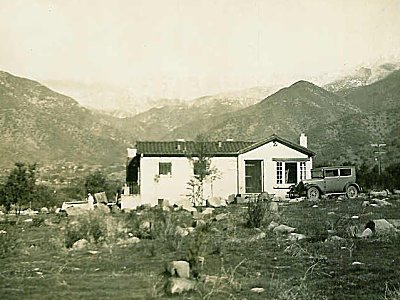
As the Monica Ros School was run as a private business there was no board of directors but the staff met once a month after school for tea to share their views and ideas and to discuss what was taking place in the school. Any problem that may have arisen. Of course in running a school there were anxious moments, financial worries and a lot of hard work connected with such an endeavor, but I know with the dedication of staff and of parents the school is indebted to so much of the happy and enriched early childhood education which they helped me carry out. But I know that only with the help and dedication of parents and staff was I able to carry out my hope of providing “right beginnings” for children at Monica Ros School, this is no boast: I have been told over and over by children and now grown and parents of the lasting and happy and helpful experience it provided. Much of the charm and development of the grounds can be attributed to Mr. Bryan King. Besides all of the regular work, he developed a lovely rose garden outside my house, he was responsible for keeping the grass play area in condition, picked hundreds of persimmons which were sold and of his own volition for each Xmas program. Clientele of friends of the school who have remained faithful throughout the years and who attended these occasions: There was Connie Wash and Patsy Eaton, the William McCachey’s, the Anne Thacher, Helen Griggs, John Marillo (?), Elizabeth Thacher, Joni Friend who made an owl costume for her daughter Anne (when The Owl and the Pussy Cat was performed) of individually sewn brown paper feathers. The Herman Guttman’s who constructed and _____(?) the school’s first jungle gym (still in use). Barbara Griggs who helped with dramatics, sewing costumes and especially when her daughter Curry Griggs, the cow in The King’s Breakfast. Mr. and Mrs. Bill Myers, Nancy Myers always helping me I remember in particular at Bake Sales held when the Tennis Tournament was in session. In the very, very early days Babette Ferrer helped with her casting of plays. The William McCachey’s and I must mention here one of the first performances at the school’s new location which was Peter and the Wolf because Robert (Calder) Davis reminded me he was the Duck. I should like to include here the name of a friend of the school, Mr. Harry Sinclair who attended that performance and I think was the first donor of a whole scholarship to a child in the school. I remember Beatrice Wood donating a piece of her lovely pottery for a raffle and Ellie Hyman who would _____ and give readings to the spellbound children or tell stories she was a ___ ____ and when husband Paul Hyman who’s bookkeeping services were gratis. There was Howard Gally who made the first set of building blocks for the school two of which are still in use in the Kindergarten room big enough for children to get into. _____(?) a bell and _____(?) A product of Sue Beck’s imagination and carpentry talents. Other names Mrs. Florence Baldwin, Jean Post, Shirley Brown, June Roller, Nel Roest, Michael Ehrhardt, James Loebl, Lilo Saber, Guy and Olga Ignon, John Torsuch, Dilly and Elizabeth, Rawson Harmon, the John Wilson’s, Isabel Hermes, Richard Paige, Wallace Burr, Headmaster of O.V.S., John Perkins, Elena Green, the Jacobs and Parkers, Dean Thompson’s. And thanks to Margaret Thomas for the Building Blocks Fund.
When the prospect of adding more grades came about I went in the summer of 1948 to New York where I attended classes at Teacher’s College under the teaching of childhood education dealing with reading methods in particular and materials.
High standards in academic subjects are maintained and I think a love of inquiry and independent thinking and learning about the world was encouraged. Except for basic standardized readers put out by Scott Foresman and arithmetic tests the choice of other texts was left to the director and teachers and teachers were free to use their own educational recourses in class projects. And of course each class had its own library from which the children chose their free reading material. Harcourt was an accepted responsibility. A lot of attention was given to the phonetic help applied to spelling and reading to the children create a great deal of original creative writing. But I think what permitted the school, and for which it won its reputation for creative activities, was through music and dramatic play. A sturdy old fashioned upright piano was on the cement floor of the pergola and for years was the focal point for the daily singing classes, folk dancing, rhythm and dramatic play. These activities culminated in the Christmas celebration and the end of the year play, usually a script written from a well known children’s classic, was performed to an audience of parents and friends of the school. I have never regretted having put so much emphasis on these musical and creative subjects and all the related skills for from it was the heart of the school. I have always maintained that a school environment needs music and that children’s responses are self-evident of the beneficial effect of music and its therapeutic or pure enjoyment in the ability to sing songs together, more freely and enjoy dancing and have the fun of acting out a part.
This deep rooted feeling for children have a well grounded, sensitive and appropriate beginning in learning musical instruments, however elementary would give a student confidence and pleasure in making music. My desire is to present children with musical experiences at an early age that allowed for a child as well in studying an instrument. In conjunction with the respective music teaches them and where music education was given an important place in the curriculum. This interest in “right beginnings” was carried over much later when the Monica Ros School was founded and where an emphasis was given to an environment that allowed for a children’s creativity and growth, learning and happiness.
Naturally one would hope that the school may continue with the same emphasis, however differently expressed, but always with sensitive and discerning concern for quality and cultural enrichment.
This then is a summary of those early years of what I feel was the life of the Monica Ros School in its simple environment, dedicated to the children’s “right beginnings” in learning and living, not in an authorative lest a “harmonious atmosphere”which was how a former teacher expressed her feelings to me.
FEELINGS BETWEEN SCHOOLS
The Ojai Valley is a notable friendly place, I believe. I have always found a good feeling between schools of different types and a spirit of helpfulness. To name instances in our case. The principal of the grammar school is the most wonderful about allowing children from my school to ride the school bus to various school activities, generally dramatizations, and extra chairs will always be willingly loaned out. The exchanging and lending out of costumes for plays, which resulted in a teacher and some boys from the Thacher school (for High School Age) caring they came to photograph the children in their Alice in Wonderland costumes for free. And then is constant introduction of applications for this or that teaching positions between schools.
DESCRIPTION OF THE COMMUNITY IN OJAI VALLEY
The community of Ojai Valley has varied interests but certainly the main ones are orange growing and schools. In between people are interested in small businesses, artistic treats, music, painting, ceramics, and acting. Then there are the philosophical minded and church minded. Also a certain fluctuation among people from the east who have found Ojai a desirable place to have a winter home (and put their children in school) who have contributed to cultural standards.
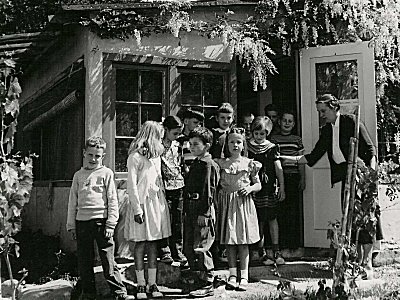 IDEAS AND POLICIES
My policy has always been and has been carried into effect that school fees should be within the means of the lower bracket income groups. I can safely say that children are enrolled from every varied walls of life and there is no disturbance of race, creed, colour or any difficulties about it.
TEACHING: Not by method but by a process of renewal
A bigger me. what kind? In California we deal in superlatives: theirs are apt to be the biggest and the best. When someone asked what kind of an instrument a double _____(?) was, he was told that it was a California violin. A bigger me in relation to teaching should have another meaning, another dimension surely? Are we bigger in size of importance or in understanding? Understanding we hope – at least it is an illusive attribute to describe.
In teaching very young children what does understanding employ? Warmth, humor, values, training, experience, calmness, intelligent guidance — there are endless attributes for an understanding teacher. If one were to divide these attributes into two categories we should have the thinking ones and the feeling ones. Together they could create a well balanced person. I think a real state of awareness, of understanding comes about if a person has a balance of thought and feeling no matter at what level. Obviously there is no pattern for this, but it does seem desirable that a teacher be a balanced thinking feeling person. Fundamentally is there wrong and right? What we do today will be regarded as wrong tomorrow? What is it than that we seek to do? Teach in the right way surely! We’d make a method out of new ideas! No, the direction I see is for an awareness of the present and constant re-creation of values. Children live in the moment – they should be our cue.
The distinction however, is not between order and disorder. To think that mechanical teaching is orderly whereas developmental teaching is chaotic, is a very great mistake. All good teaching is orderly, but there are different kinds of orderliness. The moment some people see any order sequence of work they are inclined to call it mechanistic. Nine times out of ten they are right, but they are guessing just the same. One must look deeper. One must find out whether it is externalistic and whether in practice it emphases accumulation, for these are the decisive features of the mechanicistic approach. There are _____(?) arguments against mechanistic teaching. It does not work out well in practice and it is based on a false psychology.
The young beginner has the same kind of quality of experience as the highly developed expert, the only difference lay in degree.
It is a very strange thing how often both the friends and foes of developmental teaching fail to realize its essentially orderly character, how often they seem to take it as the equivalent of chaos.
Music is my other assignment and this I dwell upon lovingly because of the enrichment and values it gives to children’s lives as perhaps no other subject can do in these early grades, provided there is a sensitive approach as in everything else. It opens up an opportunity, new vistas for the creative imagination of the child, it accents feelings, nurtures the natural artistic responses. This therapeutic value and gives endless delight and fun. Children’s responses to music delight one as much as rewarding conversations or certain stories. Dr. Mus____(?) has _____(?) out.
PERSONAL REASONS FOR DECIDING TO TEACH OTHER THAN FINANCIAL
What makes people want to become teachers? I can only answer for myself. Things, small things seemingly at the time stand out clearly and have obviously given direction to my interests. Happenings that have not been blurred from memory because of their long range significance. Once in my early teens I remember not being able to control tears because a very young child, who was sitting in a school assembly hall, affected me just by the appearance in her face. Another time I was conscious of a clear cut resolution, often having suffered at hand of bad violin instructors with bad temper _____(?) and suddenly finding haven in discovering I could do this with another type of teacher — to be a good music teacher of children because it was important.
GROWTH OF SCHOOL
The Ojai Nursery School and Kindergarten (now with an addition of first and second grades) began from a group of five children who came to me first for music and rhythmic play and by request of the parents was later formed into a Nursery School group. School was held in the veranda round a central patio and garden with some basic equipment installed. In the succeeding six years a kindergarten was added and a subdivision made of the four year olds, a first grade and next year a second grade will be added. So that children are enrolled here from years of 2 to 7 years. Also there was a remodel to a permanent residence where once again house and grounds have undergone a gradual adaptation to growing needs. The physical appearance of the a school does not look like a sample designed for the specific needs of such a school age group. Where in many have a certain uniqueness, but accommodating handicaps. But at least imaginative creative ideas have been put to the test. In So. Cal children live largely out of doors — it is this normal environment and so the psychology is a different one to that of a school in a city or in a cold climate. There is no desire on my part for a large school in the contrary, but it should be large enough to have companionship and interest for children of any age group and to avoid any taint of inclusiveness. The school numbered almost fifty children last year and it is my wish not to go beyond that number or beyond a second grade like ____(?) one searches for a ______(?)
CONCLUSION
In the beginning I can only say that I hope the intent of the little school spoke for itself through the responses of the children as they felt physically secure when they first made a break from home and continued to respond and flower as they entered kindergarten and Grade school.
I hope this has given an account of the school and its atmosphere, its problems and its aspirations. The school problems are my problems. I do not know any other method than to go about then in a spirit of constant deciding – even renewing ones ideas and this does not imply uncertainty, on the contrary it is an understood, logical process. If traditional education is wrong and progressive education right, why aren’t more educational problems part of the whole school. A new experience for me will be teaching second grade and also having two age groups at one time.
I find myself in charge of a school of my own which has grown far beyond what at first contemplated and with insufficient training for the job that it has developed into. I can draw on my music training and teaching, travel and philosophical background and an early childhood of _____(?) simple growth but in a cultural _____(?) home environment and school largely with a generous or small groups. But it is naturally not enough, I feel in an insecure position from the fact of holding no degree. I have taken courses wherever possible and will continue to do so. While I attained certain results with the children and parents have been satisfied I am greatly indebted to the direction of _____(?) such work that is given at Teacher’s College and hope I am able to work with the children _____(?) times of none _____(?) and valuable experiences there.
(AUTOBIOGRAPHICAL NOTES CONTINUE)
Now we go back in time a little. It was in 1925 or 1926 Margaret and I left our home in Roseville to live in a community of people where there were numbers of young people, often with their parents, who were members of the Theosophical Society. Our mother had been a member for years. There was no coercion as far as we were concerned, but eventually we joined the society, too, for we had many friends there. For someone like my mother it was a broadening influence from the accepted conformist church doctrines. In this community there was a definite dedication to training and study of theosophical doctrine and thought, but otherwise everyone was free to pursue his or her respective manner of living a livelihood if necessary. I continued with my associations at the Conservatorium and did some teaching and had a job in a radio station for a musical programme and Margaret worked in town for some firm. For some personal reason Margaret never wished to discuss this period in her life; she seemed embarrassed to tell anyone about it – it was hard to explain I suppose, though the Theosophical Society was and still is a recognized liberal mode of religious thought by many people all around the world. Anyway, our connection with it was a fact and I leave it to you whether it seems appropriate to mention it or not. I know Margaret really rejected it. She said once — Those dotty times. I think the difficulty arose in trying to explain this period of her life to others. While personally not in the least interested now, I look upon this period as a broadening experience. One did meet people in Sydney from all parts of the world too. I for one my husband who was a Theosophist from Havana, Cuba and visiting the center, as it was called, in Sydney. Margaret had an invitation to visit friends in Holland, which she did, and then made her way to London alone. We, of course stayed on in Ojai where I have had my home ever since.
Margaret never told me much, but I think it was a frightening experience for her to be alone in London, very little money and tramping about with her portfolio of drawings and letters of introduction and references from Sydney. As I mentioned before we were so unsophisticated. I’m sure we had never been in a hotel. Those must have been grim times for Margaret. I know father helped out, but Margaret was so independent. Father died in July of that year, 1929. Mother and Pat came over to London to be with Margaret in 1930. They lived in St. Johns Wood, Margaret working and Pat studying, singing and ballet. Florence James perhaps can tell you about those times and what Margaret did to make her way. I have no letter to refer to having unfortunately destroyed all mothers of that time. In 1933, mother decided to go back to Sydney leaving the girls in London. As her health was not good and mother felt the climate too severe in London, but in February of that year she died at sea on the voyage out.
In 1937, I was able to take a short trip to visit my sisters while my husband went to Havana. Margaret was married happily to Arthur Freeman then they had a top flat in an apartment in Inglewood Road, Hampstead which Margaret, with her usual flair, made very attractive and I thought even the view of chimney pots enchanting. Florence James perhaps can tell you more than I about those times and what Margaret did in the way of making her way. I have no letters to refer to. I took a bus tour and enjoyed all kinds of theaters and trips to Scotland but feel a visit from a sister from So. Cal. was a bit of a strain. Pat was living somewhere else and well into the musical opera touring business. Arthur, of course could tell you what they actually did then. I can remember Margaret working at sketches in the flat.
Soon after my return to California World War II in 1939 began. That was a terrible time. Margaret’s letters were gay and funny as usual describing events, which must have been petrifying in reality. I managed to speak by phone once. Of course the U.S.A. did not enter the war until much later 1945.
As I have written earlier after my return from a visit to Havana in 1940, I resumed teaching music. Formerly I had taught violin in particular when my husband was alive, and as I mentioned I later formed a class of nursery school age children for musical experiences of all kinds, which developed into a Nursery School later. In 1944 I was able to purchase a property near by which was ideal for a little school and which on the same site is the Monica Ros School though I retired as director sixteen or more years ago. Margaret on the other hand had a keen insight into children’s minds and needs and ways, but strangely contended she did not like them about personally. So we had different ways of expressing our feelings toward children. I devoted to teaching, she as an illustrator. I included a brochure for which Margaret supplied the drawings. She would sometimes at my request send me illustrations for costumes, which I needed when the school was involved in a period play performing plays for was a high light of the schools curriculum including music of all types.
In 1955 I paid a short visit to Sydney and stayed near the Freeman’s at Elizabeth Bay. They had returned from London in 1949 and were making their way, Margaret in her chosen field as an illustrator of children’s books and Arthur was teaching at the Technical College. I retired from the school in 1968 and in 1969 I returned again to London for six months after my retirement. Margaret and Arthur then lived near the Hawkesbury district and Margaret was then hoping then to conclude her work as an illustrator of children’s books for I recall the effort it was for her to get assignments finished. Soon afterwards they sold up everything and went to live abroad mainly in Mallorca until their return to Sydney where Margaret became increasingly frail and died in September 1978 after months of a sad coma like existence.
Art & About–A Passion for Ojai Music Festival Posters
Art and About…a passion for posters
The Music Festival’s vibrant illustrated history by Anca Colbert

As Libbey Bowl is about to come alive once again with the magic sound of music, we take a look at some of the art posters created for the Ojai Music Festival: as a group, they give us a bird’s eye view of the Music Festival’s history and tell us stories about the events, programs and performers.
In the 66 years the annual summer festival has played to devoted, adoring crowds of music lovers from Ojai and far beyond, a number of original posters were created. The more memorable works were produced between 1975 and 1995.
Prominent contemporary artists donated their designs or the use of their images for poster designs to the Festival: some of local repute (e.g., Beatrice Wood, John Nava) and many others (e.g., Richard Diebenkorn, Robert Motherwell.)
Posters have a long history as a medium combining art, graphic design, location and events. The tradition of producing posters for marketing and for fund-raising is well established in the world of the performing arts.
But what exactly is a poster?
Many use the word loosely when referring to any print or reproduction. Let’s try to define the term as what it truly describes.
POSTER in English is AFFICHE in French, PLAKAT in German. These words describe the literal action of affixing, gluing something on to a support. That is the primary function of a poster: a single sheet of paper, printed on one side only, is posted on a vertical surface to publicize something through a clear message combining words and images.
How and when did posters appear?
Broadsides (i.e., small size posters) produced with typographical design using hand-letter presses appeared as early as the 16th century. Ephemeral by nature and in purpose, broadsides were used for dissemination of a wide variety of ideas and events, official and individual proclamations, poetry, etc. They are valuable as refined examples of popular art and reflections on the culture of their day.
The revolutionary discovery of color stone lithography by Jules Cheret in Paris around 1865, and its technical evolution over a few decades into a means of mass communication, led to the development of posters as a new and modern art form. By 1900 buildings in Paris, Berlin, London, Vienna, and New York were covered with larger posters advertising department stores, perfumes, automobiles, bicycles, magazines, operas, concert halls, theater shows, fine foods, and travel. Plastered on walls, on construction sites boards and on kiosks specially designed for that purpose, their emergence in the street life of cities transformed the urban landscape. Posters became a popular medium for advertising in an artful manner.
A few artists (Toulouse-Lautrec, Bonnard, Steinlen, Mucha, et al) developed a passion for the stone lithographic process and its ability to produce multiple copies of one work fast and cheap. They also fell in love with the Japanese woodcuts first exhibited in Paris in 1889, fascinated by their esthetics and adopting their approach to bold composition, negative space and simplicity. These attributes are some of the key elements of an effective poster design.
The new art form quickly found an audience of avid collectors. Many gallery and museum exhibitions were already recording their growing popularity in the early 1900s.
Form and content changed at accelerated speeds throughout the Art Nouveau and Art Deco periods. The presses were running, and the names of Le Moulin Rouge, Le Chat Noir, Aristide Bruant, Mistinguette, Josephine Baker became famous through their now illustrious poster images.
WWI and WWII provided an explosion in bold, patriotic, political poster designs.
After WWII a true renaissance of the fine lithographic printing occurred essentially through the skilled efforts of one man: Fernand Mourlot and his printing studio in Paris put lithographic stones and tools in the hands of contemporary artists (Braque, Picasso, Matisse, Chagall) teaching them and many others how to draw on stones to create original graphic works. That led to an abundance of brilliant original limited edition fine prints and poster designs created by these artists for their publishers and exhibitions in the 50s and 60s.
The trend spread like wildfire to the USA where new lithographic and silkscreen studios opened their doors to work with artists on fine prints (Tamarind Lithography Worshop, Gemini G.E.L., ULAE.) Pop art was hot in the 60s and 70s, and production multiplied on both coasts. Rock artists produced psychedelic concert posters in the Bay Area; Warhol was experimenting with every ink in sight in New York; while others like Robert Motherwell, David Hockney, Kenneth Noland, Richard Diebenkorn, and Jim Dine were creating some of their finest original prints, and occasionally posters for art exhibitions and cultural venues. Many of the posters created by these masters for the OMF in the 80s were sometimes signed and numbered, and they are by now quite rare and valuable.
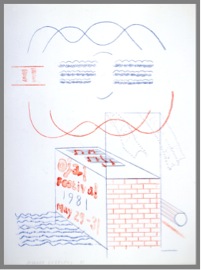

Original vintage posters have generally become quite collectable. They are represented in major museum collections worldwide. Reference books,specialized auctions and catalogues abound on the topic. A new breed of collectors (private and public) have turned their attention to the more recent examples of the Modernist and Populist styles coinciding with the renaissance of fine printing and design as “arts†after the 60s.
Meanwhile, back at the ranch
Ojai is a small town. Yet at a time when most places witness the disappearance of posters due to the ever-growing dominance of digital communication combined with the increased costs of paper printing production, Ojai holds the tradition of producing posters for local events such as the Ojai Music Festival, Ojai Film Festival, Lavender Festival, Wine Festival, Ojai Day, the Art Museum, and the Art Center.
Ojai is also a place unlike any other: rustic, intimate, culturally sophisticated, it is revered by the visiting composers, musicians and conductors coming to the Music Festival. Who could forget Dawn Upshaw’s profoundly moving lyrical ode about why she so loves coming back to sing in Ojai?
Beatrice Wood was world renowned. She moved from Los Angeles to Ojai in 1947, like so many other devotees of Krishnamurti and his annual talks under the oak trees. Coincidently, 1947 was the inaugural year of the Music Festival in Ojai. Beatrice spent the rest of her long life in this valley. Her studio had become a cherished destination – almost a pilgrimage – for art lovers, writers, Hollywood celebrities. She did not travel much, but the world came to her. When she passed away in 1998 at the age of 105, she was the most celebrated ceramic artist of Ojai and one of the significant ceramic sculptors of the 20th century.
Her contributions to local non-profits in the arts included the OMF, the Ojai Library, schools, and almost every organization which solicited her support. She believed that arts and education can change lives. They can, and they do. Beatrice generously walked her talk. Her 1993 concert pianist poster for the OMF is bold, at once provocative and charming, just as she was.
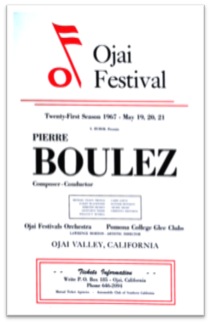

Two posters, 22 years apart, shine the light on Pierre Boulez, one of the brightest stars in the Festival’s history. The 1967 poster is using limited means, typographical design mostly and two colors (the classic red and black associated with broadside-type posters). The 1989 design by John Nava makes dramatic use of the four-color process offset printing to visually evoke the ambiance of the festival. A dreamlike atmosphere sets the stage in the blue/grey background against which three inset images – painterly renditions of the conductor’s face and hand gestures – come to life illuminated against a Midsummer Night’s Dream nocturnal atmosphere. That’s what it feels like, in the night, under the oak trees in Libbey Park, when Boulez conducts in Ojai.


Both Jim Dine’s and Jack Youngerman’s posters focus on flowers. Appropriate symbols for the setting of the festival in the idyllic natural beauty of the fertile Ojai Valley. Dine’s delicate composition draws the viewer’s eye in a subtle seduction, while Youngerman’s luminous two-color silkscreen explodes with yellow petal power in our face. The visual range represents well the musical diversity offered at the festival year after year, from the intimate classics to the cutting-edge contemporaries.
As the applause slowly subsides and the stage lights fade away, music lovers slowly, very slowly, walk out of Libbey Bowl, folding their blankets and absorbing the discoveries, surprises and joys experienced during that particular weekend. Most of us retain magical memories of specific performances. Who can forget Boulez conducting his own spellbinding Dialogue de lâ ombre double while the Ojai birds punctuated the elaborate acoustics of the composition with their own musical score? Our memory replays those high notes for years to come, words and images, sounds and lights. The vibrational quality of music is enriched and amplified by a natural environment unlike any other. The palpable experience of those moments shared with other music lovers enters our emotional and body memory.
Music is a most evanescent art experience. What remains of these intangible moments? Sometimes a poster, ephemeral art from that year’s Festival, triggers a smile and a treasured reminiscence.
Powerful posters do that well.
****
Ojai Quarterly Magazine Summer Issue 2013
Photo credits: Permanent Collection of the Ojai Valley Museum of Art and History and the Ojai Music Festival
©2013 Anca Colbert