Bonusy i promocje dla nowych graczy w Vavada

img { width: 750px; } iframe.movie { width: 750px; height: 450px; }
Bonusy i promocje dla nowych graczy w Vavada

Bonusy i promocje dla nowych graczy w Vavada

Sprawdź, jak łatwo możesz rozpocząć swoją przygodę z kasynem online. Ogromne możliwości w postaci atrakcyjnych ofert zachęcają do zajrzenia do tego świata. Warto rozważyć, co można zyskać, decydując się na pierwsze kroki w wirtualnym kasynie. Czesanie stawianych się propozycji pomoże Ci w lepszym rozumieniu dostępnych opcji oraz potencjalnych zysków.

Oprócz standardowych gier, które dostarczają rozrywki, ważne są także dodatkowe atuty, które umilą Twoje doświadczenie. Skorzystaj z dostępnych ofert i zgarnij ciekawe nagrody, które są dostosowane do nowych użytkowników. To świetny sposób na zwiększenie swojego kapitału oraz eksplorowanie różnych gier bez dużego ryzyka. Przemyślane działania mogą przynieść wymierne korzyści.

Jeśli zamierzasz wykonać pierwszy krok w kierunku emocjonującej zabawy, pamiętaj o znalezieniu najlepszego miejsca, które spełni Twoje oczekiwania. Zróżnicowanie gier, ciekawe stawki oraz możliwość skorzystania z różnego rodzaju bonusów sprawią, że czas spędzony w kasynie stanie się niezapomniany. Pobierz vavada kasyno i przygotuj się na ekscytującą rozrywkę, która na długo pozostanie w Twojej pamięci.

Rodzaje bonusów dla nowych użytkowników Vavada

Witamy w miejscu, gdzie przygoda z grami staje się jeszcze bardziej ekscytująca. Pierwszym typem wsparcia, które przyciąga uwagę, jest oferta związaną z pierwszym wpłaconym depozytem. Zazwyczaj, można zyskać procentową wartość wpłaty, co daje możliwość bardziej intensywnej gry na start.

Innym sposobem na zwiększenie emocji są darmowe spiny. To świetna opcja dla tych, którzy pragną spróbować swoich sił na automatach. Oferowane darmowe obroty pozwalają na zabawę bez ryzykowania własnych środków, co z pewnością zachęca do dalszego grania.

Również ciekawe są oferty związane z programami lojalnościowymi. Kiedy stajesz się częścią społeczności, możesz liczyć na różnorodne nagrody, punkty lojalnościowe oraz unikalne wydarzenia. Im dłużej grasz, tym więcej korzyści możesz zgromadzić, co czyni każda sesję gry bardziej opłacalną.

  • Bonus za referencję – polecając znajomego, można uzyskać dodatkowe fundusze na konto.
  • Bez depozytu – szansa na wypróbowanie gier bez konieczności wpłaty własnych środków.

Jednym z kluczowych elementów jest również promocja okazjonalna, na przykład z okazji świąt czy specjalnych wydarzeń. Daje to możliwość korzystania z dodatkowych ofert oraz zwiększenia swoich szans na znaczące wygrane.

Warto także uzyskać dostęp do ekskluzywnych turniejów. Uczestnictwo w nich stwarza szansę na zdobycie wertykalnych nagród oraz na rywalizację z innymi, co może być nie tylko satysfakcjonujące, ale i wyjątkowo emocjonujące.

Jak aktywować promocje i bonusy na platformie

Aby skorzystać z atrakcyjnych ofert, najpierw należy założyć konto na stronie. Rejestracja jest szybka i intuicyjna, wystarczy podać podstawowe dane, takie jak e-mail i hasło. Po potwierdzeniu konta, jesteś gotowy do działania.

Kolejnym krokiem jest zalogowanie się na swoje konto. Po wejściu do sekcji “Moje konto” znajdziesz zakładkę z aktualnymi ofertami, które są dostępne do aktywacji. Zdecyduj, które z promocji Cię interesują i zapoznaj się z ich szczegółami.

Aktywacja ofert odbywa się poprzez kliknięcie w odpowiedni przycisk lub link. Zazwyczaj wymaga to także dokonania pierwszej wpłaty. Ważne jest, aby uważnie przeczytać zasady skorzystania z oferowanych możliwości, aby mieć pewność, że spełniasz wszystkie wymagania.

Czasami możesz napotkać dodatkowe kody promocyjne. W takim przypadku wprowadź odpowiedni ciąg znaków w specjalnym polu przed dokonaniem wpłaty. Jest to kluczowe dla poprawnej aktwacji rabatu lub oferty, której chcesz użyć.

Nie zapomnij również o korzystaniu z powiadomień. Ustawienie alertów o dostępnych zniżkach czy ofertach pomoże Ci nie przegapić okazji, które mogą się pojawić. Regularne sprawdzanie swojego konta to dobry nawyk, by być na bieżąco.

Na koniec, możesz skontaktować się z obsługą klienta, jeśli napotkasz jakiekolwiek trudności. Ich zespół jest dostępny, aby rozwiać wszelkie wątpliwości dotyczące aktywacji ofert i odpowiedzieć na pytania. Korzystanie z dostępnych opcji jest prostsze, gdy masz wsparcie specjalistów.

Warunki i zasady korzystania z bonusów w Vavada

Aby móc cieszyć się dodatkowymi środkami, konieczne jest zarejestrowanie konta, a także dokonanie pierwszej wpłaty. Każda oferta wymaga określonego depozytu, który musi zostać spełniony, zanim środki staną się dostępne do gry. Zanim zdecydujesz się na skorzystanie z takiej oferty, zapoznaj się z minimalną kwotą wpłaty, aby uniknąć nieprzyjemnych niespodzianek.

Kolejnym istotnym aspektem są zasady obrotu. Warto wiedzieć, że każda promocja ma przypisane wymogi dotyczące liczby obrotów, które należy zrealizować, zanim będzie można wypłacić zyski. Czasami mogą występować różnice w stawkach, które trzeba spełnić, co oznacza, że nie każda gra przyczynia się do realizacji obrotu w równym stopniu. Dlatego warto dokładnie sprawdzić zasady przed przystąpieniem do gry, aby maksymalnie wykorzystać przyznane środki.

Pamiętaj, że czas trwania ofert oraz dostępność mogą się zmieniać, więc warto śledzić aktualne informacje na stronie. Poza tym, każdy gracz może być zobowiązany do potwierdzenia tożsamości, co ma na celu zapewnienie bezpieczeństwa transakcji. Efektywne zarządzanie czasem oraz środkami pozwoli Ci lepiej wykorzystać możliwości, jakie daje platforma.

Игровые автоматы онлайн играть

img { width: 750px; } iframe.movie { width: 750px; height: 450px; }
Игровые автоматы онлайн как выбрать и играть успешно

Игровые автоматы онлайн играть

Оптимальный подход к выбору платформы для азартных развлечений заключается в изучении ее репутации и предлагаемых бонусов. Начните с анализа отзывов пользователей и рейтингов, которые помогут определить надежность ресурса. Также важно обратить внимание на наличие лицензии, что гарантирует соблюдение установленных правил.

При выборе развлечений стоит учитывать их механизмы и особенности. Разные слоты предлагают различные типы выигрышей: прогрессивные, фиксированные, с бонусными играми или бесплатными вращениями. Заранее ознакомьтесь с правилами и таблицей выплат, чтобы понимать, какие комбинации дают максимальный выигрыш.

Используйте стратегии управления банкроллом, чтобы оптимизировать свои шансы на успех. Установите лимиты для ставок и придерживайтесь их, это поможет избежать значительных потерь. Можно выбрать платформу, такую как vavada зеркало на сегодня, где можно проверить последние акции и предложения для увеличения шансов на выигрыш.

Не забывайте об искусстве разумного выбора времени для участия в азартных занятиях. Игры в часы, когда платформа наименее загружена, могут увеличивать шансы на получение выигрыша. Сосредоточьтесь на развлечениях, которые вам нравятся, это сделает процесс более увлекательным и потенциально выгодным.

Как определить надежность онлайн-казино для игры на автоматах

Один из важнейших аспектов – наличие лицензии. Проверьте, выдана ли лицензия авторитетными регуляторами, такими как Мальтийская игровая ассоциация или Комиссия по азартным играм Великобритании. Эти организации следят за соблюдением правил и стандартов, что подтверждает безопасность и легальность работы заведения.

Обратите внимание на репутацию заведения. Изучите отзывы игроков на специализированных форумах и сайтах. Высокий рейтинг и положительные комментарии чаще всего свидетельствуют о надежном сервисе. Избегайте площадок с множеством жалоб на выплаты или качество обслуживания.

Проверьте, какие провайдеры предоставляют софт для платформы. Знаменитые разработчики, такие как NetEnt, Microgaming или Playtech, обеспечивают высокое качество игр и защищенность пользователей. Это снижает риски мошенничества.

Изучите условия по бонусам и промоакциям. Надежное заведение предлагает прозрачные условия без скрытых нюансов. Избыточные требования по отыгрышу могут быть сигналом о недостаточно честном подходе.

Обратите внимание на поддержку пользователей. Наличие круглосуточного чата, быстрота реагирования и квалифицированные консультанты – признаки серьезного заведения. Если служба поддержки быстро отвечает на вопросы и решает проблемы, можно говорить о высоком уровне доверия к платформе.

Какие стратегии помогут увеличить шансы на успех в игровых автоматах

Рекомендуется выбирать слоты с высоким показателем RTP (возврат игроку). Оптимальное значение составляет от 95% до 98%. Это означает, что при ставках в 1000 условных единиц вы можете рассчитывать на возврат от 950 до 980 единиц. Сравнивайте различные вариации игр и выбирайте те, которые предлагают лучшие условия.

Перед началом стоит установить бюджет и придерживаться его. Запланированная сумма должна быть комфортной и не вызывать финансовых затруднений. Избегайте попыток отыграться после неудач, это может привести к дополнительным потерям. Четкое соблюдение бюджета поможет контролировать процесс.

  • Понимание волатильности слота. Высокая волатильность подразумевает большие выплаты, но реже, в то время как низкая обеспечивает частые, но небольшие выигрыши.
  • Изучение бонусов и акций. Многие платформы предлагают выгодные старты, например, фриспины или бонусы на депозит. Используйте эти предложения для увеличения активности.

Использование демоверсии для проверки механики слота перед реальными ставками – хороший способ понять, как работает игра. Это поможет сформировать стратегию, основанную на личном опыте и предпочтениях. Также можно протестировать различные ставки и решить, какая из них наиболее удобна.

Участие в tournaments и лотереях на платформах может приносить дополнительные награды и улучшать общую прибыль. Следите за мероприятиями и участвуйте в акциях, чтобы максимально повысить результаты и увеличить шансы на удачу. Однако не забывайте о рисках и действуйте с умом.

Как управлять банковским счетом при игре в онлайн-автоматах

Определите четкий лимит бюджета и придерживайтесь его, выделяя определенную сумму на ставки. Используйте отдельный счет для азартных развлечений, чтобы контролировать расходы и избегать перерасхода. Не добавляйте средства, если баланс закончится; это поможет избежать импульсивных решений в состоянии эмоций.

Регулярно анализируйте свои транзакции, чтобы выявить закономерности. Отмечайте, когда вы выигрываете, и в какие моменты теряете, чтобы понять, какие стратегии работают. Периодически пересматривайте свои финансовые цели и подходы, учитывая прошлый опыт и текущие обстоятельства, чтобы адаптироваться к изменениям и улучшать результаты.

Review of the Sixties — Part 4

The following article first appeared in the December 31, 1969 edition of “The Ojai Valley News” on the front page. It is reprinted here with their permission.

Review of the Sixties — Part 4

Freeway fighters win scenic highway battle

by Gary Hachadourian


(This is another in a series of articles reviewing the Sixties in the Ojai Valley.)

Early in the Decade the state legislature passed the Scenic Highway Act and then asked the counties which roads they wanted designated as “scenic highways.” Ventura county supervisors fingered Highway 150 from Santa Barbara to Santa Paula — through the Ojai valley — and that’s when the Battle of the Scenic Highway originated.

In the beginning, there was no opposition. In fact, if you had asked the average resident how he felt about Highway 150 as a “scenic highway,” the reply would probably have been “just fine.” It wasn’t until the state decided to choose the route that the first shots were fired and the battle joined.

The word “freeway”
In the beginning “scenic highway” had meant to the public, in essence, “making the highway more scenic.” When the state came forward with varied routes, residents soon learned that the new Highway 150 would be built according to “freeway standards.” The word “freeway” had alarming connotations and the issue at once became emotional. Few people wanted another freeway through the valley.

Between Ojai and Upper Ojai, four routes were being considered, the state announced. Though public sentiment was anti-construction, citizens early came to favor a route through Lion Canyon to the south of the city, away from the valley floor.

The Division of Highways had previously ceased to consider that route; but in what was seen as a partial victory for opponents of the highway, the state announced that it would re-study Lion Canyon, a more “expensive” route.

In May of 1967, however, at what was to become a turning point in the history of the battle, the newly formed Committee to Preserve the Ojai determined that it would actively oppose any selection of routes. In August of that year, the East Ojai Valley Associates, which up until then had been urging strict standards in construction made the same decision.

Throughout the next year, the Division of Highways persistently urged the city and county to agree on a route of its own accord and plan to set aside a “corridor of beauty” along that route in order to ensure that the scenic highway would indeed be scenic.

Huge petition
The City Council, in September of 1968, resolved that the Lion Canyon route was most desirable, a decision that sparked the Committee to Preserve the Ojai to get thousands of names in opposition on a petition.

When the all-important public meeting between state engineers and the aroused public came in October of 1968, the Committee to Preserve the Ojai presented a map of the valley on which each landowner who opposed all construction had his property colored red. Color the valley red.

The issue was not decided, however, until late 1969. At the urging of the City Council and the Board of Supervisors, the state agreed to postpone route adoption “for an indefinite period” in order to consider, first, “new priorities in valley road construction.”

The force of public opinion had triumphed.

There was irony in this “victory.” Opponents had been fighting to keep the valley rural by opposing the road. But it was the effects of urbanization that had brought the new road work priorities into existence and cause the state to lay off the scenic highway.

Traffic volume in the valley had grown to the point where, because freeway construction was falling behind schedule, the interim widening of Highway 33 between Foster Park and Ojai took precedence over the construction of any new road. More people in more cars needed to get in and out of the valley.

And the traffic volume within the City of Ojai had doubled. In December of 1967, City Manager Jack Blalock said that the city’s number one problem was traffic congestion in the downtown area.

In order to ease congestion, the city felt, the state should approve and construct a loop of two one-way streets in the downtown area along its state Highway 150 route.

And the loop was intended to solve not only traffic problems.

For, throughout the decade, another type of outside pressure on the valley had worked to force change within it. And though, in this case, the force was indirect, it was nonetheless real.

Ojai’s business community, with some exceptions, was suffering. As the decade progressed, the situation became increasingly pronounced to the point where, in 1968, despite population growth, taxable sales were the same as they were in 1964, this despite the fact that prices had gone up.

Promoting this situation was, of course, the development of new, convenient and competitive shopping centers in nearby cities, most notably in Ventura.

Absentee owners
Promoting it, also, was the fact that many owners of floor space in Ojai’s historic and distinctive shopping area, the Arcade, were absentee owners. They showed no inclination to spend money needed to refurbish their properties, even to the extent of making them structurally sound. (In 1966, an engineer opined that the Arcade could collapse in a severe earthquake.)

And the forces pressing for action became compounded in the latter half of the decade when the then unincorporated area along Maricopa Road to the west of the city quite clearly was being considered as a target site by commercial developers.

Also, in the untouched Santa Ana Valley a few miles away, county planners in 1967 approved plans for a 512-acre residential and golf course development that would include a new shopping center.

The traffic loop of two one-way streets in the downtown area was crucial to a plan to turn the tide. Getting the state to approve and construct a loop became the city’s number one priority. Thus, the Battle of the Scenic Highway was an ironic “victory” for Ojai.

The outrage was only reactionary, a response to the continuing force of urbanization.

If Ojai truly was to determine its future, the valley would have to anticipate events; would have to search its soul in an effort to decide what it wanted; would have to take steps to ensure that no unmanageable situations could even arise.

It would have to plan carefully, and completely, and stand by that plan.


Spelunking and other Vignettes from Drew’s Boyhood Days

The following article first appeared in the FALL 2021 (VOLUME 39 NUMBER 4) issue of “Ojai MAGAZINE”. The magazine was published by the “Ojai Valley News”. With their permission, the article is re-printed here.


LOOK BACK IN OJAI
with Drew Mashburn
Contributed on behalf of the
Ojai Valley Museum

Spelunking and other Vignettes from Drew’s Boyhood Days

Spelunking: There once was a tunnel that ran under the street in downtown Ojai by a creek bed. When I was a young teenager in the mid-1960’s, the tunnel ended behind a pharmacy in the Arcade. What made the tunnel a bit scary was the fact that it doglegs. Why was it scary you ask? Because my buddies and I would gingerly walk through it so as not to stumble over the rocks in the dark until the mid-way point where it bends. Back in those days, the dentist whose practice was next to it didn’t dig us kids using her stairs to get down to the creek. So, we had to be sorta stealth-like. Once we got to the tunnel’s midway point (the dogleg as we called it), light began appearing from the other end. But many times, just before we began to see the light, older teenage boys would be hiding in the darkness. As we approached they’d start screaming and scare the pee-waddin’ outta us! We’d take off runnin’ for the opening behind the Arcade, then scamper up the steep, weed-covered creek bank. Back then, there wasn’t an “Arcade Plaza.” In fact, the back of the Arcade was pretty sucky-looking. We didn’t care though, because we had just survived a cheap thrills adventure.

Read the rest of the article directly from the Ojai Magazine.

Review of the Sixties — Part 3

The following article first appeared in the Sunday, December 28, 1969 edition of “THE OJAI VALLEY NEWS” on the front page. The article is reprinted here with their permission.

Review of the Sixties — Part 3
Urbanization — the story of the decade

In this, the third of a series of articles reviewing what happened in the Ojai Valley during the Sixties, reporter Gary Hachadourian takes a close look at the causes and effects of urbanization on the once-rural valley. “Urbanization” is the hallmark of the past decade, according to reporter Hachadourian, who spent months scanning the
front pages of the Ojai Valley News of the years 1960–1970.
by Gary Hachadourian

The urbanization of the Ojai Valley was forced upon it — forced in three ways:

By pressure from outside the valley;

By pressure from within it, generated to ensure that growth would be ordered along predetermined lines, rather than haphazard.

And, once urbanization began, it was forced by the “system” and by the power of the valley’s “personality.”

These forces were not isolated one from another; there was no strictly sequential order in which they made themselves felt. They coexisted.

But the forces of urbanization here did make themselves felt, for the first time at least, in roughly a sequence. So, for the purpose of simplifying this article, they probably should be handled that way.

From outside
First, then, the forces exerted on the valley from outside it.

They ranged from the vague and unnerving thought that the golden Southland was growing and would soon need more space in which to grow, to the very specific and community-rallying force exerted by the state as it went ahead with plans to construct, first a freeway and then a scenic highway along the valley’s floor.

In 1960, a study reported that the population of Ventura County, set then at just under 200,000 would double within 20 years. The report named Ojai as a target area for residential development and said that the valley’s recreational areas would lure many vacationers.

(As it turned out, that report was modest. For the county’s population has almost doubled in ten years rather than twenty.)

In 1962, a professional firm doing a land-use study for the county forecast that the population of the Ojai Valley, in fact, would more than double in 20 years. This firm, which had also been commissioned by the City of Ojai to draft a general plan for development, said valley population would jump from its current level of about 15,000 up to 40,000 by 1985. Later forecasts would predict even greater jumps.

(As of this year, population of the valley from Casitas Springs to Upper Ojai has risen since 1960, to just under 22,000.)

A person who lived in Ojai during these early years of the decade might have doubted the actual figures in these reports if he had wanted to; but there was no way for him conscientiously to deny the forecast of growth.

County growth
The county was developing rapidly during these years. Most of the development was (and is now) taking place in the southwestern part of the county, in those areas closest to Los Angeles. But it was occurring also in Ventura and Oxnard. More significantly, it was primarily commercial and industrial development that was going on in this, the coastal area.

But, in the valley, it was seldom pressure exerted for the expansion of industry. County and state officials and private developers certainly realized already (though not to the extent they one day would realize) that the valley would not readily accept any development that clearly might damage the area’s looks or threaten its cleanliness.

Besides (and perhaps more importantly), it is the nature of successful developers that they know what uses can be sold to a community for a given piece of land.

So the pressure on Ojai was not for industrial expansion. Predictably, and true to the forecasts, it was for residential development.

And what was learned by valleyites as the proposals for various subdivisions came in was that many developers, while they obviously agreed that the Ojai should be developed residentially if at all, had their own ideas about the location, type and density of housing that was desirable.

In many instances, also, county government bodies had ideas, that differed from Ojai’s.

Proposals came into the county or the City of Ojai for cluster-housing developments such as apartment buildings, trailer parks and condominiums, in addition to the more standard (and, for valleyites, more acceptable) tract subdivisions.

And what was built was bought as people settled on the valley as a place to retire to, or as a place in which to escape the haphazard and oppressive development of metropolitan areas and find joy again in nature, or as a place, quite simply, which was close enough to the office in Ventura and had available housing.

Action in the county
Of the two types of proposals — those for developments either within the City of Ojai or on unincorporated territory — the more important ones, were those for county land.

(Ultimately, the developments that were proposed and carried out within the city had, and will have, greater impact on the long-range future of the valley. But that is another story. The proposed county developments were more significant at the beginning of the decade.)

The proposals for the development of unincorporated land forced the city to look about itself; forced a renewed realization that what happened in any part of the valley affected the whole of it.

Therefore, the City of Ojai joined residents of the outlying areas in their concern when, for instance: the 121-acre G-Z Ranch was sold for possible industrial development in 1962; when a 40-acre, 356-unit mobile home park was planned for the south slope of Krotona hill in 1964; when a $3 million subdivision of 38 homes was proposed for the Dennison Grade in 1966.

These developments were seen as undesirable by Ojaians. County supervisors, though, were not so partisan. Ultimately, the developments were not carried out because: in the case of the G-Z Ranch, plans were never presented (the area now, however, is being considered as a site for a mobile home park); in the case of the Krotona mobile home park, supervisors refused a permit; and in the case of the Dennison tract, supervisors placed what amounted to economically prohibitive conditions on the use permit.

Supervisors were not without political motivations in arriving at their decisions. One factor in their decision-making was the public interest in the issues shown by Ojaians.

Valley-ites had discovered a weapon they could use to fight unwanted developments.

It was a weapon that would be used many times during the decade — force met with force, the complexities of back-room politics met with the straightforward simplicity (and sometimes, the simplistics) of an indignant populace, the nebulous but undeniable pressure for change met with the rage of frustrated, and bitter protectionist citizenry.

The fact that public outrage was quite often a negative weapon — negative in the sense that it was nothing other than reactionary — seemed to go unnoticed by many people. Public demonstrations were (and are) justified as the people forcing an unresponsive and sometimes devious government to respond to the public’s desires to preserve Ojai. Partly, they were that. But partly, too, they were an expression of a conscience that knows it has waited too long before speaking out; and an expression of frustrated isolationism.

But if public outrage was sometimes negative, it was also, at times, positive — to the extent that no other course of action was available to the people.

And the best examples of relatively positive outrage were the Battle for the freeway and six years later, the Battle of the scenic highway.

Both battles, of course, were centered around the desirability of having a major highway running along the valley’s floor in the area of Ojai. But the battles differed insofar as the sensitivity of the opponent was concerned — his sensitivity to the feelings and the do-or-die dedication of the valley-ites. (The proponent, naturally, was the state.)

There’s been a change
During the Battle for the Freeway, the state’s champion, the Division of Highways, was as insensitive in his proposal as he was intractable in his stand—at first.

Six years later, however, the Division of Highways showed considerably more restraint, more willingness to compromise, as it pushed for the adoption of a mutually agreeable route for a scenic highway. In fact, it urged the City of Ojai to protect itself by planning a “corridor of beauty” for the route.

(Late in 1969, the Div. of Highways’ handling of Ojai would finally be directly opposite to what is was earlier. The division would request the city to hold a public hearing on the proposed traffic loop in the downtown area before—before—the state arrived at a recommended route. This so that the state could know the feelings of Ojaians before they spent the time and money on possibly objectionable route studies.)

Residents of the valley, however, showed no such inclination toward large compromise in the scenic highway issue. Their determination was as steadfast, their views as adamant, as they had been when the freeway was discussed.

The frustration and even anger of highway commissioners was apparently complete when valleyites reared up at them this second time, over the scenic highway; for, from their point of view, they were pressing only for a type of highway which the valley had determined years before was acceptable.

In the Battle for the Freeway, then, it was nothing less than the State of California that was the force pressing on the valley from the outside for change.

The Division of Highways, with its tendency to see beauty as a straight line between two points, saw the need for a freeway to Los Angeles by way of an inland route. The valley’s floor was not only a conveniently flat roadbed; it was also the route indicated in the state’s master plan for highway development.

This plan, the state’s engineers explained, was drawn with an eye toward the future needs of the target area (i.e., its projected population growth) as well as with an eye toward convenient traffic flow throughout the state.

It would be a freeway to serve anticipated needs. But since a freeway promotes development in addition to serving it, the valley was, inevitably, to be “opened up.”

There was never any question about whether it would be built. The state had its prerogatives, after all. The battle was over the route it would follow.

The Division of Highways, to the amazement of Ojaians, believed that it should pass through the City of Ojai. In 1960, residents viewed posted drawings that showed no less than 15 alternate routes through the city, some of them along Ojai Ave through the downtown area.

It is an understatement to say that residents’ feelings ran high.

The Ojai City Council, under the leadership of Mayor Robert Lagomarsino (now State Senator) was urged to protest. Certainly, the council would have done so of its own accord.

Of the many alternatives proposed by the state, the majority of Ojai citizens, recognizing that some route would be adopted, favored a route to the south of the city, along Creek Rd. Next in preference was the Ventura River bed route through Meiners Oaks.

It was this second alternate that the council urged the state, saying that a freeway was not needed through Ojai.

The public was quick to sign a petition that endorsed the council’s resolution.

On September 1, 1960, residents turned out in force for a meeting of state engineers and the public at Matilija Junior High. Engineers were insistent that the projected traffic volume of the city made a city route necessary. The audience disagreed.

No decision was made, of course, and residents left the meeting with the disturbing feeling that the state might not respond to their desires.

River route
Subsequently, the council formed a Freeway Study Group of selected citizens with the aim of providing the state with a more thoroughly considered opinion from Ojai residents. This group, too, recommended the river route after two months of study.

In May of 1961, the state announced that it would delay route adoption in order to give it more thought.

And a year later, in May of 1962, the state opted for the river route. (In addition to being the route desired by valley residents, it was also the cheapest.)

Residents were elated. In a figurative sense, at least, handshakes were passed all around, congratulatory.

Public sentiment clearly was a weapon that could be used to determine the future.

Somewhat determine it. The city was left intact, but the freeway, nevertheless, was now a reality. And the freeway, as a force, would promote an urbanized valley at least as much as it served it.
Рейтинг лучших онлайн казино для азартных игр 2023

img { width: 750px; } iframe.movie { width: 750px; height: 450px; }
Лучшие онлайн казино для азартных игр в 2023 году

Рейтинг лучших онлайн казино для азартных игр 2023

Если ищешь качественный опыт в сети, стоит обратить внимание на заведения с хорошей репутацией. Попробуй сделать ставку на ресурсы с лицензионными играми и прозрачными условиями, чтобы твои шансы на выигрыш были максимально высокими.

Среди множества платформ, выделяются несколько, которые предлагают щедрые бонусы и быструю выплату выигрышей. Если хочешь узнать подробности, поищи топ онлайн казино на реальные деньги, это поможет получить доступ к последним новинкам и актуальным предложениям.

Не забывай о безопасности: выбирай заведения с надежными методами оплаты и службы поддержки, работающей круглосуточно. Это даст уверенность в том, что твой опыт будет не только увлекательным, но и безопасным.

Как выбрать надежное онлайн казино: ключевые критерии

Второй важный момент – это выбор игр. Платформа должна предлагать разнообразные развлечения от известных производителей ПО. Просмотрите список доступных слотов, настольных игр и живых предложений. Отзывы игроков могут помочь понять, насколько богат ассортимент. Если любимые игры отсутствуют, вероятно, стоит обратить внимание на другие варианты.

Такой аспект, как пользовательская поддержка, также имеет значение. Ищите заведение с несколькими способами связи: чатом, email и phone support. Быстрая и эффективная помощь в час, когда она нужна, может значительно улучшить ваш опыт. Попробуйте задать вопрос на этапе выбора, чтобы оценить скорость и вежливость сотрудников. Это хороший индикатор, как они будут реагировать на ваш запрос в будущем.

Топ-5 онлайн казино с высокими выплатами и бонусами

1. Первое место занимает платформа, известная высоким коэффициентом выплат – до 98%. За регистрацию предлагается приветственный пакет, включающий 100% бонус на первый депозит и бесплатные вращения на популярных слотах.

2. На втором месте – веб-ресурс с фокусом на разнообразие игр и выгодные условия для постоянных игроков. Так, тут можно получить кэшбэк до 20% каждый месяц, а также участвовать в регулярных акциях с крупными призами.

3. Третью строчку занимает сервис, отличающийся впечатляющими выплатами и широкой подборкой настольных развлечений. Бонусная программа включает не только стандартные подарки, но и индивидуальные предложения под каждого игрока на основании его активности.

4. Следующая платформа предлагает уникальную систему лояльности, где за ставки начисляются очки, которые можно обменивать на реальные деньги или бонусы. Также доступен щедрый приветственный бонус до 150% на первый взнос.

5. Замыкает пятерку конкурсная площадка с акциями на каждую неделю. Здесь игроки могут участвовать в турнирах с призовыми фондами до 50 000 рублей, что делает досуг не только увлекательным, но и прибыльным.

  • Интересные факты:
  • Часто доступны программы для мобильных устройств для удобного доступа.

Тщательно выбирайте ресурс, учитывая бонусы и коэффициенты выплат. Некоторые предлагают очень выгодные условия для новых пользователей, что может значительно увеличить шансы на прибыль.

Советы для безопасной игры и управления банкроллом в казино

Установите пределы расходов. Определите точную сумму, которую вы готовы потратить до начала игрового процесса, и придерживайтесь этого бюджета. Важно решить заранее, сколько времени вы готовы уделить развлечению и сколько денег готовы потратить. Если вы достигли своей отметки, не продолжайте игру в надежде отыграться. Это поможет избежать ненужных потерь и позволит наслаждаться процессом без лишнего стресса.

Кроме того, следите за своими выигрышами. Определите сумму, при достижении которой вы прекращаете свою игру. Ставьте перед собой реальные цели и не позволяйте эмоциям управлять вашими решениями. Используйте инструменты контроля, такие как таймеры, чтобы напоминать себе о времени, проведенном за игрой, что поможет поддерживать баланс между развлечением и ответственностью.

Five local parks men to be honored for valor

This article was run in the “Ojai Valley News” on page A3 of the Wednesday, April 19, 1978 edition. The author is unknown.

Five local parks men to be honored for valor

Five Ojai Valley men employed by the Ventura County Parks Department will be honored at the Peace Officers Association of Ventura County’s 5th annual Medal of Valor Awards Dinner April 21. Thomas [Drew] Mashburn, Larry Bintz, Mike Payton, Rip Reed and Bob Bordasch will each receive the Citizen Award for Distinguished Service for their rescue of U.S. Forest Service officer Jim Schellenger from Matilija Canyon floodwaters in February.

Schellenger was hiking along Matilija Canyon Road just past the campground taking photographs of flood damage. He safely crossed a section of road that had been washed out, traversing a narrow ledge about 3 feet wide by 10 feet long. When he returned, the ledge was gone, leaving a breech of about eight feet. To one side was a sheer rock wall; to the other, flooded Matilija Creek.

SCHELLENGER TRIED to scale the wall to cross. A rock he used as a handgrip gave way, and he fell into the river, where he was immediately swept downstream about 40 yards under water. When he finally struggled to the surface, he saw a drain pipe jutting from the river bank, grabbed it and climbed atop. Still in the river channel, however, he could not climb up the bank.

When he called for help, the five park men came to his rescue by forming a human chain to pull him to safety.

The Peace Officers’ Association, which is comprised of officers from all federal, state and local law enforcement agencies of the county, sponsor the Medal of Valor Awards Dinner to recognize citizens and police officers who have risked their lives to save a life or apprehend a dangerous criminal. The dinner will be held at the Oxnard Community Center, and tickets can be purchased through police or sheriff’s departments.

Are we ever to do anything about it?

The following article first appeared in the December 31, 1969 edition of “The Ojai Valley News” on Page D-6. The author is unknown.

Guest Editorial

Are we ever going to do
anything about it?


(This is the second half of an editorial which appeared in the October 15, 1969 edition of the Novato Advance, a weekly newspaper serving North Marin county, 25 miles north of San Francisco. The editorial was sparked by a 1,800 pad trailer park seeking approval in the area.)

* * *

City councils and planning commissions, by the character of the people who traditionally are elected or appointed to such bodies, are powerless to lead citizenry to any alternate way of life. As part of the system, they represent the values of the system as merciless and destructive as they are. With an occasional exception, they act as undertakers of the communities they govern, burying without ceremony those amenities which made the community in its early life history bearable and worth preserving.

Planning commissioners are incapable of planning — planning the community in terms of the wants and needs of its inhabitants rather than along the lines demanded by construction restrictions, by conventional standards, by expected norms, and accepted planning principles, hopelessly out of date by the time they are enunciated.

The only substantial function planning commissions and council play is to upgrade standards, and set up hearing processes which a developer if he is patient enough will in time outlast and breach. The automobile has led to basic changes in our civilization, most of them disagreeable. It has brought about the deterioration of our inner cities; led to the scatterization of suburbia and to the fragmentation of the suburban community so a sense of community is barely realizable.

The planners go merrily on catering to the automobile, raising the standards of streets, the parking lots which gobble up so much valuable downtown ground, allowing uses catering to an automobile clientele rather than pedestrians. The Novato Square, a key block in downtown Novato for creating a viable central district, has been sacrificed for the pleasure of the public traveling through Novato and patronizing drive-in hamburger joints and restaurants, instead of being preserved for businesses enhancing the community instincts of the residents here.

Planning commissions raise standards for hamburger joints, so that they not longer may be joints, but the basic purpose remains the same, converting downtown property for uses that are basically non-community. Higher grading standards are set, but in any critical case, which may involve community “progress” the bars are let down.

Planning commissions also set higher standards for mobile home parks, so that they are not longer trailer parks but mobile home parks. City ordinances have been rewritten to assertedly have greater control. The ultimate questions are never discussed in a study of mobile home parks, only the question of what standards should apply. The standards have been raised, so what? Five years from now they will be out of date. What about the standards of the community? Have these been set to determine if proposed development is inimical or friendly to our way of life here?

Goals are always expressed by planners, particularly by professional staff members, in the most acceptable of banal terms, representing standards in American culture which often have been in fact discarded or bear little relation to reality.

Residents here and elsewhere are often accused of being apathetic and unconcerned with civic issues. It is ironic to us when homeowners turn out in great numbers either in person or through representatives they have elected to serve them, their responses are so casually ignored.

More concern is spent on the wishes of the developers, on the inherent aspects of the plan, on the happiness of the future residents of the mobile home park, than on the present wishes and future goals of those actually involved in the day-to-day life of the community.

If certain technical conditions are satisfied, anything goes. Planners only see their roles as deciding how many mobile home pads should be permitted per acre rather than deciding whether a mobile home park is desirable in the first place.

Apparently it is more important for a plan to satisfy certain objective planning principles in order to be accepted than be acceptable to those whose community is being invaded by an alien and unwelcome forrce.

As we watch our council, planning commission and other local agencies at work and see them so often ignoring the lessons of the past, we increasingly tend to believe that we are losing the capacity to govern ourselves and solve the problems of the day, not only here but throughout the land. Who are we governing for anyway? Novato is being shaped by those who happen to want to risk capital here. Is this the only determinant that should be considered?

Are we ever going to do anything about it?

OJAI VALLEY Memorable Trees

The following article first appeared in the SPRING 2021 (VOLUME 39 NUMBER 2) issue of “Ojai MAGAZINE” on pages 122-123. The magazine was published by the “OJAI VALLEY NEWS”. It is reprinted here with their permission.

LOOK BACK IN OJAI
with Drew Mashburn
Contributed on behalf of the
Ojai Valley Museum

OJAI VALLEY Memorable Trees

TARZAN had nothin’ on me and my buddies!

In about 1966, Mark Madsen — Viking descent, not raised by apes, but kinda ape-ish — and I decided we’d build a tree fort. Mark’s parents had moved to Modesto, so Mark moved in with me to finish out the school year at Matilija Junior High School.

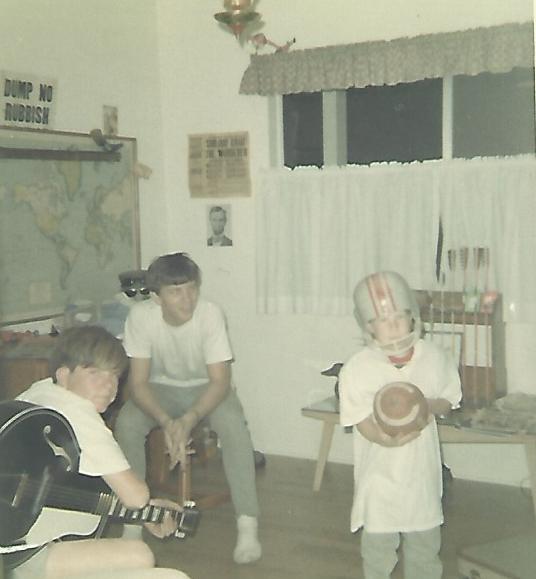
Circa 1965 – 1966. Drew Mashburn, Mark Madsen and Blake Mashburn ( Drew’s brother) in Drew’s bedroom when Mark was living with Drew so he could finish out the school year of 1965 to 1966. This home was on S. Rice Road in Mira Monte. Drew’s father donned the home the “Poor Man’s Ponderosa”.

Read the rest of the story directly from the Ojai Magazine.


A review of the Sixties — Part 2

The following article first appeared in the Wednesday, December 24, 1969 edition of “The Ojai Valley News” on the front page. It is reprinted here with their permission.

A review of the Sixties — Part 2
How the Ojai valley has changed


(How has Ojai valley changed in the last decade? Reporter Gary Hachadourian scanned the Ojai Valley News front pages — over 1,000 of them — between 1960 and 1970 to come up with some answers. This is the second in a series of eight articles.)
by Gary Hachadourian

The urbanization of the Ojai Valley in the Sixties was the result of a combination of forces. True, the City of Ojai took many steps which determined, partially, the direction it wanted urbanization to take. But the community was playing a losing game. Growth was inevitable; growth was occurring.

Urbanization was forced in other ways. The City of Ojai — as most California cities — was living under an economic system that forced it to accept and even welcome development of an admittedly questionable variety in order to raise tax money to meet constantly increasing operating costs. Ojai was forced to develop in order to keep from “going broke.” (This particular “force” will be a subject in a later article.)

The changing makeup of the community was another force. A town is what its people are. A community can be no greater than the men and citizens who control its destiny.

The personality of the valley is kaleidoscopic. Its elemental beauty and peace draws all types. We’ll attempt a description. Nothing specific. Just the spirit of the place, for it simultaneously invited urbanization and helped to determine the direction it would take.

Moon nest here

First, we are a self-conscious community. We are landlocked by mountains on three sides. We are endlessly conscious that we live in a very beautiful place — the “center of the universe.” The Chumash Indians also felt that way, for in their language “Ojai” means that the moon nests here. Many residents feel that the sun does. also.

The news stories of the Sixties are filled with congratulatory quotations which say, in essence: “aren’t we wonderful to deserve all this.” There was something aristocratic in our deference to outsiders.

The community’s intimate relationship with nature produced a stern protectionist attitude. The love felt for the valley’s natural beauty was real, because most Ojaians were recently transplanted from city-like environments. They knew that soul-saving open spaces were fast disappearing and deserved to be preserved. They knew their valley was vulnerable to the insistent demands of developers who think of land as money.

Most Ojaians of the Sixties seemed well aware that the valley, lying close to the industrial and commercial centers of the county, is a natural target for extensive — and intensive — residential development. Thus, the community exhibited on occasion an isolationist sentiment. As one letter to the editor said: “let’s pound stakes across the highway at the Y.”

But the community as a whole was prepared to compromise . . . and channel the growth. (Valleyites are also red-blooded capitalists. What else should they be? In this country that’s how money is made and in many cases that’s how they earned the living that brought them a home and acreage with a view of the mountains.)

But, there was a difference between capitalism of the Philistines and the capitalism of Ojaians. The Philistines wanted property because it developed into money, while Ojaians wanted money in order to support property. That’s why seldom do the people who live here treat their land badly.

All this leads to an inescapable and stifling contradiction. It preys on the mind: How can Ojaians deny rights to outsiders that they grant to themselves? How can they think of themselves as the owners of their particular parcel while at the same time acting as overseers of the rest?

How, though, if land is currency, can you rightfully keep outsiders out of the market? This contradiction, in spite of all the restrictive planning, was not answered in the Sixties.

You can’t blame the oldtimers. They came to the valley by choice, for what it offered them. Those who would come in the future would do so more out of necessity, needing space and bringing their conveniences with them. So, if land is currency, there was no way to keep the newcomers out. Restriction planning was not enough.

The area has another characteristic that could be self-defeating. Because of the delight residents feel in living here, Ojaians tend to view themselves as the vanguard contingent of a new urban civilization, a community charged with the heavy responsibility of setting an example of how to live in the suburbs.

They may be right, too. But overconfidence can be self-defeating. Overconfidence can mean a dropping of one’s guard — and the community did that on occasion in the Sixties. Thus the apathy on many occasions when the troops failed to march in the Battle to Preserve Ojai.

These characteristics had a great bearing on what happened in the valley from 1960 to 1970. In fact, they largely determined it.

(The next article places in perspective the events in the urbanization of Ojai Valley during the past 10 years.)